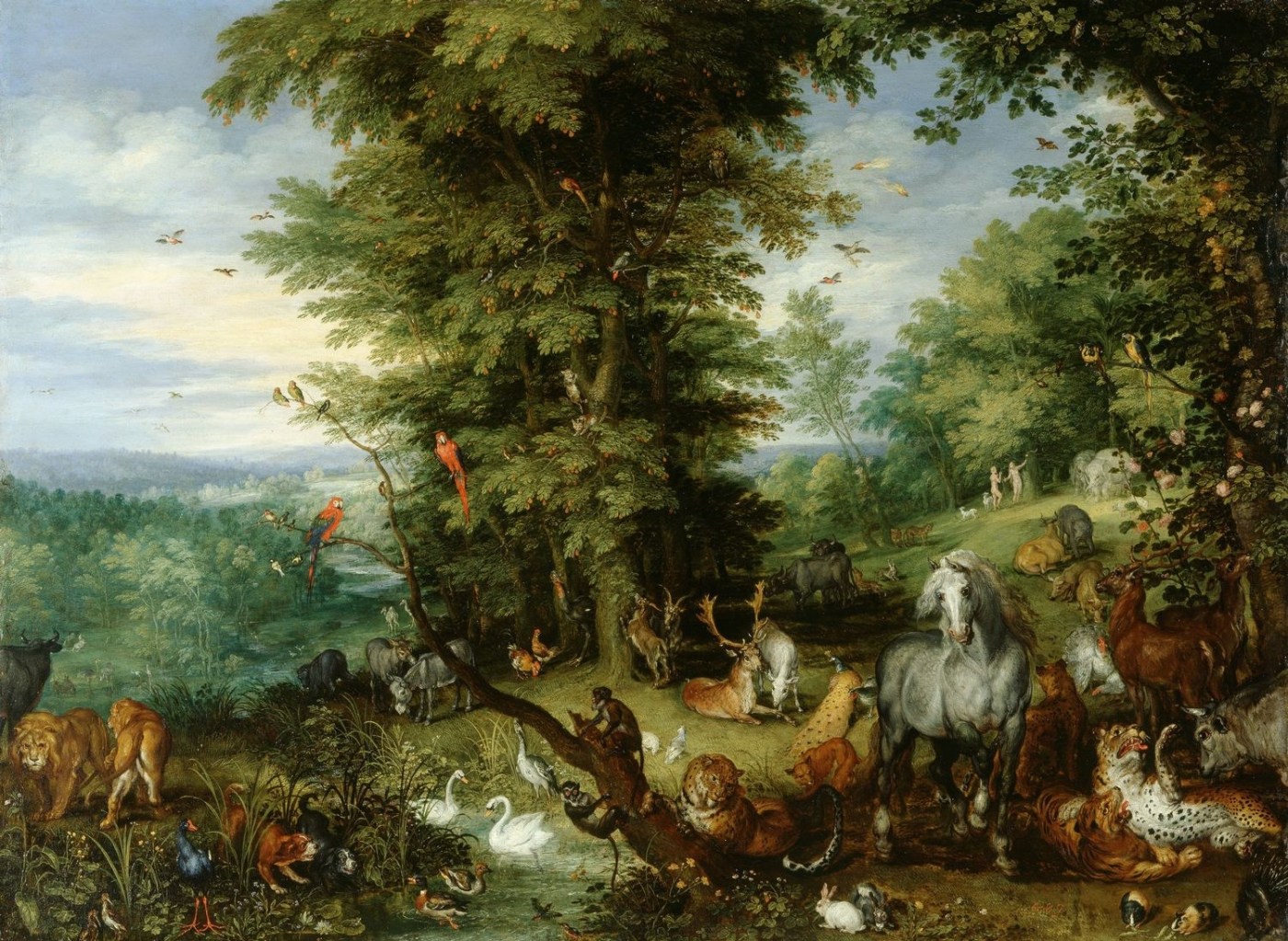
“He was on a plain on which the flowers were queer and the shape of the trees monstrous.”
Edward John Drax Plunkett, better known as Lord Dunsany, was the 18th Baron of Dunsany and he wrote something like 90 works of fiction. His most famous being The King of Elfland’s Daughter.
To call the Lord Dunsany the first “fantasy writer” may not be entirely correct, but to ignore his influence over the genre would be criminal. I hope it isn’t an overstatement to say that without his Gods of Pegāna the concept of an invented pantheon would never have taken wing in the speculative genre at large. He was an influence on H.P. Lovecraft, Robert E. Howard, J.R.R. Tolkien, and Gene Wolfe to name my favorites.
I discovered Lord Dunsany only a few years ago and immediately launched into the King of Elfland’s Daughter. If I’m being honest, its not exactly a page turner, but it has some of the most beautiful prose I’ve ever read and that alone kept me reading.
Dunsany’s use of language is haunting. His writing style is best described as an upscale fairytale. The work is simple, like the Brothers Grimm. But the language itself is dense and syrupy like the poetry of the 1900s.
“She sang of old Summer noons in the time of harebells: she sang on that high dark heath a song that seemed so full of mornings and evenings preserved with all their dews by her magical craft from days that had else been lost, that Alveric wondered of each small wandering wing, that her fire had lured from the dusk, if this were the ghost of some day lost to man, called up by the force of her song from times that were fairer.”
There’s something about the passage above that makes me long for a place I’ve never been. That, to me, is what makes Lord Dunsany so good. Elfland’s Daughter is longing in its purest, most distilled form. Later on, writers like Tolkien would take this spirit and age it into a proper whiskey. From longing for Elfland to longing for the Shire, the genealogy is strikingly apparent.
Elfland, like all progenitors, is blurry around the edges. It defies classification and description. It’s a place where the colors are not like our colors, where the flowers are not like our flowers, where the trees are strange and scary. That’s why it’s so familiar—that’s what the world looks like when you’re little. As we grow, Elfland grows, or maybe it gets smaller or disappears entirely. Elfland is a place so familiar it seems unfamiliar, but we’ve all been there. Some may lose Elfland, others never leave.
Naturally, I keep house in Elfland. I’ve loved it here since I was a little girl. Everyone is welcome in my salon, because everyone is welcome in Elfland.
Above: Adam and Eve in the Garden of Eden. Jan Brueghel the Elder (1568 – 13 January 1625). Flemish. Oil on copper. Held by the Royal Collection, housed in the Cumberland Withdrawing Room of Hampton Court Palace.
 The Salon at Elfland
this
seems creative I think it’s better than the normal one
LikeLiked by 1 person