On Keeping a Commonplace Book

I love notebooks—I think every writer loves notebooks. There’s something about a virgin piece of paper and the unbent binding that beckons the writer onto some adventure. It becomes a new companion. A friend, a lover. Someone to whom we pour out a best and silliest ideas. Some of it is useful, some of it is forgotten. The rest is chaff, the nonsense we jot down for kindling in the furnace of the imagination.   

If you’re like me, you rarely—if ever—finish out that notebook. The paper yellows, the spirals bend, the corners crease, and it takes up space in a closet. Half-used, half-remembered. Sometimes I stumble upon an old notebook and thumb through it, grinning at the little spark that become that story or that poem or got reworked into a greater whole.

I collect those bits and add them into a binder or another notebook. The rest, like I said above. Is chaff. I don’t discard it because it was useful when I put it down, but I’ve outgrown the idea. I still respect it.

A few years ago, I came upon the Latin word “Florilegium.” Or, “a gathering of flowers.”  

Medieval Scholars kept a kind of commonplace book, a literal notebook collection of Scripture, Patristic sayings, ideas, etc. for the purpose of writing Sermons. They called these books Florilegium.

This got me thinking.

First, what a wonderful concept—gathering flowers. And gathering flowers, not to destroy a lovely growing thing, but the kind of metaphysical flower we call Wisdom.

Secondly, there are so many kinds of flowers. Why stop at wisdom? Why not pick one because I think it’s pretty? Or because it means something to me? Or because the aesthetic is something so powerful I must collect it with the hope of planting something half that brilliant?

Thirdly, I began to wonder what would happen if I finished one of those notebooks? As in used up all the paper, front to back?

To make sure I actually accomplished this massive feat, I bought a nice notebook. Its leather bound with cream colored lined paper, and personalized with my name and the book’s title: Florilegium, “a gathering of flowers.” I then bought a fountain pen. If I was going to do this, I wanted to do it as ritualistically as possible. I wanted to make it a devotion.

My first entry tells you a little about where I was when I first began gathering flowers.

“…I believe; help my unbelief!”

Mark 9:24

There are parts of this volume (there are two at the time of writing this post) that I can read and feel a wash of memories. There are others that are there because I like them.

Some hold a rich degree of meaning to me:

I am in a sea of wonders. I doubt; I fear; I think strange things which I dare not confess to my own soul. God keep me, if only for the sake of those dear to me!

Bram Stoker, Dracula

Others are for pure aesthetics:

Paul-Muad’Dib remembered that there had been a meal heavy with spice essence.

Frank Herbert, Dune

The more I think on these flowers, the more I see a collage of the writer I want to be.

My handwriting grew sloppier the more I used the book, not because it became a burden, but because I had so much to write down. I dumped the fancy pens and went for whatever pen I had at hand.

This bouquet has become personal to me. The casual reader would find something deeply intimate, and yet come away knowing hardly anything about me. Some of the quotes connect to thoughts, others seem so jarringly out of place that the ideas may appear schizophrenic.

Only I know what Mona Lisa Overdrive has to do with Christ Jesus. Only I know why Chesterton’s work sits next to Frank Herbert’s or why the Spiritual Combat takes up a majority of pages, why I only quote my favorite novel once.

I don’t need anyone to see the pattern—if there even is one. I read what comes to me, what seems fun and profitable as I find it. I collect what I like or what makes me think or what I think sound cool.

And that is why I think a commonplace book is good practice. Not just for writers, but for people. As a purely human exercise.

You don’t even have to read to keep one. Movies, or TV, or friends, have just as much to say to us as anything else. Hell, you don’t even have to keep a book! A blog is just as useful, or just a text sheet on your computer.

The only thing I think you shouldn’t do it make any kind of order of it. Pick flowers as you come upon them. Try it for a year, I think you’ll find that what you thought was a bouquet of cut flowers, is actually a healthy, growing garden.

Here’s where you can read me!

Follow me on Twitter/X.

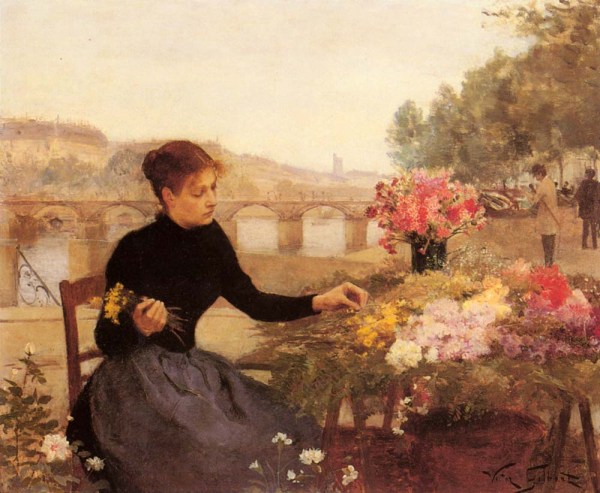
Above: A Parisian Flower Market. Oil on Canvas. Victor Gabriel Gilbert 1847-1933. French.

Tripping over Easter Eggs

It probably started with the Marvel movies. Not references themselves, but the relentless, in your face, Easter eggs that constitute a meaningless dog whistling. “Hey fellow nerds,” this little pop culture reference seems to say, “remember this cool thing? Only serious fans remember this obscure piece of ephemera!”

With Disney’s permission via example, pop culture easter eggs suddenly became something I started tripping over, especially in the fiction of the last decade or so. Not just in movies and tv, but in books.

For the first few years, I appreciated having my nerdy ego stroked. I liked that I was more familiar with Hawkeye than my friends, I liked that I could smugly explain the significance of a clunky piece of written dialogue, I liked that I could state “that’s from Dungeons and Dragons.”

But, as I got older, the charm wore off.

The clumsy, often non-sequitur references felt less like a wink and a nod and more like a slap to the face. Not someone hinting at me that they enjoy the things I enjoy, but more like a corporate apparatchik with no interest in the thing I’m interested in trying to convince me that they don’t hold me and very reference itself in contempt.  

I can’t take a reference and by extension the writer who makes it, seriously anymore.

Take, for example, the Wilhem Scream of cinema fame. What started out as a piece of cost-saving sound design, Star Wars turned it into a “pop culture icon,” and now has become so ubiquitous it’s in approximately 400 films. As an inside joke, it’s bereft of any meaning. It breaks tension, it breaks the cohesion—it calls attention to itself.

Whenever I hear the Wilhem Scream, I think “oh yeah, that’s right. I’m watching a movie.”

When you’re writing a story, this breaking of immersion can be disastrous.

The willing suspension of disbelief is an unspoken contract between the reader and the writer. In exchange for a good yarn, the reader willingly suspends their skepticism. They simply accept faster-than-light travel, magical talking swords, or healing crystals, despite that logic and reason dictate those things as impossible. A good story doesn’t have to be realistic, but the logic of your constructed world must be internally consistent.  

Constructed being the operative word—all written stories are, by the nature of story, contrived.

A written story must follow certain laws. The laws of grammar, spelling, and language, the rules regarding structure, character typology, typeface, cultural mores, etcetera.

When a reader opens a book and escapes into the world that a writer has created, the last thing the writer wants is to slam on the brakes and make the reader remember “oh yeah, that’s right. I’m reading a book.”

Do not call attention to your grammar. Do not call attention to your clever typeface. Do no call attention to a piece of media they might very well rather be enjoying than your story.

When I read a book, I don’t want to be taken out of your story, not even to laugh, not even to feel smug. I’m giving you my attention, respect my time and give me a good story.

Regarding Video Games

The term Easter Egg comes from the world of programming. It’s tempting the call them a “tradition.” I would be the first to admit that I enjoy the occasional references that I’ve found in my favorite games.

Most of the time, the references must be hunted down, hence “Easter egg.” The player can choose to actively look for them or not. Engagement is optional. That doesn’t mean I’ve never stumbled upon an obvious reference and had to look it up in order to understand it, but it does mean that I can choose not to participate in the hunt itself.

Unlike video games, books are wholistic. By reading, I must engage with the totality of the work, references, grammar, structure, and all. A cringy, out-of-place pop culture reference takes up precious space, both in the reader’s imagination and in the physical work.

Easter eggs can be stumbling blocks, or worse—an assault on the good tastes of a reader, who, out of the all the stories in the world, picked yours. Respect their good taste and don’t remind them they’re reading a book. Instead, let them escape into your world and grieve when they must put it down.

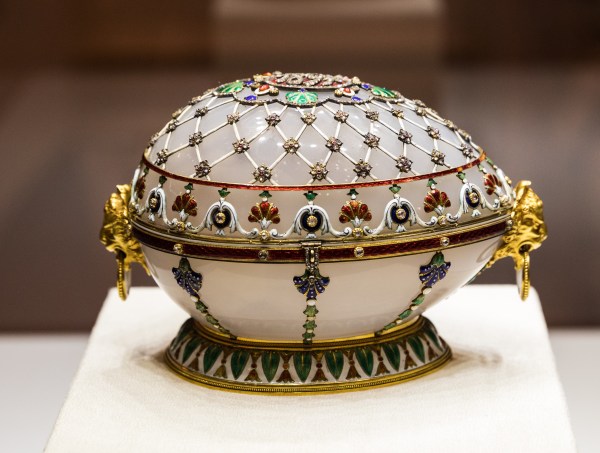
Above: The Renaissance Easter Egg, a Fabergé Egg, part of the Easter Series. Mikhail Perkhin 1860-1903, Russian. Materials: Gold, rose-cut diamonds, agate, rubies. Housed in the Blue Room of the Fabergé Museum, St. Petersburg, Russia.

You can find my written works here. Follow me on X/Twitter.

Writer’s Review: Buffy and the Art of Story

When I purchased Buffy and the Art of Story I had a very different notion of what I was ordering verses what I got. It was an impulse buy, I admit. I love Buffy—okay, I love the first three season of Buffy with some select episodes from the other four. The book promises that I’ll be “writing better fiction by watching Buffy.”  

I expected the book to go through the entirety of the Buffy series, break down the character development, plot, motifs, symbolism, etc., all of this towards the goal of enhancing my writing abilities. It wasn’t until the book was in my hands that I realized it said “Season 1.”

When I made my cursory flip-through, I saw that it went through episode by episode. As I began reading, I learned it’s scope was very specific—structure, with some limited commentary of character development and story devices.

The disappointment was my fault. I misunderstood the scope and point of the book. I also got a bit too excited about the gimmick.

Gimmick really is the word here. One of the things that you start seeing with most of the how-to-write books is the reliance on gimmicks.

It makes sense. There are literally thousands of these kinds of books on Amazon alone. If you’re writing one of these books, you have to make yourself stand out.

For example, my own Adventures in Storytelling is, at its core, a how-to-write “book.” It’s gimmick is to share tips, tricks, and advice through the perspective of a personal odyssey.

Buffy and the Art of Story’s gimmick is Joss Whedon’s incredibly successful 1990s horror/comedy/drama television show, Buffy the Vampire Slayer.

Buffy and the Art of Story, Season One by L. M. Lilly

Disclaimer: Per the introduction of Buffy and the Art of Story, the book is a transcript of a podcast by the same name. Because I review how-to-write books and not podcasts, I didn’t listen to it.   

Let’s start with the vampire in the room: this book is extremely niche.

I’ll be the first to admit that I shun fandom. I don’t like the cringy, obsessive, argumentative ways that some fandoms operate (particularly online). So, I’m really not sure if there is much of a modern Buffy fanbase—that is, younger generation fans, not Gen Xers and Millennials like me.

My first taste of Buffy was catching a random re-run some October while I was in high school. I began to borrow the DVDs from my local library, some of which didn’t work properly, so I never ended up finishing the entire series until COVID gave me a chance to sit down and binge.

Although I’m a “new” fan, I’m not really sure how many new fans there are out there. The first episode aired in 1997, I wasn’t even ten! My age bracket is probably the upper limits of someone who would even be familiar (that is, nostalgic) for the cheesy 90s’ and early 00s’.

Buffy and the Art of Story is clearly for established fans of the Vampire Slayer. There are no recaps or synopses at the beginning of each chapter. Lilly simply “dives into the Hellmouth.”

You must already know the basic story and characters of every episode in season 1 in order to get anything out of this book.

The chapters are named by episode, so if you want to skip around and examine specific episodes, you can. Each chapter is arranged the same, starting with some background information about the writers and director; listing the particular story elements the author wants to highlight; a chronological breakdown of the episode catching each one of Lilly’s seven-pointed plot structure; some spoilers and commentary; and finishing up with a list of questions for your writing.  

In the first chapter, Lilly gives us an introduction to her preferred story structure: “Key plot points and turns for your story.”

It’s solid, seven-pointed structure:

  • Opening Conflict, which opens the story and draws the reader in.
  • Story Spark (aka, Inciting Incident), the event that sets off the story at about 10% in.
  • One-Quarter Twist, the first major plot point that “spins the story in a new direction” and typically comes from outside the protagonist.
  • Midpoint, where the protagonist commits to the quest or suffers a major reversal.
  • Three-Quarter Turn, the next major plot point that spins the story in a new direction but usually comes from within the characters. It usually comes in two-thirds through a story.
  • Climax, the “culmination of the main plot.”
  • Falling Action, the end of the story.

As I read the book, I found myself, for the most part, agreeing with Lilly’s use of the structure. However, this book has some serious flaws and it’s for that reason that I cannot recommend it.

I don’t like doing “negative reviews.” The goal of these essays has always been to help other writers find how-to-write books that might expand their horizons. But if that is my stated goal, then I have to be honest. 

Lilly’s seven-pointed structure is a good structure; it’s just not the only one. And it’s especially not the only structure Buffy uses.  

For example, a lot of Buffy’s one-off episodes—the monsters-of-the-week—do not fit neatly into this structure. Some of them use what I would call a “pulp structure.” The episode isn’t really about the characters changing or growing in any profound way, it’s about the characters overcoming obstacles.

This kind of structure is easily seen in any given Conan the Barbarian story. There is a goal and a series of hurdles that the character must overcome in order to achieve said goal. The story is in the lengths a character will go in order to achieve their ends.  

And while Lilly hits the mark for most of the episodes i.e. the two parts 1st and 2nd episodes (Welcome to Hellmouth/the Harvest); episode 7, Angel fits well within her structure; even the one-off I, Robot…You, Jane. She misfires by trying to squeeze every episode into her seven-pointed story structure.

That said, I think the structure is a strong one, it’s should be. It’s the Holy Trinty, the Tripod, better known as the Three Act Structure.

An ocean of ink has been spilled over the vagaries of plot structure and ultimately that’s the thing here. There are better books on plot structure.

But, there are also some problems in her analysis.   

Take her chapter on episode 6, the Pack.

It’s a standalone Xander-centric episode wherein Xander and a gang of obnoxious bullies are possessed by the demonic spirit of a hyena. Here’s a link to a quick summary and analysis if you’re unfamiliar or need a refresher.

The main problem with Lilly’s analysis is that she misplaces story beats because she’s misidentified the active protagonist as Buffy when it’s Xander. This doesn’t mean that Buffy and Willow aren’t active protagonists—they are, but it’s Xander who sets off the story, it’s Xander who commits, and it’s Xander who saves Willow.

Lilly misremembers that Xander is with the Pack when they eat the school mascot and I think this is the critical error in her analysis. This causes her to misplace her midpoint because “from a storytelling perspective [the pack] are not the protagonists.” In a way, she’s right. The four “packmates” aren’t the protagonists, but Xander is. He’s their leader.  

Another issue I have with Lilly’s analysis is episode Eight and I’ll admit that it’s somewhat a nit-pick, she says:

“…in addition to Moloch being this sort of mustache-twirling villain who is just evil for evil’s sake, we also have the people support this kind of demon apparently just for evil’s sake…

…so I know we were told from the beginning that Moloch preys upon the weak of mind. Also he’s the Corruptor, and that he has this way over people. So it’s probably unfair to say they are choosing to follow this demon. But it feels a bit like weak storytelling to me. It is less interesting to have a demon who just has this magic power of making people follow him rather than the followers having some reason. Some deep need the demon is filling, something that makes us understand why they would devote themselves to this demon.”

Buffy and the Art of Story, Pg. 168-169

There are several instances where I think Lilly’s grasp of symbolism and motif is woefully atrophied. And while this episode doesn’t have a great rap, I find it a wealth of almost painfully obvious symbolism.

Moloch is a demon, he preys on the lonely, he’s called the Corruptor, his name is Moloch.

Moloch is traditionally understood to be an ancient Canaanite deity, throughout the Bible the Israelites find themselves falling into idolatrous worship of him. Idolatry is best understood as misplaced love or corrupted love.  

I, Robot…You, Jane is one of those episodes that I feel falls a bit short of the lofty symbolism it’s playing with, in part because the symbolism is clunkily spoon-fed to the audience. Moloch is a symbol of the tension between the characters. Willow’s unrequited love of Xander; Buffy’s crush on Angel; Giles’ utter distrust of technology; Fritz obsession—idolization—of technology.

Lilly’s miss regarding this symbolism was when I truly realized that I couldn’t recommend this book.

Final Thoughts.

Story is more than tight structure, its more than making sure each chapter ends on a hook, its more than twists and turns and reversals.

If Lilly kept strictly to breaking down structure, leaving out any analysis of the characters or plot, it would still be a flawed book, but it would be one with some minor use for novice writers who are also Buffy fans.

As it stands, this book isn’t terrible, it’s just not useful.

Adventures in Storytelling 5

Entry 4, Carpe editorem, occide, part 3.  

Now that I’ve confirmed what we already know, that writing is work worth doing; every correction, setback, and mistake makes you a better writer. We can talk about the tricky subject of taste.

I don’t like this is a delicate situation every writer will inevitably come up against. The way it’s handled can make or break a writer’s morale. Whether it comes from a friend, a random reader, or the worst critic of all—the self. Not liking something you’ve written can be disastrous.

I began editing P1 while embarking on a new career path. Unfortunately, I would abandon this career about a year and a half later, but during this period of my life I went through long stretches when I didn’t really do any editing or any serious work on P1. I worked on short stories at this time, although I also worked on Project Paisley’s second work, P2.

A stretch of alienation, as previously mentioned in entry 3, can put a lot of distance between the work and the writer. When I finally went back to P1 I found there was more to love than I had thought.

What I also learned is that there were plenty of things I didn’t like too.

This caused an…interesting crisis.

On one hand, P1 was almost exactly what I want in a fantasy epic. Political intrigue, sword fights, romance, an interesting magic system, etcetera. The problem was that all the cool stuff was tied up with a subpar b-plot that drifted into multiple directions and needed cutting or immediate tie-in.

I wish I could explain what this crisis looked like, but the only word that comes close is despair. I was extremely sad that I failed to bring this crucial plot material into the fold. It stuck out like a loose thread. Pulling it out unraveled parts of the story I wasn’t ready to give up. Leaving it there was a testament to my poor abilities.

After another month of wallowing, I eventually worked up the courage to take a look at my draft. It was still not great. But, this time around I noticed something. Attentive to the dislike I had for certain sections, I read them as a reader would and found myself thinking; “I would have done this” or “it makes more sense this way.”

I remember that it was a Saturday, sometime in Spring, during the COVID lockdowns when I could go outside during my at-home work day and get some sun. I resolved to fix what I didn’t like.

Armed with a blue pen and sheet of white computer paper, I made myself think about my work and how to make it better. I wrote notes, I crossed things out, I made sarcastic remarks to myself. I worked.

It was about this time when I began to see the value of planning. While my “pantsing” managed to hammer out an initial draft, I realized that it was that out-of-control creative process that tangled up the good ideas with the bad ideas. Somewhere between pantsing and planning, there is a happy middle.

When I write, I find that there is a gestational period between the initial idea and the beginning of the execution of that idea. It’s been as short as one evening and as long as several years. During this gestational period, I took up a practice I call wish-listing.

Over the next several days after that initial sit down, I added more ideas to my list. It’s only now that I understand what I was doing there. I was wish-listing.  

As far as those needed edits go, I eventually settled on a plan and began to put it into action. I’ve completed the first section requiring some massive rewrites. The rest will involve re-arrangements, cuts, and most likely, rewrites.

No one wants to rewrite thousands of words, but ultimately to solve the problem I created, I had to rewrite it. In order to work on these rewrites, I set aside other works in order to focus my energy on P1.

It’s been increasingly difficult to “get in the mood” so to speak. Working a full-time job can really put a damper on the creative flow. The same happens when I spend long stretches away from my work. I have to spend a little time getting back into the characters. To get back in the groove I use a tactic similar to pre-editing (entry 3) that I call previewing.

During preview I jump back to sections before the area I want to work on. Sometimes, I read things out loud. I try to capture the rhythm and voice of the character I intend to write. Jumping ahead can also help the process. Sometimes I takes an entire Saturday to recapture the voice I want. Other times, it’s easy. Since I can only find time to write on the weekends, this gives me a very short window in which to work.

This was a source of extreme anxiety for me. I began to feel like I was giving up without the dignity of throwing in the towel. My life was consumed by my 8-5. When most people use the weekend to unwind from their work week, I felt like I was starting my work—the real work, the work I love. This made me miss out on relaxation, on the unwinding required for a healthy work-life balance.

Worse, when I did relax, I felt guilty. I felt like I was procrastinating, shirking my responsibilities.

Suddenly, spending an hour reading a novel felt like I was wasting time not working on mine. Hanging out with friends had to be cut short because I had to go home and get something out on a page. I didn’t go hiking or take a walk or do any of the things I loved doing before my full-time.

I taxed my mental health and my physical health. Sleeping issues that I had dealt with in the past suddenly reared up, worrying me more. Something was going to break, and that something was me.

To make a long story short, the break didn’t involve my writing. There are personal factors that went into the long and dark winter that was 2021. Writing was my haven, the place I could control. The only thing in the world that made sense to me. I muddled through 2021, fought my way through the spring of 2022.

It was at the height of this breakdown that I finally gave in. I had toyed with Catholicism for years by then. In April, just a few days after Easter, I caved too the only force that could soften my stubborn heart. Christ struck tinder in the ash heap of my soul and for the first time in a long time I stopped worrying.

Am I going to tell you that I no longer complete an elaborate night-time ritual in order to fend off the Sunday Scaries? No, because that would be a lie. Am I going to tell you that I’m not anxious about my writing, or work, my personal life, politics—no, because that would be a lie. But I don’t let them control me anymore. Not even my writing gets to rule my life. I have a different King now and he wants me to write because he likes stories and wants me to like them too.

During 2022, while I worked through my personal problems, I let myself enjoy writing again. I set the P1 rewrites aside and worked on a couple short stories. When I went back to P1 I fell in love with the story and found a deeper appreciation for the work that I put into P1.

I finished the largest chunk of those rewrites back in August of 2022. There’s still more work to do. But I’m taking a break from P1. This isn’t the last entry regarding P1 and Project Paisley. But it is for now.   

Ultimately, what I hope you pick up here, dear reader, is that writing is hard. It’s hard work. Don’t let anyone tell you that it’s not. The effort and preparation that goes into writing is enormous. Editing is just as effortful and time consuming as writing itself—sometimes even more so. The emotional exertion can be just as detrimental to your heart, mind, and body as the physical toll of working that shitty retail job you hate.

But just like that job you hate; you have to do the work. The key to staying even-keeled is remembering the job you love is supposed to be done because you love it. You were asked to pick up this cross because the Man we nailed to it knows you can carry it.

Writing demands work, but it should bring joy.     

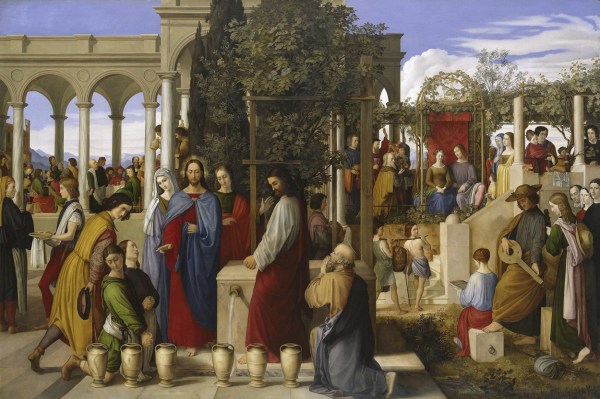
Above: The Marriage at Cana. Julius Schnorr von Carolsfeld (March 1794 – May 1872). German. Oil on Canvas. House at Hamburger Kunsthalle.

Writer’s Review: How to Write a Novel Using the Snowflake Method

If you’re familiar with my Adventures in Storytelling series, you’ll know that I’ve mentioned my preferred method of outlining. I started writing as a hardcore organic or “pantser” type. And while that method worked for me, I’d often find myself quickly losing control of the process and flying off into all sorts of interesting directions. In order to remedy this, I turned to a soft form of outlining I call wish-listing, where I jot down major plot points and connect and collate them as needed.

Naturally, I was intrigued by the premise of the Snowflake Method. The book promises a Goldilocks method, something in between plotter and pantser.

How to Write a Novel Using the Snowflake Method by Randy Ingermanson  

Many how-to-write books have little gimmicks to interest the reader, but I don’t think I’ve ever read a how-to with such a cute one. Mr. Ingermanson writes the book as a book, as in, it has a plot, characters, stakes, conflict, etc.

It’s cute and the charm managed to keep me reading. That said, it’s also short. Any longer than 160 pages and I’m pretty sure I would have gotten tired of it.

The way Mr. Ingermanson relays his information is through the plot and characters of the story.

Goldilocks is our protagonist. She has a dream: to become a best-selling author. The problem is, she doesn’t know where to start when it comes to writing a book. Goldilocks signs up for a series of writer’s workshops, hosted by the Three Bears, the eponymous Papa, Mama, and Baby.

Goldilocks quickly discovers that Papa’s method of plotting is far too rigid; Mama’s organic method is too open; but Baby Bear seems to be onto something with his method, one that splits the difference between his parents.

This method is the Snowflake Method, it is made up of ten steps and its underlining goal appears to be limiting the number of drafts and corrections without dulling the edge of the creative process.

The largest benefit to the rigid outline is its ability to see over the horizon and catch mistakes before they happen. While the biggest benefit to the organic method is the free flow of creative energy that gets words on a page. As someone who struggles with both methods, you can see why I find premise of the Snowflake Method interesting.

To see how it works, I actually took the time to write out a snowflake for a novella I’ve been planning. I won’t be listing any details here, as the snowflake is really designed for the writer, sharing it would give too much away.  

The Method consists of 10 steps:

  1. One sentence summary
  2. One paragraph summary
  3. Write a summary sheet for each character
  4. One page synopsis
  5. Write a character synopsis for each character
  6. Four-page synopsis
  7. Write a character bible
  8. List all the scenes
  9. Write a plan for each scene
  10.  Write your novel

Like most how-to-write guides, Ingermanson’s base is the Three-Act Structure. He also refers to it as the Three-Disaster Structure. His idea is that readers want three things: excitement, decision, and new directions—a disaster. Some might call this a plot point, or a beat. But it’s the incident that forces the character into confrontation with the plot, demanding they answer, and move the story forward.

So, let’s look at these steps.

One Sentence Summary

Fairly self-explanatory. Ingermanson states that it should “give [the reader] a taste of the story in twenty-five words or less.” (pg. 19) I actually call this a “mission statement” and use it as a statement of intent more for myself than anyone else, but I’ve been known to whip it out when a friend or family member asks me what I’m “writing about.” 

It’s a solid idea that I would recommend to the novice and expert alike. You want to be able to tell your friends and family what you’re writing, most importantly you want to be able to tell yourself what you’re writing.

One Paragraph Summary    

Again, another self-explanatory step. Each of Ingermanson’s steps build off the previous the steps, which is very intuitive. For the novice, this semi-solid structure may provide an example of what a writer needs to discern naturally.

The idea of the one paragraph summary is that you take the one sentence summary and expand it into five sentences, paying special attention to characters, setting, the disasters. It should hit all the story beats of each act and include your conclusion. Ingermanson doesn’t want you to bog yourself down with how you get to your conclusion or how characters respond to disaster so much as he wants you to draw the most basic of lines between persons, places, and events.  

Summary Sheet for Characters

For those familiar with my Adventures in Storytelling series, you’ll know that I’ve mentioned a character chart. I typically only make them for major characters and they not absolute, meaning, the character I chart might be completely different in the finished product.

The idea behind the chart is to throw every idea I have for that character down and I then draw lines connecting each piece of personality or backstory to each other. What I like to think I’m doing it making cause-and-effect clear to myself. Why is Character A like this? How did this event effect Character A?

Ingermanson’s character sheet is far from my blasé charts.

While Ingermanson makes it clear that this step isn’t necessary for every character, or that not every step within this step is needed for each character, this is where some of the tedium began to set in for me.

Ingermanson’s right, of course. There’s no need to produce a sheet for every character. As with my charts, it needs to be done for your main characters. You need to know your characters names, their values (“nothing is more important than X…”); their ambition (abstract desire); their goal (achievable); their conflict; their epiphany; a one sentence summary of their story; and a one paragraph summary of their life both in and out of the story.

As I said above, I struggled through this step. I worked out my main characters, wrote down some basic information for my minor characters, and moved on to the next step.

One Page Synopsis  

Unlike the one paragraph summary, the one-page synopsis might be useful for the marketing of a book. Editors and agents are busy people, they need a synopsis to hook them to make sure their time is used wisely.

Ingermanson suggest you take your one paragraph summary and turn each sentence of it into a paragraph.

For me, I found that easier said than done. But I understand Ingermanson’s point. It’s something that probably should be done. That said, I’ve done this only after I’ve finished a work.

I see the point; however, it does take that thin single paragraph and broaden the lines to build a skeleton which can be incarnated in the four-page synopsis.

Character Synopsis     

I’ll be honest, it was about here that I began to think that this method wasn’t really for me. I tried to convince myself that I’m just being averse to hard work, but that’s not being fair to all the hard work I’ve done in writing.

I determined that I would only write a synopsis for my two POV characters. Honestly, my conclusion was that the one paragraph summary I did of my characters in step 3 was all I needed.

Now, this might be because I’ve been brewing this novella for about a year now. It could also be that I don’t intend it to be a full novel. Frankly, this step felt “hand-holdy” if you catch my meaning.

Ingermanson is incredibly clear about how you don’t have to do all the steps of the Snowflake Method, and I appreciate that sentiment because this step isn’t for me. I don’t see its use other than to help you feel like you’re making some kind of progress.

Four Page Synopsis   

I skipped this step. I knew if I forced myself to write a four-page synopsis for my work, it would cause me to resent the Snowflake Method.

But I understand why he suggests it. Ingermanson is taking the rigid outline and hiding it in paragraphs instead of bullet points. He wants the writer to have their story idea locked down so that they know where they start and where they finish.  

Character Bible

Okay, so I was a little harsh on those last two steps. This step is a lot more useful to me. That said, it’s also something I would collapse into the character summaries of step 3.

Ingermanson’s character bible is meant to be the sheet that helps a writer keep track of the nitty-gritty detail of character, i.e., hair and eye color, age, height, DOB, favorite food, the way they take their tea, favorite movie/book, etc…

Not all these details are going to be relevant, although you should always make note of the way certain characters look, especially if they have certain defining features like scars or hair color. A character bible is the place to put that information.   

List all the Scenes

As Ingermanson says, the scene is the basic building block of any story. Each scene ought to play out the three-act structure in miniature, with a conflict and a resolution.

I didn’t do this or step 9. Why? Because I wrote a full page and half outline in step 4. And if I had completed step 6, what purpose would step 8 and 9 serve? I’ve already written the outline.    

In Chapter 8, Goldilocks realizes the crux of the method:

“The Snowflake Method was forcing her to think about things she hadn’t really worked out yet, but she could see that it was filling in the gaps in her story nicely. Every time Baby Bear asked a question, she could easily make up something on the spot to answer it.”

How to write a Novel using the Snowflake Method, Randy Ingermanson Chapter 8, page 69

Final Thoughts

The Snowflake Method is an ordering of the creative process. Its goal is to take the rigid outline and soften it with organic-looking paragraphs; Ingermanson cuts the hard work with fun work, and even gives approximate times you should give yourself to complete a task. He alternates the writer between character development and plot development to keep the writer from going lopsided in any direction.

Ultimately, I believe the Snowflake Method is a training tool. This book is not for people who already know how to write. This is for people who have no idea where to start, what to do, or where to finish. Honestly, I should have figured that out from the beginning. Goldilocks is a complete novice.

This feels like the kind of book a writer can use to get started. But after a while, you should start intuiting some of this process. Writing is an organic endeavor; you should always be getting better. Or as I like to say, where you start isn’t where you finish.

At some point, I think any writer who uses this method will eventually let it fall by the wayside as they develop their own writing tools. This is great for the novice. If you have absolutely no idea where to start, start here.  
Blog at WordPress.com.

Up ↑