Petals from my Florilegium: William Gibson, Virtual Light

I keep a commonplace book where I collect phrases, proverbs, sentences, or ideas like a haphazard bouquet of wildflowers. I pick them as they come to me, with no curation save what I share on this blog.

In this series, I’ll offer a quote and meditate on why it deserved to be preserved in my Florilegium.


Its steel bones, its stranded tendons, were lost within an accretion of dreams; tattoo parlors, gaming arcades, dimly lit stalls stacked with decaying magazines, sellers of fireworks, of cut bait, betting shops, sushi bars, unlicensed pawnbrokers, herbalists, barbers, bars. Dreams of commerce with their locations generally corresponding with the decks that had once carried vehicular traffic; while above them, rising to the very peaks of the cable towers, lifted the intricately suspended barrio, with its unnumbered population and its zones of more private fantasy.    

William Gibson, Virtual Light

William Gibson of Neuromancer fame is one of my favorite writers. His work, Virtual Light, falls into the cyberpunk genre, but in a far more subtle way than the Sprawl Trilogy. There are evil mega-corporations, corrupt governments, mysterious climate disasters, and all the other accoutrements that accompany the genre, but the story revolves around a pair of high-tech glasses and the powerful entities hunting the glasses down.

Sounds bizarre, I know, but the fun of Virtual Light is the unsettling implications behind the high-tech, low-life world that the characters live in.

That said, if you looking for neon-soaked streets, desperate drug addicts, and cyberspace raids, Virtual Light ain’t it. Cyberspace isn’t mentioned once.

Unlike the Sprawl Trilogy where Console Cowboys melt ICE and chat with mystical AI pseudo-gods, Virtual Light revolves around the Bridge.

The Bridge, what we would know as the Golden State Bridge, has in the seedy near-future, become a ghetto. It’s a holdout for the disenfranchised lowlifes of San Francisco. The passage above is the first glimpse the reader gets of the Bridge.

“Its steel bones, its stranded tendons, were lost within an accretion of dreams.” The Bridge is a massive, haphazardly pieced together architectural marvel of busted beams, splintery planks, and rusted platforms. The shops and bars and stalls are all located on the two lower decks where once cars buzzed from San Fran to Oakland. Above, people have built their homes from whatever scrap they can find.

What draws me to this paragraph is not the strange prescience with which it describes the San Francisco of 2024, but the poetry of it.

Gibson is a poet when the mood strikes him, especially when he’s describing places.

This passage begs to be read aloud with emphasis set on the repeated sounds like an alliterative poem.

steel bones, its stranded tendons”

“dimly lit stalls stacked with decaying magazines

“cut bait, betting shops, sushi bars, unlicensed pawnbrokers, herbalists, barbers, bars.”

This passage is awash in sounds and scents, a description that gives you what you need to paint a clear picture without robbing you of the joy of letting your imagination hold the brush. I can hear city traffic humming just below the harsh cries of the vendors. I can smell salt and rust and ramen and rotten fish.

This is the kind of paragraph I long to write—words that stick with a reader, that demand to be read again, and then, read aloud. It’s the perfect balance of rhythm and flavor, sweeping you into something at once familiar and utterly alien.

Gibson is a visionary—not just of the future, but a man who really seems to know his craft. As much as his works tend to horrify me, they enchant me too. Virtual Light doesn’t haunt me the way Neuromancer and Mona Lisa Overdrive still do, but I wrote down this passage because I couldn’t get it out of my head.

I hope it haunts you too, and it convinces you to give Virtual Light a read, if only for gems like this.   

Above: Close up of a Flower. Susanne Nilsson.    

Like weird tales? I write my own, you can find them here! You can also follow me on Twitter/X!
A Gentle Introduction to Conan the Cimmerian

Conan casts a mighty shadow over the swords and sorcery genre. You might even say, Conan is the genre. At the very least, he is the gold standard and all sword and sorcery fare is measured against the Cimmerian, regardless of the fairness of it.

The half-clad, sword-wielding barbarian is the trope de jour in all things swords and sorcery. From movies, to short story collections, to heavy metal music—if it’s swords and sorcery, it’s got buxom ladies, evil wizards, and loincloth bedecked barbarians.  

This isn’t a bad thing. I like tropes, I think they’re useful—good, even! And this trope is one of my favorites. I love a good sword-swinging savage man, bare-chested, blood covered, roaring insults against cowards and foes alike.

And if you like this trope too, Conan is your man. But, he’s also wily, cunning, quiet, pensive, chivalric, deceitful, womanizing, loyal, sneaky, brash—in other words, he’s complex.

Now, complex does not mean he completes a full “modern” character arc—in fact, he wouldn’t be Conan if he “changed” at the end of his tales.

“The Pulp Structure” as I call it, is about a character facing an obstacle or series of obstacles be they physical, mental, or both and overcoming those challenges. The story is found in the way they overcome the contest. Most importantly, they need to surmount the obstacle with their character or morality or ideology intact.

This resistance to change serves two purposes, it preserves the integrity of the kind of character that Conan is. It is also the mechanism that allowed Robert Howard to write Conan into all sorts of situations. The fun of a Conan story is in how Conan solves the problem before him.

“Hither came Conan, the Cimmerian, black-haired, sullen-eyed, sword in hand, a thief, a reaver, a slayer, with gigantic melancholies and gigantic mirth, to tread the jeweled thrones of the Earth under his sandalled feet.”

-The Phoenix on the Sword

This is Conan, a savage from the wastes of Cimmeria. A mercenary and robber. A man who has known great joy and even greater sadness. Impudent, knavish—he scoffs at kings and peasants alike. He lives, he burns with life, he loves and slays and is content. Plunder is seized and spent just as quickly—his philosophy, if a man like Conan has one, is this:

“I think of Life! The dead are dead, and what has passed is done! I have a ship and a fighting crew and a girl with lips like wine, and that’s all I ever asked. Lick your wounds bullies, and break out a cask of ale. You’re going to work ship as she never was worked before. Dance and sing while you buckle to it, damn you! To the devil with empty seas! We’re bound for waters where the seaports are fat and the merchant ships are crammed with plunder!” 

-The Pool of the Black One

Conan is not a man who goes out of his way to protect the weak. In fact, he doesn’t have a lot of respect or understanding for the weak and the poor.

By his estimation, the poor ought to get strong and rob the rich. The life of man is warfare, so men ought to take up sword and war. The strong will grow stronger because they are strong and the weak will die, because they are weak.

In this way, Conan is pure pagan. He would hear the words of Jesus “blessed are the poor” and sneer and ask how man is meant to eat a blessing.

This is best exemplified by the shadowy, utterly absent, cold and grim, god of the Cimmerians—Crom.

“Their chief is Crom. He dwells on a great mountain. What use to call on him? Little he cares if men live or die. Better to be silent than to call his attention to you; he will send you dooms, not fortune! He is grim and loveless, but at birth he breathes power to strive and slay into a man’s soul. What else shall men ask of the gods?”

-The Queen of the Black Coast

Conan’s fatalism is more Norse than it is Roman. His grim god’s attention promises doom, but despite that he seems to call out Crom’s name as if tempting fate, daring, maybe even demanding that promised doom so he might conquer it.

The Hyborian Age, the fictional pre-history setting of Howard’s Conan stories is awash in pagan fatalism. There is Bel, the god of Thieves; Mitra, the most widely worshiped and beloved of the gods; Set, the snake god of the Stygians who demands human sacrifice; the mysterious Asura. The good ones, if there are good ones, are Bel, Mitra, and Asura.

Conan does not call on any of them. Nor does he seem to care for their cults and practices. He has little regard for “blasphemy” and would do battle with a god if it suited him. The Priests of Asura have aided Conan in his journey, and Mitra has aided others in finding Conan’s help. He has spurned Set in a more physical way—slaying his children and confounding his priests.

For the average people of this mythical age, there appears to be little hope. This fatalistic caste system, where the strong prey on the weak, makes slavery, wanton cruelty, and human sacrifice the order of the day.

Power is all that matters, and those who don’t have it, live and serve at the pleasure of those who do.

Women are the particular victims of this system. Although Howard never spells out exactly what occurs in the flesh markets, harems, and pleasure palaces of the civilized nations, it is easily discernable to any but the most naïve of readers.

“…her worst oppressor had been a man the world called civilized.”

-Iron Shadows in the Moon

The tension between civilization and savagery is the red-hot pulse of the Conan stories. Howard does not hide what side he comes down on—barbarism is the superior. What Howard really appears to be doing is showing the ultimate end of degenerated civilizations. Rome degenerated and fell to “barbarian” incursions. The same fate befalls Aquilonia.

The difference, of course, is Conan.

He bucks against the spirit of fatalism. He forges his own path, mocks the gods. He has no need for the rules of civilization or savagery. If he is a barbarian, then I suspect we’d all wish to be barbarians.

“We do not sell our children.”

-Iron Shadows in the Moon

Conan says to a woman sold into sexual slavery by her own father. He’s never forced a woman against her consent, bought a human being, or forced a heavy tax burden on his people. He is a thing apart. Perhaps the only true example of rugged individualism that has and even will be.  

Conan is a renewing force; an infusion of fresh blood into a sickly man. He does not change, but all who meet him are changed. Slaves are freed, spines are steeled, villains are slain. In a bizarre, round-about way Conan is a liberator. Whether physically, or spiritually, Conan slaps sense into those around him, especially those who read him.

If you’re tired of tepid modern fantasy with it’s warmed-over Tolkienian platitudes, or handwringing, “grimdark” antiheroes; Conan might be the barbarian for you. Think of life! Think of rich red meat and stinging wine, think of passion and the flash of crimson blades, and be contented!

“Oh, soul of mine, born out of shadowed hills,

To clouds and winds and ghosts that shun the sun,

How many deaths shall serve to break at last

This heritage which wraps me in the grey

Apparel of ghosts? I search my heart and find

Cimmeria, land of Darkness and the Night.”

-Cimmeria

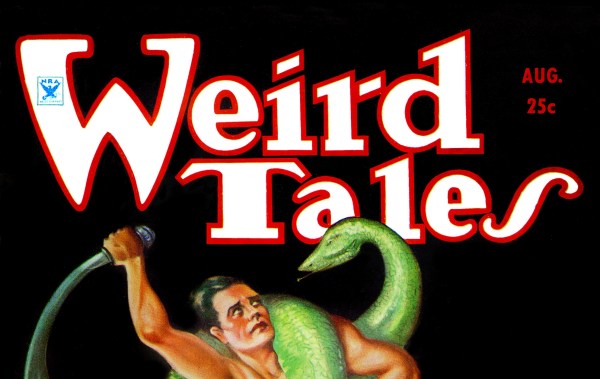
Above: A section from the August 1934 cover of Weird Tales featuring Robert E. Howard’s Conan the Cimmerian in The Devil in Iron.

I write my own weird tales, check them out here and follow me on X/Twitter.

On Keeping a Commonplace Book

I love notebooks—I think every writer loves notebooks. There’s something about a virgin piece of paper and the unbent binding that beckons the writer onto some adventure. It becomes a new companion. A friend, a lover. Someone to whom we pour out a best and silliest ideas. Some of it is useful, some of it is forgotten. The rest is chaff, the nonsense we jot down for kindling in the furnace of the imagination.   

If you’re like me, you rarely—if ever—finish out that notebook. The paper yellows, the spirals bend, the corners crease, and it takes up space in a closet. Half-used, half-remembered. Sometimes I stumble upon an old notebook and thumb through it, grinning at the little spark that become that story or that poem or got reworked into a greater whole.

I collect those bits and add them into a binder or another notebook. The rest, like I said above. Is chaff. I don’t discard it because it was useful when I put it down, but I’ve outgrown the idea. I still respect it.

A few years ago, I came upon the Latin word “Florilegium.” Or, “a gathering of flowers.”  

Medieval Scholars kept a kind of commonplace book, a literal notebook collection of Scripture, Patristic sayings, ideas, etc. for the purpose of writing Sermons. They called these books Florilegium.

This got me thinking.

First, what a wonderful concept—gathering flowers. And gathering flowers, not to destroy a lovely growing thing, but the kind of metaphysical flower we call Wisdom.

Secondly, there are so many kinds of flowers. Why stop at wisdom? Why not pick one because I think it’s pretty? Or because it means something to me? Or because the aesthetic is something so powerful I must collect it with the hope of planting something half that brilliant?

Thirdly, I began to wonder what would happen if I finished one of those notebooks? As in used up all the paper, front to back?

To make sure I actually accomplished this massive feat, I bought a nice notebook. Its leather bound with cream colored lined paper, and personalized with my name and the book’s title: Florilegium, “a gathering of flowers.” I then bought a fountain pen. If I was going to do this, I wanted to do it as ritualistically as possible. I wanted to make it a devotion.

My first entry tells you a little about where I was when I first began gathering flowers.

“…I believe; help my unbelief!”

Mark 9:24

There are parts of this volume (there are two at the time of writing this post) that I can read and feel a wash of memories. There are others that are there because I like them.

Some hold a rich degree of meaning to me:

I am in a sea of wonders. I doubt; I fear; I think strange things which I dare not confess to my own soul. God keep me, if only for the sake of those dear to me!

Bram Stoker, Dracula

Others are for pure aesthetics:

Paul-Muad’Dib remembered that there had been a meal heavy with spice essence.

Frank Herbert, Dune

The more I think on these flowers, the more I see a collage of the writer I want to be.

My handwriting grew sloppier the more I used the book, not because it became a burden, but because I had so much to write down. I dumped the fancy pens and went for whatever pen I had at hand.

This bouquet has become personal to me. The casual reader would find something deeply intimate, and yet come away knowing hardly anything about me. Some of the quotes connect to thoughts, others seem so jarringly out of place that the ideas may appear schizophrenic.

Only I know what Mona Lisa Overdrive has to do with Christ Jesus. Only I know why Chesterton’s work sits next to Frank Herbert’s or why the Spiritual Combat takes up a majority of pages, why I only quote my favorite novel once.

I don’t need anyone to see the pattern—if there even is one. I read what comes to me, what seems fun and profitable as I find it. I collect what I like or what makes me think or what I think sound cool.

And that is why I think a commonplace book is good practice. Not just for writers, but for people. As a purely human exercise.

You don’t even have to read to keep one. Movies, or TV, or friends, have just as much to say to us as anything else. Hell, you don’t even have to keep a book! A blog is just as useful, or just a text sheet on your computer.

The only thing I think you shouldn’t do it make any kind of order of it. Pick flowers as you come upon them. Try it for a year, I think you’ll find that what you thought was a bouquet of cut flowers, is actually a healthy, growing garden.

Here’s where you can read me!

Follow me on Twitter/X.

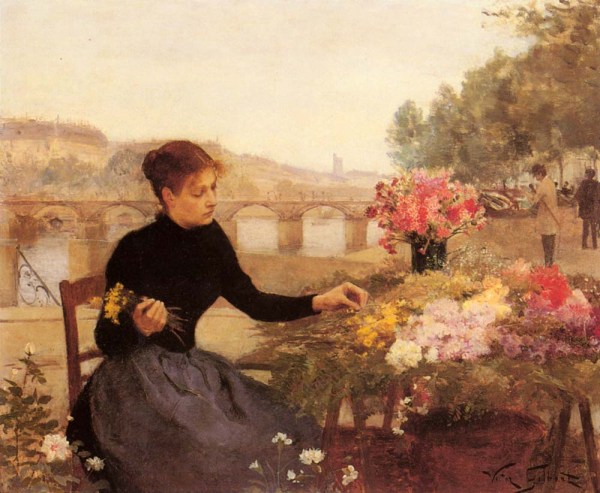
Above: A Parisian Flower Market. Oil on Canvas. Victor Gabriel Gilbert 1847-1933. French.

Tripping over Easter Eggs

It probably started with the Marvel movies. Not references themselves, but the relentless, in your face, Easter eggs that constitute a meaningless dog whistling. “Hey fellow nerds,” this little pop culture reference seems to say, “remember this cool thing? Only serious fans remember this obscure piece of ephemera!”

With Disney’s permission via example, pop culture easter eggs suddenly became something I started tripping over, especially in the fiction of the last decade or so. Not just in movies and tv, but in books.

For the first few years, I appreciated having my nerdy ego stroked. I liked that I was more familiar with Hawkeye than my friends, I liked that I could smugly explain the significance of a clunky piece of written dialogue, I liked that I could state “that’s from Dungeons and Dragons.”

But, as I got older, the charm wore off.

The clumsy, often non-sequitur references felt less like a wink and a nod and more like a slap to the face. Not someone hinting at me that they enjoy the things I enjoy, but more like a corporate apparatchik with no interest in the thing I’m interested in trying to convince me that they don’t hold me and very reference itself in contempt.  

I can’t take a reference and by extension the writer who makes it, seriously anymore.

Take, for example, the Wilhem Scream of cinema fame. What started out as a piece of cost-saving sound design, Star Wars turned it into a “pop culture icon,” and now has become so ubiquitous it’s in approximately 400 films. As an inside joke, it’s bereft of any meaning. It breaks tension, it breaks the cohesion—it calls attention to itself.

Whenever I hear the Wilhem Scream, I think “oh yeah, that’s right. I’m watching a movie.”

When you’re writing a story, this breaking of immersion can be disastrous.

The willing suspension of disbelief is an unspoken contract between the reader and the writer. In exchange for a good yarn, the reader willingly suspends their skepticism. They simply accept faster-than-light travel, magical talking swords, or healing crystals, despite that logic and reason dictate those things as impossible. A good story doesn’t have to be realistic, but the logic of your constructed world must be internally consistent.  

Constructed being the operative word—all written stories are, by the nature of story, contrived.

A written story must follow certain laws. The laws of grammar, spelling, and language, the rules regarding structure, character typology, typeface, cultural mores, etcetera.

When a reader opens a book and escapes into the world that a writer has created, the last thing the writer wants is to slam on the brakes and make the reader remember “oh yeah, that’s right. I’m reading a book.”

Do not call attention to your grammar. Do not call attention to your clever typeface. Do no call attention to a piece of media they might very well rather be enjoying than your story.

When I read a book, I don’t want to be taken out of your story, not even to laugh, not even to feel smug. I’m giving you my attention, respect my time and give me a good story.

Regarding Video Games

The term Easter Egg comes from the world of programming. It’s tempting the call them a “tradition.” I would be the first to admit that I enjoy the occasional references that I’ve found in my favorite games.

Most of the time, the references must be hunted down, hence “Easter egg.” The player can choose to actively look for them or not. Engagement is optional. That doesn’t mean I’ve never stumbled upon an obvious reference and had to look it up in order to understand it, but it does mean that I can choose not to participate in the hunt itself.

Unlike video games, books are wholistic. By reading, I must engage with the totality of the work, references, grammar, structure, and all. A cringy, out-of-place pop culture reference takes up precious space, both in the reader’s imagination and in the physical work.

Easter eggs can be stumbling blocks, or worse—an assault on the good tastes of a reader, who, out of the all the stories in the world, picked yours. Respect their good taste and don’t remind them they’re reading a book. Instead, let them escape into your world and grieve when they must put it down.

Above: The Renaissance Easter Egg, a Fabergé Egg, part of the Easter Series. Mikhail Perkhin 1860-1903, Russian. Materials: Gold, rose-cut diamonds, agate, rubies. Housed in the Blue Room of the Fabergé Museum, St. Petersburg, Russia.

You can find my written works here. Follow me on X/Twitter.

Anvil #4 – Pre-orders are Live!

Read me in Anvil Issue #4

I’ve hammered out another short story for Anvil. Pre-orders for issue 4 are currently live on IronAgeMedia. The guys at IronAgeMedia are always great to work with and I can’t wait for you guys to get your hands on this issue! More details to come.

While you’re checking out that pre-order, and if you haven’t already picked one up, don’t miss Issue #2, in print and digital. Anvil #2 features my my short story Afflicted: Nourritures les Ver. Here’s the blurb:

Amélia Mitre is Afflicted. Cursed by a pact of her own making, she is made to follow the Weird Way of Scealfe, God of Death of Decay. Summoned to the industrializing city of Beauanne, the Cursed Doctor finds herself investigating a disturbing disease that defies the laws of nature and therefore, the laws of her dark patron. She must discover the origins of the plague and punish anyone foolish enough to pretend rivalry with the God of Death.  

Follow me on X (formerly Twitter)

Check out my other written works here.

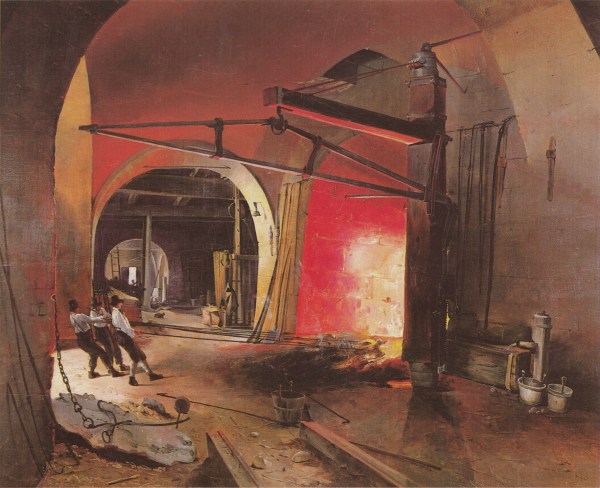
Above: Three Workers in the Iron Works. Oil on panel. Carl Geyling, Austrian (1814–1880), founder of Carl Geyling’s Erben a stained glass company.

Blog at WordPress.com.

Up ↑