Adventures in Storytelling 5

Entry 4, Carpe editorem, occide, part 3.  

Now that I’ve confirmed what we already know, that writing is work worth doing; every correction, setback, and mistake makes you a better writer. We can talk about the tricky subject of taste.

I don’t like this is a delicate situation every writer will inevitably come up against. The way it’s handled can make or break a writer’s morale. Whether it comes from a friend, a random reader, or the worst critic of all—the self. Not liking something you’ve written can be disastrous.

I began editing P1 while embarking on a new career path. Unfortunately, I would abandon this career about a year and a half later, but during this period of my life I went through long stretches when I didn’t really do any editing or any serious work on P1. I worked on short stories at this time, although I also worked on Project Paisley’s second work, P2.

A stretch of alienation, as previously mentioned in entry 3, can put a lot of distance between the work and the writer. When I finally went back to P1 I found there was more to love than I had thought.

What I also learned is that there were plenty of things I didn’t like too.

This caused an…interesting crisis.

On one hand, P1 was almost exactly what I want in a fantasy epic. Political intrigue, sword fights, romance, an interesting magic system, etcetera. The problem was that all the cool stuff was tied up with a subpar b-plot that drifted into multiple directions and needed cutting or immediate tie-in.

I wish I could explain what this crisis looked like, but the only word that comes close is despair. I was extremely sad that I failed to bring this crucial plot material into the fold. It stuck out like a loose thread. Pulling it out unraveled parts of the story I wasn’t ready to give up. Leaving it there was a testament to my poor abilities.

After another month of wallowing, I eventually worked up the courage to take a look at my draft. It was still not great. But, this time around I noticed something. Attentive to the dislike I had for certain sections, I read them as a reader would and found myself thinking; “I would have done this” or “it makes more sense this way.”

I remember that it was a Saturday, sometime in Spring, during the COVID lockdowns when I could go outside during my at-home work day and get some sun. I resolved to fix what I didn’t like.

Armed with a blue pen and sheet of white computer paper, I made myself think about my work and how to make it better. I wrote notes, I crossed things out, I made sarcastic remarks to myself. I worked.

It was about this time when I began to see the value of planning. While my “pantsing” managed to hammer out an initial draft, I realized that it was that out-of-control creative process that tangled up the good ideas with the bad ideas. Somewhere between pantsing and planning, there is a happy middle.

When I write, I find that there is a gestational period between the initial idea and the beginning of the execution of that idea. It’s been as short as one evening and as long as several years. During this gestational period, I took up a practice I call wish-listing.

Over the next several days after that initial sit down, I added more ideas to my list. It’s only now that I understand what I was doing there. I was wish-listing.  

As far as those needed edits go, I eventually settled on a plan and began to put it into action. I’ve completed the first section requiring some massive rewrites. The rest will involve re-arrangements, cuts, and most likely, rewrites.

No one wants to rewrite thousands of words, but ultimately to solve the problem I created, I had to rewrite it. In order to work on these rewrites, I set aside other works in order to focus my energy on P1.

It’s been increasingly difficult to “get in the mood” so to speak. Working a full-time job can really put a damper on the creative flow. The same happens when I spend long stretches away from my work. I have to spend a little time getting back into the characters. To get back in the groove I use a tactic similar to pre-editing (entry 3) that I call previewing.

During preview I jump back to sections before the area I want to work on. Sometimes, I read things out loud. I try to capture the rhythm and voice of the character I intend to write. Jumping ahead can also help the process. Sometimes I takes an entire Saturday to recapture the voice I want. Other times, it’s easy. Since I can only find time to write on the weekends, this gives me a very short window in which to work.

This was a source of extreme anxiety for me. I began to feel like I was giving up without the dignity of throwing in the towel. My life was consumed by my 8-5. When most people use the weekend to unwind from their work week, I felt like I was starting my work—the real work, the work I love. This made me miss out on relaxation, on the unwinding required for a healthy work-life balance.

Worse, when I did relax, I felt guilty. I felt like I was procrastinating, shirking my responsibilities.

Suddenly, spending an hour reading a novel felt like I was wasting time not working on mine. Hanging out with friends had to be cut short because I had to go home and get something out on a page. I didn’t go hiking or take a walk or do any of the things I loved doing before my full-time.

I taxed my mental health and my physical health. Sleeping issues that I had dealt with in the past suddenly reared up, worrying me more. Something was going to break, and that something was me.

To make a long story short, the break didn’t involve my writing. There are personal factors that went into the long and dark winter that was 2021. Writing was my haven, the place I could control. The only thing in the world that made sense to me. I muddled through 2021, fought my way through the spring of 2022.

It was at the height of this breakdown that I finally gave in. I had toyed with Catholicism for years by then. In April, just a few days after Easter, I caved too the only force that could soften my stubborn heart. Christ struck tinder in the ash heap of my soul and for the first time in a long time I stopped worrying.

Am I going to tell you that I no longer complete an elaborate night-time ritual in order to fend off the Sunday Scaries? No, because that would be a lie. Am I going to tell you that I’m not anxious about my writing, or work, my personal life, politics—no, because that would be a lie. But I don’t let them control me anymore. Not even my writing gets to rule my life. I have a different King now and he wants me to write because he likes stories and wants me to like them too.

During 2022, while I worked through my personal problems, I let myself enjoy writing again. I set the P1 rewrites aside and worked on a couple short stories. When I went back to P1 I fell in love with the story and found a deeper appreciation for the work that I put into P1.

I finished the largest chunk of those rewrites back in August of 2022. There’s still more work to do. But I’m taking a break from P1. This isn’t the last entry regarding P1 and Project Paisley. But it is for now.   

Ultimately, what I hope you pick up here, dear reader, is that writing is hard. It’s hard work. Don’t let anyone tell you that it’s not. The effort and preparation that goes into writing is enormous. Editing is just as effortful and time consuming as writing itself—sometimes even more so. The emotional exertion can be just as detrimental to your heart, mind, and body as the physical toll of working that shitty retail job you hate.

But just like that job you hate; you have to do the work. The key to staying even-keeled is remembering the job you love is supposed to be done because you love it. You were asked to pick up this cross because the Man we nailed to it knows you can carry it.

Writing demands work, but it should bring joy.     

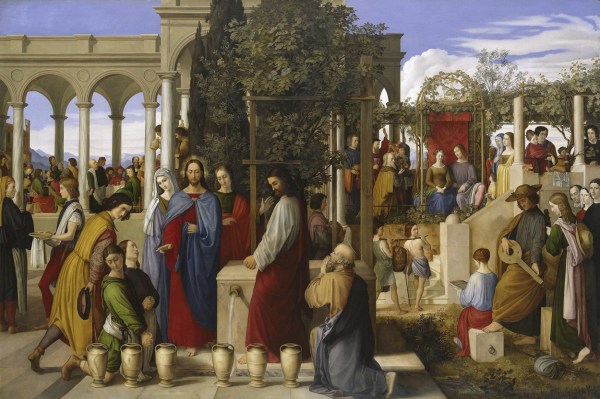
Above: The Marriage at Cana. Julius Schnorr von Carolsfeld (March 1794 – May 1872). German. Oil on Canvas. House at Hamburger Kunsthalle.

Writers Must Read…the Prince

Niccolò Machiavelli’s the Prince

Someone once told me that Machiavelli’s little treatise, the Prince, was “baby’s first political theory.” It was a lame attempt to convince me not to read it, in leu of what, I never found out. Ultimately, I’m glad I disregarded such ignorant advice.

The Prince is probably one of the most useful, practical handbooks for vicious politicians who want to get things done. That quality alone makes it worthy of a writer’s attention. 

Niccolò Machiavelli is the man of our times, and if that sounds scary to you, its because you don’t know much about Machiavelli. That’s not your fault. Cultural references to Niccolò paint him as the mastermind of tyranny. He is the eminent philosopher on cruelty; a wicked, unscrupulous, conniving historical villain whose writings helped spawn the likes of Robespierre, Stalin, and Hitler.

The English nickname for the devil, “Old Nick” is thought to derive from Niccolò. Even now, the word, Machiavellian is used to describe those who excel in the use of calculating, unprincipled tactics whether in the Boardroom, on the House Floor, or in the office. A Machiavellian man is a crafty social climber, sophisticated only so far as it helps him achieve his ambitions, maybe he’s even sociopathic?

Niccolò Machiavelli has been painted with the same broad brush that we’ve come to expect when we hear the adjective bearing his name.

But the truth is far more complicated and far more interesting. The Prince is just one small piece of the fascinating life of Niccolò Machiavelli’s life.

Niccolò, as Aristotle said of all men, was a political animal. Politics was his bread and butter, literally, it was how he paid his bills, which were always growing larger as his income grew smaller. The Prince was written as a last-ditch effort to reenter the universe of politics that he loved so much.

This effort failed so catastrophically that this stalwart defender of republican liberty became synonymous with tyranny and realpolitik.   

Born in Florence in 1469 during one of the most tumultuous eras in Western history, Machiavelli, like most of his fellow Florentines, almost seemed destined to collide with greatness. He was born during a short period (1494 to 1512) when the Medici Family were deposed and the republic re-established.   

Our history books tend to refer to the Renaissance as one enormous event making it seem as if it occurred simultaneously across all of Europe. The truth is, it began in Florence generations before it ever reached France and England, or even her nearby neighbors of Venice and Milan.

The world seemed to revolve around Florence in the 15th Century; for example, the Florin was the most trustworthy currency in Europe at the time and saw wide acceptance and commercial use.  

But most importantly, Florence was a bastion of liberty. Florence was a republic and had been a republic since the 12th century. She wasn’t perfect, because no nation is perfect, and a citizen of modernity would have much to complain about regarding her Signoria, councils, and guilds.

Not all denizens of Florence were citizens, but the chosen few who were citizens, were granted unparalleled rights and responsibilities. In Modernity we tend to believe that liberty is do what you want. In Florence, a citizen was meant to do as they ought.

I won’t bog you down with anymore 15th Century Florentine politics, but by the time Machiavelli was born, twilight was upon the Republic of Florence and its political machine was an elaborate dance of payoffs, patronage, and surrogacy.

The Medici were expelled from Florence when, Piero, the son of Lorenzo de’ Medici the Magnificent, squandered all his father’s hard work by making a bad deal with the French. The Medici were forced to flee Florence. Florence resumed its tradition of republican government.

Machiavelli held many posts during this short period of the reassembled republic. He was a diplomat, a messenger, and even started a proper citizen-lead militia for the defense of Florence which, under his command, recaptured the rebellious city of Pisa.     

But, in 1512, the Medici returned at the head of a Papal-Spanish Army and Florence crumpled. The republic was dissolved by the victors and Machiavelli was deprived of office and exiled.

A year later, Machiavelli was accused of plotting against the Medici rulers. He was seized by the government and tortured. Despite the government’s best efforts to force his arms out of their sockets in a torture method known as corda, Machiavelli never broke. If he knew who was part of the conspiracy, or even if he himself was a conspirator, he refused to say and was released a few weeks later.

He returned to his exile, and it’s hard not to assume he was a different man after that. The man who once wrote bawdy plays, Discourses on Livy (the republican version of The Prince), and corny, lewd poetry, retired to the countryside and wrote The Prince.       

“Men who are anxious to win the favor of a Prince nearly always follow the custom of presenting themselves with the possessions they value most, or with things they know especially please him; so we often see princes given horses, weapons, cloth of gold, precious stones, and similar ornaments worthy of their high position.”

[The Prince, Niccolò Machiavelli, letter from Machiavelli to Lorenzo de’ Medici]

The Prince was written to help revitalize Machiavelli’s career and help him reenter the political realm.

To an urbane Florentine like Machiavelli, exile was the worse than death. It’s very difficult to categorize exile to a modern mind. Part of what makes it so terrible is the danger that the “out there” represented to people before the invention of modern firearms, inexpensive maps, and waterproof matches.

While Machiavelli spent his exile in the genteel countryside, it was far from the wild, debauched nights he’d spent with the friends of his youth and even further from the palace intrigue of Florentine politics.   

He dedicated the Prince to Giuliano di Lorenzo de’ Medici, the third son of Lorenzo de’ Medici the Magnificent, in hopes of gaining entry to the old, but newly reestablished, halls of power.

The book would go unpublished and, presumably, unread, until after Machiavelli’s death.

During the Middle Ages and Renaissance, humanist writers were obsessed with writing books and philosophizing on “what makes a good prince.” The question became a genre of itself, known as “Mirrors for Princes” and usually focused on how a prince ought to be educated, what virtues make for a good leader, etcetera.  

Machiavelli simply took that idea to its natural conclusion, asking instead, “how does one become a prince” and “how does a prince keep his power?”

While his contemporaries wrote treatises on the best Christian virtues and behaviors to instill in a young king-in-waiting, Machiavelli’s work can be summed up easily as: be a lion, unless you must be a fox.

“So, as a prince is forced to know how to act like a beast, he must learn from the fox and the lion; because the lion is defenseless against traps and a fox is defenseless against wolves. Therefore, one must be a fox in order to recognize traps, and a lion to frighten off the wolves. Those who simply act like lions are stupid.”

[The Prince, Niccolò Machiavelli, Chapter XVIII: How princes should keep their word]

“Those who simply act like lions are stupid.” A lot of writers would do well to heed this line.

One of my least favorite tropes is the over-the-top tyrannical king who rules his people with a bloody iron fist.

Part of my problem with trope of the Tyrannical King is that it is often misused. The writer makes their Tyrant King viciously murder friend and foe alike, they surround him with sycophants and bootlicks, and never consider (beyond the needs of their protagonists and plot) how these actions might affect the ruling ability of a king.

Machiavelli has an entire chapter about those who win their power by crime. He uses an example from antiquity, Agathocles, a man who through treachery and crime, rose to become the ruler of Syracuse. Of this tyrannical king, Machiavelli said this:

“It cannot be called virtue to kill one’s fellow-citizens, betray one’s friends, be without faith, without pity, and without religion; by these methods one may indeed gain power, but not glory. For if the virtues of Agathocles in braving and overcoming perils, and his greatness of soul in supporting and surmounting obstacles be considered, one sees no reason for holding him inferior to any of the most renowned captains. Nevertheless his barbarous cruelty and inhumanity, together with his countless atrocities, do not permit of his being named among the most famous men. We cannot attribute to fortune or virtue that which he achieved without either.”

[The Prince, Niccolò Machiavelli, Chapter VIII: Those who come to power by crime]

The limp, ill-used Tyrant King is a villain, he does villainous things. He tortures little girls for fun and kicks puppies when he’s bored, his life is debauched with wine, women, and blood. He is evil, he is a tyrant and that is the extent of his character. His wickedness stems from the writer’s need to contrast the goodness of their hero with the malfeasance of their villain.  

But one moment of thought and a writer may realize that a king who lets his troops slaughter villages, rape townspeople, and burn farms will soon find his army starving. Starving solider soon turn on that king. This idiot lion, this misused trope, has the potential to be interesting, but much like the tyrant’s strategy, the story is not sustainable and it’s not interesting.

Instead, writers should heed what Machiavelli says next:

“Some may wonder how it came about that Agathocles, and others like him, could, after infinite treachery and cruelty, live secure for many years in their country and defend themselves from external enemies without being conspired against by their subjects…

I believe this arises from the cruelties being exploited well or badly. Well committed may be called those (if it is permissible to use the word well of evil) which are perpetrated once for the need of securing one’s self, and which afterwards are not persisted in, but are exchanged for measures as useful to the subjects as possible. Cruelties ill committed are those which, although at first few, increase rather than diminish with time.”

[The Prince, Niccolò Machiavelli, Chapter VIII: Those who come to power by crime]

Well-committed cruelty—what a concept! Imagine a villain who wins loyalty and love like a hero. Now there’s a story I’d love to read.

“It is to be noted, that in taking a state the conqueror must arrange to commit all his cruelties at once, so as not to have to recur to them every day, and as to be able, by not making fresh changes, to reassure people and win them over by benefiting them.”  

[The Prince, Niccolò Machiavelli, Chapter VIII: Those who come to power by crime]

The chapter concludes, warning would-be tyrants that those who fail to act decisively and craftily (like a lion or fox), should be prepared to always keep a knife in their hands at the ready, because someone will always be trying to shove one into their back.

“…a prince must live with his subjects in such a way that no accident of good or evil fortune can deflect him from his course…”

[The Prince, Niccolò Machiavelli, Chapter VIII: Those who come to power by crime]

Eyes on the prize. Don’t let innate cruelty get in the way of the goal. If you want to write a believable, canny, terrifying Tyrant King, I suggest you take Machiavelli’s advice.

Most of the Prince is like this, salacious advice for how to be cruel without being too cruel. But that’s the easy was to read it. There are some historians and philosophers, like Erica Benner in her book Be Like the Fox, who believes that Machiavelli’s intentions with the Prince were far more noble and far more underhanded than we think.

What if Machiavelli was writing a book to tell the liberty-minded what to expect and how to treat tyrants? What if Machiavelli’s Prince is actually a handbook for heroes?

I’ll admit that the evidence is found more in the life and other writing of Machiavelli, but within the Prince there are some interesting passages regarding republican government and how an elected Prince can hold onto the power given him by the people.

“A man who becomes prince by favor of the people find himself standing alone, and he has near him either no one or very few not prepared to take orders…

The people are more honest in their intentions than the nobles are, because the latter want to oppress the people, whereas they only want not to be oppressed…

…it is necessary for a prince to have the friendship of the people; otherwise he has no remedy in times of adversity.”     

[The Prince, Niccolò Machiavelli, Chapter IX: The constitutional principality]

Later on, Machiavelli goes on to encourage princes to start citizen-militias! Common wisdom states that a tyrant who arms his civilians will soon find those arms used against him.

Why would a man believed to be as evil as Machiavelli, a supporter of cruel tyrants, advise those tyrants that you can’t have good laws without good arms and that with good arms, good laws follow?

Whether you’re writing heroes or villains, Machiavelli’s little book on Princedom is excellent primer on practical politics. Your tyrants will become savvy, cruel, and clever. Your heroes will be wise, cunning, and vicious. You’ll write lions who easily transform into foxes.

Niccolò Machiavelli’s the Prince is an absolute must read for writers. It’s short, it’s punchy, and its one of my favorite books by one of my favorite historical figures.

I like the Penguin Classics version, translated by George Bull. It’s very readable, dispenses with some of the clunky phrasing, and includes historical notes in the back. However, it is also available from the University of Baltimore for free here. I used both translations for the quotes above.

[More Writers Must Read]

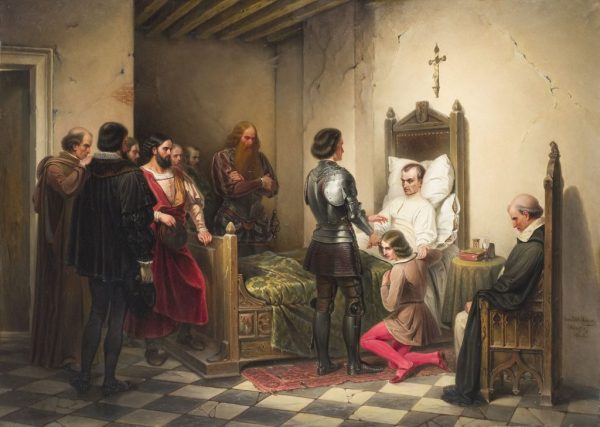
Above: Morte di Niccolò Machiavelli. Cesare Felice Giorgio Dell’Acqua (22 July 1821 – 16 February 1905), Italian Painter. Oil on canvas. Housed at the Revoltella Museum, Trieste, Italy.
Adventures in Storytelling: Interview w/ Richard of IronAge Media

For this entry in Adventures in Storytelling, I’m doing something a little different. Instead of focusing on myself and my journey, I want to turn our attention onto a less well-known part of Storytelling, namely, publishing.

Richard Wilson is the founder of IronAge Media. Recently, his new magazine ANVIL: An IronAge Magazine was crowdfunded and released in July of 2023. In the interest of full disclosure, I was a backer of issue 1 and, my short story, Afflicted: Nourritures les Ver, will be published in ANVIL issue 2 which will be released this coming October. Although fundraising has ended, you can still purchase copies “on demand” via Indigogo.

The point of this series has always been to share tips, tricks, and struggles in the same way someone might journal a travel diary. Richard is on the bleeding edge of a new era of literary endeavor and I think we can learn a lot from his side of the adventure.

Independent publishing has become the norm and pulp style magazines are seeing a resurgence in online circles. While I’m not sure that the traditional publication industry is entirely down for the count, its certainly exciting to see new blood in the literary world.

I’d like to thank Richard and everyone at IronAge Media for consenting to this interview. Working with this team has been an awesome experience. I’ve learned so much from the interactions I’ve had with Richard.    

Let’s get into it.

The Interview

Tell me a little about yourself. Are you a writer, artist, or is Anvil Magazine your first creative endeavor?

Well I’m certainly not a writer, and although I have done plenty of painting and sketching in the past I wouldn’t identify as an artist. Prior to ANVIL I had worked on a couple of personal projects that would qualify as creative endeavors, but all of them were digital and coding focused. A few small video games and mods, some coding projects, and even a metaverse for a bit. However, ANVIL was the first thing I’ve personally made a serious effort to bring to market.


Who are your favorite writers or books? Favorite video games, comics? What type of media inspires you?  

That’s a big question. Early in life the Dinotopia books by James Gurney were particularly influential in my love of reading and I believe they hold up as beautiful artistic works as an adult. The original Dune series, The Book of the New Sun, and Zen and the Art of Motorcycle Maintenance were all works that I chewed on in my high school years, in addition to the usual high school assigned reading torment and more casual fun of older scifi.


For readers who might not be familiar, in your own words, what is the Iron Age? 

I’ll steal from myself in the first issue of ANVIL: The Iron Age is a decentralized movement of independent creators, across genres and mediums, circumventing traditional producers to create the kinds of entertainment that they want to see.


Do you think there’s a real hunger for original IPs?

I think there’s a hunger for something different. Before mega-corporations started buying up IPs like startup competitors, I think there was a much broader range of ‘taste’ within those legacy franchises and people didn’t feel any need to look around. Now if you want something aside from boardroom, corporate approved mediocrity wearing your childhood franchises like a skinsuit, you really have to look to new, original IPs.


What is the philosophy or guiding principle of IronAge Media?

Become the culture! Pragmatically that means bootstrapping the new media ecosystem as best as I can.


What made you want to start a magazine? Was it a spur of the moment decision or was it something you had always dreamed of? I know you have a talented team working with you, were you friends before IronAge Media, or did you just come together as a group of like-minded people? (i.e. how did this team get assembled?)

It was relatively spur of the moment. I hadn’t considered starting a magazine in January, but I was looking at actionable ways to achieve some broader goals I’d been thinking about. As for the team, Daniel and Jake were people I met early in the process of growing IronAge Media, and it was just a matter of looking at people who I knew I’d work well with and also had the skill sets I needed.


How did you settle on the name, Anvil? Is it symbolic or just cool?

Both. It was the first thing that popped in my mind when I was thinking about the magazine. Symbolically and thematically on brand for the Iron Age. I agonized over a lot of other names when I discovered an old communist rag was called ‘The Anvil’ back a hundred years ago, but I ultimately decided I’d rather go with my instincts and re-appropriate the term.


The first issue of Anvil Magazine far surpassed its original monetary goal, how does that feel? Were you surprised or did you know there was a desire for the kind of stories that Anvil promises?

It was immensely humbling more than anything else. I wasn’t necessarily surprised that people wanted it, I felt confident in the product, but I was surprised that I was able to get enough attention to communicate what it was to people and that those people were willing to trust me to deliver on that message.


What was the hardest part of getting IronAge Media and Anvil magazine off the ground? What was the most fun? And what was the most rewarding?

For me the greatest difficulty of IAM has been articles. I’m not a writer by practice, so writing a review or article for the site is far more time consuming than it should be, which is why I’m so appreciative of people who send in content. As for the most fun I’d definitely say the image prompts. Those were a decision I made on a whim and have proven to be a major part of the community building of IAM, and in many ways lead directly to ANVIL. Regarding ANVIL, by far the most difficult part of it has been fulfillment so far. I know a lot of people see the big number on the campaign and think it translates to big dollars for me, but when it comes to hourly rate, I definitely screwed myself over. The success of ANVIL of course has been an amazing and at times surreal experience that opened up a lot more options for what else I’d like to do. Certainly seeing authors happy to be published and readers excited about the magazine has been a very rewarding.


What are your future hopes for Iron Age Media? Do you have any plans to see IronAge Media branch out beyond Anvil Magazine? Do you see Anvil as a herald of a new age in media?

Expect to see the IAM site rebuilt soon to give users a more modern, slick feel. The overall brand is already moving into some new projects. One which will be public later this year, another that has a much longer timeline.

My goal for ANVIL has always been to create a place for consumers to find enjoyable works by new authors and artists they will love. I find that there’s a lot of (justified) complaining about consumer habits in the indie world, but I hope a brand like ANVIL can work as a stepping stone to draw in new buyers who know they aren’t happy, and just aren’t sure where to find that originality they’ve been missing.


I always end my entries of Adventures in Storytelling with a lesson I learned or a piece of advice I found helpful. Are there any lessons that launching Iron Age Media and ANVIL1 taught you?

Be a rational optimist and, the fastest way to learn if something is viable is to do it. There are a million failed websites and tens of thousands of failed magazines. If I had been negative about this I never would have tried. Instead I took a risk, put in the work, alongside other hard working folks, and now I can say that indie creators have made money and gained fans thanks to the project.


Do you have any advice for writers, artists, publishers?  

The potential market for new media is huge. Focus on your work and getting that work in front of buyers. Another person succeeding doesn’t take money out of your pocket, our current, globally networked economy is just too big for that. Doesn’t mean seeing crap succeeding is any less frustrating, but don’t let it drive you to harm your own goals.


Any final thoughts to share? Where can my readers find you?

Thank you for the opportunity to publish Afflicted! My wife and myself both enjoyed the character of Amélia Mitre and the interesting world you’ve placed her in. Your readers can find me at IronAge.Media and follow the links there to my various socials. I stream on Sunday evenings if you’d like to chat with me as I do something relaxing.


Again, I want to offer my heartfelt thanks to Richard and everyone at IronAge Media. Working with IronAge has been a awesome and humbling experience. It’s my hope that we work together in the future.

To sum up Richard’s great advice, remember:

Be a rational optimist. The fastest way to learn if something is possible, is to do it. Drop the negativity, take a risk, put in the work, and surround yourself with a cadre of other hardworking folk.

The potential market is huge, other people succeeding isn’t taking success from you, even if it hurts to see mediocre work rise to the top.

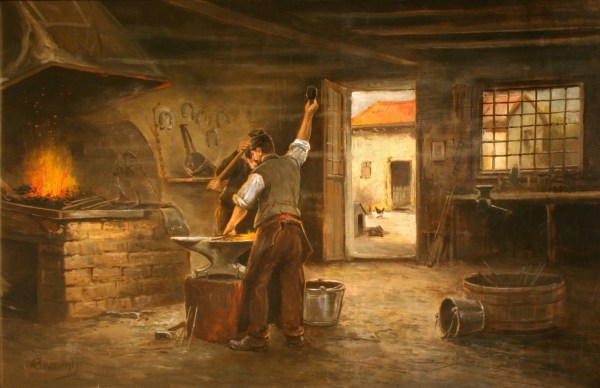
Above: The Blacksmith’s Studio. Albert Brument, French, 1883-1901. Oil on canvas. Housed in a Private Collection.

Writer’s Review: How to Write a Novel Using the Snowflake Method

If you’re familiar with my Adventures in Storytelling series, you’ll know that I’ve mentioned my preferred method of outlining. I started writing as a hardcore organic or “pantser” type. And while that method worked for me, I’d often find myself quickly losing control of the process and flying off into all sorts of interesting directions. In order to remedy this, I turned to a soft form of outlining I call wish-listing, where I jot down major plot points and connect and collate them as needed.

Naturally, I was intrigued by the premise of the Snowflake Method. The book promises a Goldilocks method, something in between plotter and pantser.

How to Write a Novel Using the Snowflake Method by Randy Ingermanson  

Many how-to-write books have little gimmicks to interest the reader, but I don’t think I’ve ever read a how-to with such a cute one. Mr. Ingermanson writes the book as a book, as in, it has a plot, characters, stakes, conflict, etc.

It’s cute and the charm managed to keep me reading. That said, it’s also short. Any longer than 160 pages and I’m pretty sure I would have gotten tired of it.

The way Mr. Ingermanson relays his information is through the plot and characters of the story.

Goldilocks is our protagonist. She has a dream: to become a best-selling author. The problem is, she doesn’t know where to start when it comes to writing a book. Goldilocks signs up for a series of writer’s workshops, hosted by the Three Bears, the eponymous Papa, Mama, and Baby.

Goldilocks quickly discovers that Papa’s method of plotting is far too rigid; Mama’s organic method is too open; but Baby Bear seems to be onto something with his method, one that splits the difference between his parents.

This method is the Snowflake Method, it is made up of ten steps and its underlining goal appears to be limiting the number of drafts and corrections without dulling the edge of the creative process.

The largest benefit to the rigid outline is its ability to see over the horizon and catch mistakes before they happen. While the biggest benefit to the organic method is the free flow of creative energy that gets words on a page. As someone who struggles with both methods, you can see why I find premise of the Snowflake Method interesting.

To see how it works, I actually took the time to write out a snowflake for a novella I’ve been planning. I won’t be listing any details here, as the snowflake is really designed for the writer, sharing it would give too much away.  

The Method consists of 10 steps:

  1. One sentence summary
  2. One paragraph summary
  3. Write a summary sheet for each character
  4. One page synopsis
  5. Write a character synopsis for each character
  6. Four-page synopsis
  7. Write a character bible
  8. List all the scenes
  9. Write a plan for each scene
  10.  Write your novel

Like most how-to-write guides, Ingermanson’s base is the Three-Act Structure. He also refers to it as the Three-Disaster Structure. His idea is that readers want three things: excitement, decision, and new directions—a disaster. Some might call this a plot point, or a beat. But it’s the incident that forces the character into confrontation with the plot, demanding they answer, and move the story forward.

So, let’s look at these steps.

One Sentence Summary

Fairly self-explanatory. Ingermanson states that it should “give [the reader] a taste of the story in twenty-five words or less.” (pg. 19) I actually call this a “mission statement” and use it as a statement of intent more for myself than anyone else, but I’ve been known to whip it out when a friend or family member asks me what I’m “writing about.” 

It’s a solid idea that I would recommend to the novice and expert alike. You want to be able to tell your friends and family what you’re writing, most importantly you want to be able to tell yourself what you’re writing.

One Paragraph Summary    

Again, another self-explanatory step. Each of Ingermanson’s steps build off the previous the steps, which is very intuitive. For the novice, this semi-solid structure may provide an example of what a writer needs to discern naturally.

The idea of the one paragraph summary is that you take the one sentence summary and expand it into five sentences, paying special attention to characters, setting, the disasters. It should hit all the story beats of each act and include your conclusion. Ingermanson doesn’t want you to bog yourself down with how you get to your conclusion or how characters respond to disaster so much as he wants you to draw the most basic of lines between persons, places, and events.  

Summary Sheet for Characters

For those familiar with my Adventures in Storytelling series, you’ll know that I’ve mentioned a character chart. I typically only make them for major characters and they not absolute, meaning, the character I chart might be completely different in the finished product.

The idea behind the chart is to throw every idea I have for that character down and I then draw lines connecting each piece of personality or backstory to each other. What I like to think I’m doing it making cause-and-effect clear to myself. Why is Character A like this? How did this event effect Character A?

Ingermanson’s character sheet is far from my blasé charts.

While Ingermanson makes it clear that this step isn’t necessary for every character, or that not every step within this step is needed for each character, this is where some of the tedium began to set in for me.

Ingermanson’s right, of course. There’s no need to produce a sheet for every character. As with my charts, it needs to be done for your main characters. You need to know your characters names, their values (“nothing is more important than X…”); their ambition (abstract desire); their goal (achievable); their conflict; their epiphany; a one sentence summary of their story; and a one paragraph summary of their life both in and out of the story.

As I said above, I struggled through this step. I worked out my main characters, wrote down some basic information for my minor characters, and moved on to the next step.

One Page Synopsis  

Unlike the one paragraph summary, the one-page synopsis might be useful for the marketing of a book. Editors and agents are busy people, they need a synopsis to hook them to make sure their time is used wisely.

Ingermanson suggest you take your one paragraph summary and turn each sentence of it into a paragraph.

For me, I found that easier said than done. But I understand Ingermanson’s point. It’s something that probably should be done. That said, I’ve done this only after I’ve finished a work.

I see the point; however, it does take that thin single paragraph and broaden the lines to build a skeleton which can be incarnated in the four-page synopsis.

Character Synopsis     

I’ll be honest, it was about here that I began to think that this method wasn’t really for me. I tried to convince myself that I’m just being averse to hard work, but that’s not being fair to all the hard work I’ve done in writing.

I determined that I would only write a synopsis for my two POV characters. Honestly, my conclusion was that the one paragraph summary I did of my characters in step 3 was all I needed.

Now, this might be because I’ve been brewing this novella for about a year now. It could also be that I don’t intend it to be a full novel. Frankly, this step felt “hand-holdy” if you catch my meaning.

Ingermanson is incredibly clear about how you don’t have to do all the steps of the Snowflake Method, and I appreciate that sentiment because this step isn’t for me. I don’t see its use other than to help you feel like you’re making some kind of progress.

Four Page Synopsis   

I skipped this step. I knew if I forced myself to write a four-page synopsis for my work, it would cause me to resent the Snowflake Method.

But I understand why he suggests it. Ingermanson is taking the rigid outline and hiding it in paragraphs instead of bullet points. He wants the writer to have their story idea locked down so that they know where they start and where they finish.  

Character Bible

Okay, so I was a little harsh on those last two steps. This step is a lot more useful to me. That said, it’s also something I would collapse into the character summaries of step 3.

Ingermanson’s character bible is meant to be the sheet that helps a writer keep track of the nitty-gritty detail of character, i.e., hair and eye color, age, height, DOB, favorite food, the way they take their tea, favorite movie/book, etc…

Not all these details are going to be relevant, although you should always make note of the way certain characters look, especially if they have certain defining features like scars or hair color. A character bible is the place to put that information.   

List all the Scenes

As Ingermanson says, the scene is the basic building block of any story. Each scene ought to play out the three-act structure in miniature, with a conflict and a resolution.

I didn’t do this or step 9. Why? Because I wrote a full page and half outline in step 4. And if I had completed step 6, what purpose would step 8 and 9 serve? I’ve already written the outline.    

In Chapter 8, Goldilocks realizes the crux of the method:

“The Snowflake Method was forcing her to think about things she hadn’t really worked out yet, but she could see that it was filling in the gaps in her story nicely. Every time Baby Bear asked a question, she could easily make up something on the spot to answer it.”

How to write a Novel using the Snowflake Method, Randy Ingermanson Chapter 8, page 69

Final Thoughts

The Snowflake Method is an ordering of the creative process. Its goal is to take the rigid outline and soften it with organic-looking paragraphs; Ingermanson cuts the hard work with fun work, and even gives approximate times you should give yourself to complete a task. He alternates the writer between character development and plot development to keep the writer from going lopsided in any direction.

Ultimately, I believe the Snowflake Method is a training tool. This book is not for people who already know how to write. This is for people who have no idea where to start, what to do, or where to finish. Honestly, I should have figured that out from the beginning. Goldilocks is a complete novice.

This feels like the kind of book a writer can use to get started. But after a while, you should start intuiting some of this process. Writing is an organic endeavor; you should always be getting better. Or as I like to say, where you start isn’t where you finish.

At some point, I think any writer who uses this method will eventually let it fall by the wayside as they develop their own writing tools. This is great for the novice. If you have absolutely no idea where to start, start here.  

Adventures in Storytelling 4

Entry 4, Carpe editorem, occide…continued.   

In my last entry I outlined four points that needed addressing in P1. I left off in the middle of my second round of editing and highlighted that I use my own tools to help identify my strengths and weaknesses. I made a list and focused on the nuts and bolts, things like -ly words and passive voice.

I want highlight one of the other two issues identified: lore/worldbuilding mistakes and inconsistencies; and, there are some things I simply don’t like.

I’m going to start with the first—lore/worldbuilding—because it’s easier to answer.

There is no end to the discourse regarding “worldbuilding.” There are endless books and articles on the topic, various charts and step-by-step guides on how to “build unique and imaginative places.” And that’s great, sometimes people need a guide.

Once you’ve come to understand the need for worldbuilding and mastered the concepts, your next step is to debate endlessly about when and where to use it, what qualifies as worldbuilding, and when its really just an infodump?

I’m not going to bore you with a lengthy discourse. I believe thoroughly that if you are writing, you are worldbuilding. Every sentence is an opportunity to build and deepen the unique flavor and culture of a world. It should be done in every kind of story, regardless if the setting is New York City or some far-flung elfland.

The danger with worldbuilding lies in the fact that sometimes it is an infodump.

In P1, I found that I didn’t really have a problem with infodumping. I killed that problem in one of my first drafts, working and reworking paragraphs and conversations to move information in a smoother way. I classified lore and worldbuilding information into two categories: absolutely necessary, and trivia.

Lore that is absolutely necessary is lore that is needed in order for the plot and the character’s actions to make sense. It is necessary to suspend a reader’s belief. For example, P1’s co-protagonist, R, has a background before meeting protagonist E. R’s background includes connections to an organization with an extensive history. That history must be told for R’s actions to make sense. Without that lore, R’s movements and thoughts become schizophrenic—unmoored from the reality of the story.

Lore classified as trivia is the nice little accoutrements that make a story unique, pretty, realistic. It’s the way someone styles hair or takes their tea. It’s how the road shunts to the left or how the flowers were blooming late in the mild spring. Fine details, those little things whose inclusion adds color but absence results in no serious loss to the central action of the story.

The issue was just how much lore I had.

If you recall from Adventures in Storytelling 1, I started P1 because a sense of overwhelming vastness that plagued my first abortive attempts at putting Project Paisley on paper. I knew I had something; I just wasn’t sure where to go with it. P1 was started to help me congeal—so to speak—my world.

In that, I would say I was successful. I believe the world I’ve created is colorful and realistic. Is it perfect? Of course not! But I think I have a world that is interesting and engaging. It’s made up of several counties, each with their own unique cultures.

That said, I didn’t start out that way. While writing, I spent a lot of time thinking about P1’s setting.

The main setting of P1 is an island-bound city, at the risk of oversharing, when thinking about this city I had two real cities in mind—London and Paris. I wanted to capture the things I liked about both cities. I thought deeply about how the ocean effects a city, it’s culture, government, etc. What considerations does an island-bound nation have to make regarding security? How does the sea change their food culture? What kind of jobs would their poor city-folk work? What of the prosperous?

In the end, I found myself asking, what would Paris be like if was actually on the coast of Normandy? What about London without the Thames?

My first draft was missing many of the key elements that I feel make this setting (as it’s written now) interesting. While I muddled through various technical problems, I found myself filling in the blank corners. Ordinary English idioms were rewritten to better relay the culture of a seafaring people, food became fish heavy, the peasantry became laborers and fishermen. I began to add these little details.

And that was just a single city. The religion of this world was terribly atrophied. I used a placeholder name for the main deity until a better name struck me in the middle of a slow work day. That bit of inspiration was just pure luck, the rest I had to force myself to sit down and think about.

When I began writing P1, I already had a small booklet that I jotted ideas in. It was in no way comprehensive, but it was helpful and allowed me to keep track of my thoughts.  

I’d written several notes about the religion of a particular civilization that acts as the “national antagonist” if that makes sense. This nation is in a strained relationship with the other nations. They’re less an actual threat and more a looming, invisible darkness that hangs over the characters like a Sword of Damocles.

With them, I had to ask myself, how weird am I willing to be? How strange and foreign do I go? I wanted to create a religion that would repulse all modern sensibilities. Something in the way of a mystery cult with elements of ancient fertility cults. I confided in some friends and the answer I got back is the same advice I would give to any writer. Be weird. Write what you want. Weird is where the fun is.

There is only one way to solve lore and worldbuilding inconsistencies. If its trivial, you can drop it. If it’s necessary, you alter it. Its perfectly possible for you to like the mistake more than the original idea. I’ve changed things to better match up with the mistake I made.

But, the more you have, the higher the chance for error. As I read through my second or third draft, I realized that my timeline was, well, fucked. I couldn’t keep my pacing tight. Things were moving either too quickly to be believable, or too slowly. Fixing this is easier said than done. I haven’t completely fixed it.

Before my most recent draft I sat down and did two things.

First, I worked out a primitive timeline. I went event by event and found that a perceptive reader would quickly take note of the awkwardness of the pacing. Conflict was happening so frequently that despite my clear delineation of day and night, it didn’t feel like there was enough time between problem and resolution.

Now, of course, piling catastrophe on catastrophe is part of being a writer. The action happens in between conflict and resolution. Because my story has a high element of political chaos, it was necessary for the conflicts to coalesce, or the solution to become a problem later in the plot. But I couldn’t make the pacing feel natural. I had to sit down and write it out, event by event, piece by piece, until I understood exactly what I was looking at.

I remain uncomfortable with my current timeline; I am working on fixing the pacing.

The second thing I did was go through each chapter and take out everything I could find that was lore related. I placed it all in a master document. This list has become an augmentation to my original booklet. I refer to it as needed. Now, anything inconsistent or repeated is glaringly obvious. By listing each piece of lore/worldbuilding with the chapter it was found in, I am now able to refer and correct.

You’ll note that these aren’t really solutions. They’re more like guides. The tasks I’ve made for myself are monumental and they cannot be solved in a few short sessions. As I write this entry, I’m actively in the middle of these corrections. I’m not foolish enough to think that I can work a perfect draft. Eventually, I will have to give in and let the story escape.

It’s hard to pinpoint a lesson when you’re actively attempting to fix something. The only thing I could offer my past self is this:

Writing is work, but a good story deserves your attention. Even if you can only work small pieces at a time, keep chipping away. Every correction, every setback, every mistake makes you a better writer.

Above: a view from the Paris Catacombs. Consecrated in 1786, the Catacombs are the final resting place of countless Parisian dead. May the souls of the faithfully departed, through the mercy of God, rest in peace.

Blog at WordPress.com.

Up ↑