Dragon Age the Veilguard: I waited ten years for this?

I love the Dragon Age games—I own all the novels, comics, and the cookbook. I am a sucker for this series. I will defend DA2 out of loyalty. I’ve gotten thousands of hours of enjoyment out of the Dragon Age games and I will get thousands more in the future. 

In preparation for Veilgaurd, I replayed Origins and 2. I listened to the audiobooks. I reread the comics. I also imposed a content embargo, meaning I didn’t watch or read anything about Veilgaurd and made the decision to go in blind.

Milquetoast, Dull, Tedious, and other Adjectives

Dragon Age 2 catches a lot of flak for “not being an RPG.”

Well, Dragon Age: The Veilguard, saw that and said “hold my lyrium potion.” Or at least it would, if Veilguard had any lyrium potions.

Much like the aforementioned lyrium potions, Veilguard is missing something. The game is polished, pretty to look at, but every time I boot up the game, I leave it feeling intensely unsatisfied, like I’m playing a spin-off and not the actual sequel to Dragon Age Inquisition.

Trying to put words to what’s missing is a staggering challenge, mostly because there are just so many words that qualify.

To put it bluntly, Veilguard commits the greatest gaming sin: it’s really fucking boring. 

The game feels cold. Its charmless. Its tedious. The combat is terrible. Thedas feels empty. The environments are pretty, but there’s nothing interesting in them. The characters have vague, almost non-existent motivations. There’s not a single memorable score. Not a single memorable character interaction, villain, or NPC. The companions are uninteresting. There is a general, intense, noticeable lack of tension. Edgeless, clinical, sanitized, Disney-esqe.

Veilgaurd left me asking, with great disappointment: I waited ten years for this?  

Would you like to gather your party and venture forth?

For some unidentifiable reason, BioWare made the choice to overhaul Dragon Age’s combat system, turning it into something more akin to “baby’s first souls-like.” It’s toothless and dull, requiring little beyond button mashing. The game helpfully [read: hand-holdy] reminds you whenever your team can complete a combo.

Part of the combat issue, I believe, stems from the collapse of the class system. Picking a class in Veilguard seems to be wildly irrelevant.

Mage class is favorite class in DA. I enjoy controlling the battlefield from a safe distance, setting up elemental based traps, containing the fight, while using my warrior companions to tank, and my rogue to lay on damage—this is the typical set up for most companion-based RPGs.  

Veilguard has done away with that. You can only select two companions for your party, which doesn’t seem like an issue in and of itself until you realize that your companions’ abilities are locked behind cooldowns (think Mass Effect).

This means, if you play a mage and you want to draw enemy damage away from you, you must bring Davrin. He is the only companion who can taunt. If you use taunt, you can’t use any of Davrin’s other abilities until taunt completes its cooldown, effectively locking him out of the fight.

Oh, and taunt stops working the moment you strike a target.

When playing as a mage, you spend most of each combat encounter running away because the enemies are always aggroed to you.

The enemies don’t really target your companions, begging the question: why even have companions?

The companions don’t have health bars, they never go down, they teleport to targets only on command, and the player can clip right through them.

Sometimes, I forget the companions are even there, helpfully, the game has them shout out “I’m ready!” “Snipers!” “They have us at range!” to remind me that I’m being haunted by the ghosts of BioWare Past.

As far as I can tell, the companions basic attacks do very little—if any—damage. Rarely do the companions finish off a fight. As the player, I always strike the first blow, and the final, on each and every enemy.

Although simple to understand and even master, the combat system is tedious. You bring two companions who can set up triggers and detonations for high-damage combos—bonus if you also have abilities that trigger and detonate.

The game grinds to a halt while I slog my way through another combat encounter filled with copy-paste enemies that all feel and fight the same. Fighting Qunari feels like fighting darkspawn feels like fighting Ventori feels like fighting demons. 

Because the enemies are all the same, there’s no need to change your strategy. Bring the two companions that earns you the “Triple Threat” bonus and then spam those abilities whenever available one enemy at a time. There’s no reason to try and attack multiple enemies at once, each is a sponge. You’re better off focusing on a single target and trying to subtract, one by one, the enemies attacking you.

Just to reiterate—attacking you. The enemies don’t really attack your companions. They’re ghosts. Insubstantial. They don’t even stand in the background of cut scenes.  

BioWare has created some of the best companion characters that I know of. Many of them have extremely well-written character arcs, backgrounds, and compelling romances. Garrus from Mass Effect and Alistair from Dragon Age Origins come to mind.

Romance has become a big part of what sets BioWare games apart, although, I think it can be argued that romance has become too much a part of BioWare games. But there is something fun and rewarding about connecting with an interesting character on deeper level, role-playing as their lover, having quiet moments of tenderness with them.

Unfortunately, Veilguard suffers from the same problem that plagued Dragon Age 2. Because your companions are all “pansexual” the friendship feels like romance and romance feels like friendship.

There’s no romantic tension, or there’s an inappropriate underlying romantic tension. Its off-putting and awkward.  

It’s the worst of Dragon Age 2’s companions mixed with the worst of Mass Effect Andromeda’s companions. Its lazy writing, it’s unrealistic, its uninteresting.

Never have I played a game with such a roster of milquetoast characters. They are unsubstantial, analogous, hardly even characters. More like an arbitrary addition, grudgingly there because the fandom simply expects them to be.

Not a single companion says anything interesting. Not a one challenges me in a meaningful way or allows me to challenge them. We are like the imaginary characters in a HR Sexual Harassment training course. Mind-numbingly agreeable, belonging only to the dull imaginations of a Human Resource Manager.  

Not one character has a defining moment—and why would they? I do all the work, even in their own personal quests.

“I don’t work for the Inquisition.”

For the life of me, I cannot figure out why Rook is involved in the hunt for Solas.

Varric hired me, or I’m on loan from the Lords of Fortune—I genuinely do not know my character’s personal motivations.

There are no personal stakes for Rook, outside of a vague “the world is ending” feeling. You even tell the Inquisitor, the person sworn to stop Solas, that you “don’t work for the Inquisition.”

So why is Rook here? What is the inciting incident that brought Rook to work with Varric in the first place, especially if it’s not because they’re an Agent of the Inquisition?

The Hero of Ferelden was conscripted. Hawke was self-made. The Inquisitor was a victim of fate. Rook is… here?

To illustrate my point, one of your companions, Bellara, asks Rook why they’re “doing all this.” I had three response options: “Someone has too;” “Redemption, I guess;” and, “I don’t know.”

And that just really sums up Veilguard in its entirety. Rook doesn’t know why they’re here, and neither do I.

Veilgaurd doesn’t allow you to craft Rook beyond cosmetics, you can pick their sex, their pronouns, their scars, even add cataracts. But if you’re looking to create an interesting role playing experience, you’re out of luck.

Every response Rook has in every interaction is a slightly different shade of agreeable. There is no room for conflict between you and your companions, no place to disagree, even slightly, when a companion is out of line.

Rook is edgeless, an ineffective middle manager trying desperately to avoid an employee complaint.

Part of my defense of Dragon Age 2 is that you can read the ambition between the lines. Everything about DA2 falls short, but none of it feels shallow, none of it reads like a mass-appeal Pixar flick.

DA2’s serial killer arc doesn’t cinch it, but its implication are brutal; the blood magic that infects Kirkwall is clearly influencing the city, but you’re suspicions are never quite satisfied; Mages are suffering, but so are the Templars, and the game doesn’t do enough to show the player how mutual suffering builds mutual suspicion and mutual hatred.

But at least DA2 felt like a rowdy band of miscreants hunting up trouble, causing problems for themselves and others, sometimes, even without remorse.  

Veilguard’s quests are fairly cut and dry. They are complete, they provide further explanations of the lore, they confirm suspicions I’ve had since DA2, some of them are even interesting in the moment, yet I can barely remember them.

The whole game feels shallow, cold, unserious.   

It gets worse.

As I completed the game and marinated on my thoughts, one thing became shockingly clear to me.

Everything about Veilguard feels envious and resentful.

At the beginning of the game, you are able to design you Inquisitor and it asks a couple questions about your previous game state. My favorite Inquisitor is a female, human mage, who romanced Blackwall. The background questions don’t even differentiate between the classes of your Inquisitor, despite the fact that being a Mage Inquisitor should have deep implications for the end of the Mage-Templar War.

But that war never gets mentioned.

It gets worse—eventually, you get a letter from the Inquisitor that tells you how Southern Thedas is faring amidst the blight and you learn that Denerim and Redcliffe have been destroyed, Kirkwall has evacuated and ruined. Skyhold is barely holding on. Orlais is fighting Venitori and not answering any of the Inquisitor’s letters.

My heart sunk when I read that Denerim and Redcliffe were destroyed because those are places I care about.

As the Warden, I fought to put Alistair on the throne, to save Redcliffe from the Undead. As Hawke, I put time into cleaning up Kirkwall’s crime-riddled streets. As the Inquisitor, I traveled from Ferelden to Orlais closing rifts, stopping demons, and Red Templars.

Veilguard does not mention any events from the previous games.

Hawke’s name is never stated, despite that Hawke is Varric’s best friend. The last thing we heard of the Warden is that they were at Weisshaupt, yet, the Hero of Ferelden is never mentioned. The Divine is never mentioned. No one discusses the Circles or Templars or the fallout from their war. The Inquisitor, who, at the end of the Trespasser DLC, swore to save or stop Solas has the force of presence of a potato.    

The continuity of Dragon Age is gone, destroyed. Shoved aside.

It gets worse—the “secret” ending offers us a glimpse of what BioWare has “planned” for the next entry.

A shadowy organization Inquisition players will immediately recognize as the Executors, have been the dark puppet masters all along. They convinced the Magisters to enter the Fade, they guided Loghain into betraying Ferelden, they whispered to Bartrand about the Idol, they aided Corypheus.

Loghain didn’t come to the conclusion that he must kill Calian in order to save Ferelden from the Orlesian’s. He was manipulated into his actions.

The red lyrium didn’t corrupt and amplify Bartrand’s innate greed—the Executor’s did!

The Inquisitor wasn’t at the wrong place at the wrong time, they, the Divine, and Corypheus were all victims of shadowy machinations!

A lot is said about the hunt for the “modern” audience and the plundering of beloved franchises. I said above that Veilguard feels shallow, but perhaps it’s better to say that its hollow. Like something emptied out of its soul.

Veilguard doesn’t feel so much like soft reboot as it does a message of resentment and envy.

There are two explanations for this: the writers at BioWare are too cowardly to take a shot at creating a different franchise, or the writers at BioWare resoundingly resent their predecessors.

Neither explanation is nice, neither is how I want to feel; but cowardice can be forgiven. Resenting the story, resenting the choices, resenting the players—that’s not something that’ll induce me to give them another shot.

Conclusion

Enough digital ink has been spilled regarding wokeness and Dragon Age and I have no intention to add to it, other than to note that “wokeness” is an excuse. It’s a crutch used by both sides to obfuscate legitimate criticism.

Veilguard has more problems than an uncomfortable discourse about identity.

Veilguard is poorly written, the combat is unfun, and the story is disjointed and hollow, its characters are limp and insubstantial, it had none of the charm I associate with Thedas, it utterly disregards the former entries and hopes you don’t notice—trust me, you’ll notice.

To paraphrase G.K. Chesterton: a good story tells us the truth about its hero. A bad story tells us the truth about its writer.

The truth that Veilguard tells me about its writers is unbelievably disheartening.

I don’t recommend Veilguard, not even for hardcore Dragon Age fans like me.

Things I liked

There’s actually a reason why dragons need to be hunted and slain.

Manfred.

Complaints I couldn’t include above

The HUD is terrible. The menus system is clunky.

The enemies are just copy-paste reskins of each other. They all fight the same, have the same abilities. There is no variety of peril.

Classic enemy types have been redesigned. Enemies are indistinct from each other. The darkspawn are cartoony and visually bland.

There’s a surprising lack of grim-dark in my grim-dark fantasy game. Tevinter has been hyped up as the evil empire and yet it has zero implications for the plot and you wouldn’t even know they practice slavery if an NPC didn’t tell you.

Lacks the small, charming elements I associate with Dragon Age: no Elfroot to pick, no lyrium potions, hardly a mention of the extremely poetical Chant of Light, “would you like to gather your party and venture fourth?”, bees.     

Solas is wasted as a villain.

Varric’s death is cheap and leads me to believe that he was used as a lure to old fans.

I’ve gotten more enjoyment out of making fun of this game than actually playing it.

ABOVE: Saint George and the Dragon. Bernat Martorell, Catalan, d. 1452. Tempera on panel. A picture I took at the Art Institute of Chicago, it is most impressive in person.
Review: To Sleep in a Sea of Stars, Christopher Paolini

Christopher Paolini and I go way back. Growing up I loved the Inheritance Cycle—or rather, I loved the first two books. Eagon was a fun ride for what it was although it took me a second reading really to appreciate Eldest. Unfortunately, by the time I reached high school I had, for the most part, moved on.

I eventually did finish Brisingr, but it left nothing to me. I barely have any memory of actually reading it. When Inheritance came out, I simply ignored it and seldom, if ever, thought of Paolini again.

A few months ago, a coworker told me about To Sleep in a Sea of Stars, a sci-fi offering from a now very grown-up Christopher Paolini.

I thought, great, maybe this will ignite my love of his works? He’s an adult now, he has experience, gravitas. I’ll give this a read.

To start off this review, I want to say that I don’t regret reading Stars. It was fun, a solid reading experience. But the book left me with a sense of missed opportunity, of near-incompleteness.

There’s a lot of good ideas in this book and each one is sort of picked up, given a cursory examination, and gently set back down again as we move onto the next item of interest. After finishing the novel, I just couldn’t shake the sense that Paolini told the wrong story—that he missed out on the far more interesting tales going on it the background.

Part of what makes the background seem so much more interesting is the absolute bore of a character that is Kira, our POV main protagonist.

Kira has the flavor a passive observer. Things happen to Kira.

Some of this passivity is a product of the universe she inhabits—one that takes orders. Kira is a scientist for a major corporation, she takes orders or she doesn’t get paid; the government is a military dictatorship and she does what they say because she’s a good citizen.

When Kira does finally muscle up some agency, its too little to late. Her character is one that allows things to happen to her, why the sudden shift in attitude?

A story where things happen to an everyman character isn’t necessarily a bad one, but passivity in fiction can be perilous for the writer. There are time where Paolini seems to peek out of the clouds and offer his characters a dues ex machina.

“Wow, that was lucky!” Isn’t really the kind of thing a reader wants to be thinking about how the last story crisis played out. There’s a time and place for that kind of narrative trick, but for Kira, it just reiterates her passivity. She is not calm, cool, collected, or competent. Moments for character growth are unearned—or worse, boring.

Which leads me to my next big issue with Stars. The space travel is boring.

Because of the way Paolini designed FTL space travel, it necessitates that most of the characters go into deep freeze. Kira, immune to the drugs that put people under, spends weeks by herself and Kira simply isn’t interesting enough to make these long periods of narrative fun or stimulating.

Kira’s “progress” made during these FTL trips are a slog to read through, lending to the overall sense of her nonparticipation. Her development feels unearned because the only person she really contends with is herself.

My third, and perhaps my biggest issue with Stars is the direct cause of that sense of incompleteness I mentioned above.

Paolini has created a horrific galaxy filled with technological marvels that stretch the bounds of science and good sense. He’s placed normal people into a place of deep disquiet, but whenever he draws close to pulling out a thread of that existential terror, he draws back and I’m left asking “wait, what? Go back to that, talk about that!”   

At some point, the rebel alien faction mentions that they agreed with the main alien faction’s original plan to invade and conquer human space, they only changed their minds because they felt they needed the help of the humans to defeat a bigger threat.  

This revelation, which is great fodder for storytelling, is barely touched outside a mention here or there.  

But it goes deeper than just missed opportunities.

Like most modern sci-fi, Stars embraces an unquestioning endorsement of Gnosticism. The characters are only their minds, not the flesh that encases them working in tandem with their souls. Despite that many of the characters have become something else, they insist that they have not, that it’s still “them inside.”

But this isn’t true; by the end, Kira becomes something else in the same way Ship Minds are something else.

I think Paolini wants the reader to feel happy for Kira. She has found peace, or at least purpose. But its hard to reconcile what I’m told to feel with the actuality of what he is describing.

Kira is a Lovecraftian nightmare, a color out of dark space. When she returns from her sojourn, when all her friends are long dead and there is nothing left to tie her to the humanity she is no longer a part of, what’s to stop her from becoming the tyrant of the future? She’s already showed signs of it—spying on her friends, passing out all-powerful gifts, making demands of reasonably skeptical government leaders.

And it’s that disquieting, horrific future that I’m far more interested in. Maybe in the sequel, Paolini will deal with these lingering questions? Maybe Stars is the villain’s origin story? Maybe we’ll meet a Ship Mind made a ship’s mind against their will? Maybe someone will stand up to the military dictatorship? I’m not terribly hopeful, but taking a stab as any of those questions would do a lot towards getting me interested in the next book.

Miscellaneous notes

I’ve been telling people that To Sleep in a Sea of Stars reminds me of Mass Effect Andromeda in that I don’t like any of the characters and just when I think it’s going to let me have fun, it doesn’t.

This seems harsh until you learn that I didn’t hate Andromeda. But I didn’t like Andromeda for the reasons that Bioware wanted me like to Andromeda.

Most of the fun in Andromeda came from being deliberately annoying to my shipmates or picking it apart for its questionable plot or finding interesting ways to break it. In other words, Andromeda was fun when I didn’t take it seriously.  

Towards the end of Stars I couldn’t stop laughing. The ending is mostly silly or it’s saccharine to a ridiculous degree. I’m even laughing as I write this because some of the ending is that outlandish.

Stars is also like Mass Effect in the sense that it’s Mass Effect. There’s a lot of similarities right down to the fact that the audiobook is voiced by Jennifer Hale, the voice of Female Shepard. Paolini doesn’t try to hide this fact, he was upfront with Mass Effect’s influence on his work, and it doesn’t really bother me, but it’s there.

Final Thoughts    

Paolini’s capacity for creativity is undiminished. What he lacks is the writing chops to deal with his topics in a charming and stylistically interesting way. To Sleep in a Sea of Stars is competently written, creatively charged, and fast-paced enough to make its hefty page count a relatively easy read. But there’s little to go back to and most of what I’ll recall years from now is what made it entertaining for the wrong reasons.

I don’t regret reading it, but I can’t recommend it.

I write weird tales of my own, you can see them here! Follow me on Twitter/X.

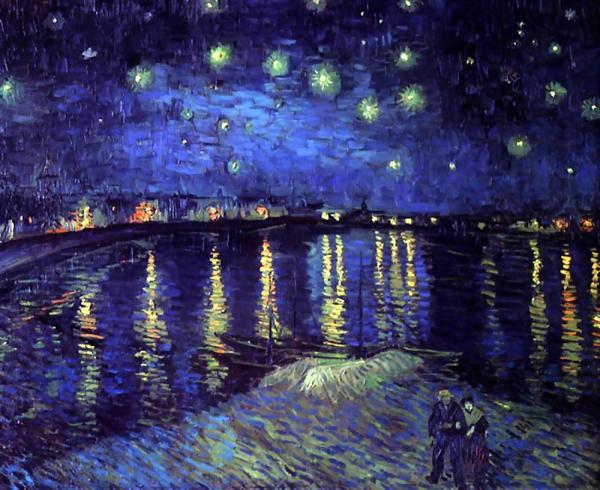
Above: Starry Night Over the Rhône. Oil on Canvas. Vincent van Gogh (1853-1890), Dutch. Currently housed in the Musée d’Orsay in Paris, France.

Album Review: First Strike

Am I qualified to talk about music? Probably not, I haven’t read a lick of sheet music since I was in High School; the last instrument I played was for my Junior High String’s band.

That said, I know what I like and I have a deep appreciation for music. It has always been a part of my life, from blasting Alan Jackson and Toby Kieth from the speakers of my Dad’s truck while camping, to sifting through my mom’s collection of rock albums, to my adulthood obsession with collecting every David Bowie CD—my tastes are wide and discerning and I am always hungry to discover new bands.

Last year I decided I wanted to get into heavy metal. That means I sat down and listened to band after band, pushing the YouTube algorithm to its limit in a desperate search for something I could really fall in love with.

Heavy metal is a vast genre, composing so many different quirks and subgenres. I found that I like melody and vastness of sound, epic topics, harmonic singing—what I believe is sometimes called power metal.   

Naturally, I was intrigued when IronAge Media announced an album.

First Strike is probably best described as a compilation album with the talents of Jacob Calta (YouTube/Twitter), Evaleigh (YouTube/Bandcamp), Chillkid (YouTube/Soundcloud), J.V.P. (YouTube/Twitter), and A.C. Pritchard (YouTube/Substack) with Jacob Calta as Producer, Mastering completed by Calta and J.V.P., with Executive Producer, Richard Wilson.

(Disclaimer: I’ve worked with IronAge Media in the past. Whether that makes me biased or not is up to you.)

First things first

I prefer physical media so I tend to buy CDs instead of downloading them as a rule. It may seem silly to discuss a jewel case, but I collect music albums. It’s important to me that the case work as intended and look cool.  

The CD case is smooth cardboard with plastic insert, it includes a song booklet. It’s quality, especially considering the downward spiral most jewel cases have had in the past few years. Is it going to get beat up in the console of my car, are the edges going to get frayed? Yes. But it will hold the CD and the booklet

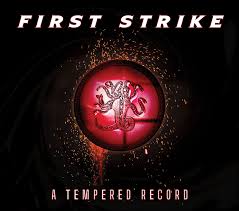
The album art is pretty slick. I like simplicity in an album cover, especially in something that suggests a wide variety of styles. Also, the symbol of a hydra can’t be overstated—I’m pretty positive that Jacob Calta, the art designer, chose that symbol on purpose. A good choice considering the stated goals of IronAge Media and the Iron Age at large.  

The music

Is First Strike a metal album? Yes. But like I said above, it’s a compilation of talents. There is heavy, pulsing guitar, melodic synth, scream vocals, and most importantly sick guitar solos. Everyone involved has brought their A game.

There are only six songs on the album, so let’s go through them one by one.  

Track 1 – First Strike – Jacob Calta

Track 1 is an instrumental. I found it surprisingly jazzy, with shades of the classic Sonic soundtrack—sort of etheral late 80s, early 90s synth—if that makes sense. There’s a head bobbing urgency to it and a warmth of tone that feels like a classic cape-crusader training montage.

I’ve been getting into synth lately and one of the problems with synth is that, after a while, some of it really starts to sound the same. Juxtaposing a heavy synth instrumental next to a more guitar-heavy rock song is a good call.

This is a great track to start the album off with.  

Track 2 – Power – Evaleigh

Does the Iron Age have an anthem? If not, I nominate Power.

If this song is supposed to be about the little guy, the small-time indie artist, taking on the big corporate music industry, then he’s nailed it. David v. Goliath is a universal tale that is applicable to all kinds of situations, not just the Iron Age.  

“God only knows what I’m doing here tonight” is the kind of lyric I can appreciate. I know that feeling. I still feel it, especially when I burn midnight oil on a Sunday night, hammering out a crappy first draft wondering if anyone will even read what I’ve written or if I’m just wasting time.

The song goes on to suggest that I am not wasting my time, and neither is Evaleigh.

Fantastic little anthem. I love it.  

Tack 3 – the Anvil – Chillkid

I’ve really come to appreciate chillwave synth. Track 3 is very chill, but not a calm chill, an intense chill.

The lyrics are about being “born in fire” and “shaped on the anvil.” I find the irony of a chillwave song about forging by fire and anvil to be deliciously clever. It also has this really cool call-and-response to the lyrics that makes it feel more like a war chant than a typical song.

I think this is a song that grows on you.  

Track 4 – the Wraithsayer – J.V.P.

This instrumental is probably my favorite track. It features a wide variety of synthetic instruments: strings, horns, even an organ, ghost-like chanting. It makes the song feel expansive, like a guitar player with the backing of an orchestra.

The use of organ and bells lends a Victorian eeriness that builds into something epic and heroic. This is the song of a English gentlemen plucking up his courage and taking on the thing that haunts the graveyard.

Weird horror in song. Absolutely love it.

Track 5 – Villainous Wake – A.C. Pritchard

There is not accounting for taste. Unfortunately, I’m not a fan of screaming, gruff, vocals a la Slipknot. That doesn’t mean there aren’t things to like in this song—there are.

The discordant sounding chorus is a very cool effect that matches the lyrics. “I’d rather fly free, than die as a slave. I’ll break from my cage, I’ll rise from the flames. My words are my wings, my shield, my blade, my pleasure, your pain, my villainous wake.” Pritchard casts himself as the villain, and maybe he is? But doesn’t the POV matter?

Not a fan of screamo, but the lyrics are fantastic and J.V.P.’s guitar work is excellent.  

Track 6 – Blow by Blow – Chillkid, A.C. Pritchard, Evaleigh, J.V.P., Jacob Calta

If this album has a B side, then track 6 is it. The weakest of the six tracks, I’m not sure if the problem stems from too many cooks, or if its just the principal that every album must have that one song you can’t vibe with?

Evaleigh and J.V.P.’s guitar work stands out, especially with that plucky guitar work at the 1:40 mark and the solo at the 2:30.

Final thoughts

I honestly had my concerns when I bought this album. I feared that it was going to be like those CDs you buy from the bands who play the bars in Nashville or L.A. But this is a solid album with excellent production and high-quality music.

Even in the song’s I don’t like, I can feel the passion and the care. I believe that these artist like making music and that they want me to like their music too; mutual respect is a part of the titular Iron Age. I feel like I got my money’s worth and that my time wasn’t wasted.

An excellent showing, I recommend it and leave you, appropriately, with lyrics from Track 6:

Flying free into horizons

The moon and stars all fall away

Determination, out instincts guide us

Into a whole new age.   

-Blow by Blow

Don’t forget to check out Anvil Magazine #4, currently available for pre-order!

I write my own weird tales, check them out here and don’t forget to follow me on Twitter/X!

Writer’s Review: Buffy and the Art of Story

When I purchased Buffy and the Art of Story I had a very different notion of what I was ordering verses what I got. It was an impulse buy, I admit. I love Buffy—okay, I love the first three season of Buffy with some select episodes from the other four. The book promises that I’ll be “writing better fiction by watching Buffy.”  

I expected the book to go through the entirety of the Buffy series, break down the character development, plot, motifs, symbolism, etc., all of this towards the goal of enhancing my writing abilities. It wasn’t until the book was in my hands that I realized it said “Season 1.”

When I made my cursory flip-through, I saw that it went through episode by episode. As I began reading, I learned it’s scope was very specific—structure, with some limited commentary of character development and story devices.

The disappointment was my fault. I misunderstood the scope and point of the book. I also got a bit too excited about the gimmick.

Gimmick really is the word here. One of the things that you start seeing with most of the how-to-write books is the reliance on gimmicks.

It makes sense. There are literally thousands of these kinds of books on Amazon alone. If you’re writing one of these books, you have to make yourself stand out.

For example, my own Adventures in Storytelling is, at its core, a how-to-write “book.” It’s gimmick is to share tips, tricks, and advice through the perspective of a personal odyssey.

Buffy and the Art of Story’s gimmick is Joss Whedon’s incredibly successful 1990s horror/comedy/drama television show, Buffy the Vampire Slayer.

Buffy and the Art of Story, Season One by L. M. Lilly

Disclaimer: Per the introduction of Buffy and the Art of Story, the book is a transcript of a podcast by the same name. Because I review how-to-write books and not podcasts, I didn’t listen to it.   

Let’s start with the vampire in the room: this book is extremely niche.

I’ll be the first to admit that I shun fandom. I don’t like the cringy, obsessive, argumentative ways that some fandoms operate (particularly online). So, I’m really not sure if there is much of a modern Buffy fanbase—that is, younger generation fans, not Gen Xers and Millennials like me.

My first taste of Buffy was catching a random re-run some October while I was in high school. I began to borrow the DVDs from my local library, some of which didn’t work properly, so I never ended up finishing the entire series until COVID gave me a chance to sit down and binge.

Although I’m a “new” fan, I’m not really sure how many new fans there are out there. The first episode aired in 1997, I wasn’t even ten! My age bracket is probably the upper limits of someone who would even be familiar (that is, nostalgic) for the cheesy 90s’ and early 00s’.

Buffy and the Art of Story is clearly for established fans of the Vampire Slayer. There are no recaps or synopses at the beginning of each chapter. Lilly simply “dives into the Hellmouth.”

You must already know the basic story and characters of every episode in season 1 in order to get anything out of this book.

The chapters are named by episode, so if you want to skip around and examine specific episodes, you can. Each chapter is arranged the same, starting with some background information about the writers and director; listing the particular story elements the author wants to highlight; a chronological breakdown of the episode catching each one of Lilly’s seven-pointed plot structure; some spoilers and commentary; and finishing up with a list of questions for your writing.  

In the first chapter, Lilly gives us an introduction to her preferred story structure: “Key plot points and turns for your story.”

It’s solid, seven-pointed structure:

  • Opening Conflict, which opens the story and draws the reader in.
  • Story Spark (aka, Inciting Incident), the event that sets off the story at about 10% in.
  • One-Quarter Twist, the first major plot point that “spins the story in a new direction” and typically comes from outside the protagonist.
  • Midpoint, where the protagonist commits to the quest or suffers a major reversal.
  • Three-Quarter Turn, the next major plot point that spins the story in a new direction but usually comes from within the characters. It usually comes in two-thirds through a story.
  • Climax, the “culmination of the main plot.”
  • Falling Action, the end of the story.

As I read the book, I found myself, for the most part, agreeing with Lilly’s use of the structure. However, this book has some serious flaws and it’s for that reason that I cannot recommend it.

I don’t like doing “negative reviews.” The goal of these essays has always been to help other writers find how-to-write books that might expand their horizons. But if that is my stated goal, then I have to be honest. 

Lilly’s seven-pointed structure is a good structure; it’s just not the only one. And it’s especially not the only structure Buffy uses.  

For example, a lot of Buffy’s one-off episodes—the monsters-of-the-week—do not fit neatly into this structure. Some of them use what I would call a “pulp structure.” The episode isn’t really about the characters changing or growing in any profound way, it’s about the characters overcoming obstacles.

This kind of structure is easily seen in any given Conan the Barbarian story. There is a goal and a series of hurdles that the character must overcome in order to achieve said goal. The story is in the lengths a character will go in order to achieve their ends.  

And while Lilly hits the mark for most of the episodes i.e. the two parts 1st and 2nd episodes (Welcome to Hellmouth/the Harvest); episode 7, Angel fits well within her structure; even the one-off I, Robot…You, Jane. She misfires by trying to squeeze every episode into her seven-pointed story structure.

That said, I think the structure is a strong one, it’s should be. It’s the Holy Trinty, the Tripod, better known as the Three Act Structure.

An ocean of ink has been spilled over the vagaries of plot structure and ultimately that’s the thing here. There are better books on plot structure.

But, there are also some problems in her analysis.   

Take her chapter on episode 6, the Pack.

It’s a standalone Xander-centric episode wherein Xander and a gang of obnoxious bullies are possessed by the demonic spirit of a hyena. Here’s a link to a quick summary and analysis if you’re unfamiliar or need a refresher.

The main problem with Lilly’s analysis is that she misplaces story beats because she’s misidentified the active protagonist as Buffy when it’s Xander. This doesn’t mean that Buffy and Willow aren’t active protagonists—they are, but it’s Xander who sets off the story, it’s Xander who commits, and it’s Xander who saves Willow.

Lilly misremembers that Xander is with the Pack when they eat the school mascot and I think this is the critical error in her analysis. This causes her to misplace her midpoint because “from a storytelling perspective [the pack] are not the protagonists.” In a way, she’s right. The four “packmates” aren’t the protagonists, but Xander is. He’s their leader.  

Another issue I have with Lilly’s analysis is episode Eight and I’ll admit that it’s somewhat a nit-pick, she says:

“…in addition to Moloch being this sort of mustache-twirling villain who is just evil for evil’s sake, we also have the people support this kind of demon apparently just for evil’s sake…

…so I know we were told from the beginning that Moloch preys upon the weak of mind. Also he’s the Corruptor, and that he has this way over people. So it’s probably unfair to say they are choosing to follow this demon. But it feels a bit like weak storytelling to me. It is less interesting to have a demon who just has this magic power of making people follow him rather than the followers having some reason. Some deep need the demon is filling, something that makes us understand why they would devote themselves to this demon.”

Buffy and the Art of Story, Pg. 168-169

There are several instances where I think Lilly’s grasp of symbolism and motif is woefully atrophied. And while this episode doesn’t have a great rap, I find it a wealth of almost painfully obvious symbolism.

Moloch is a demon, he preys on the lonely, he’s called the Corruptor, his name is Moloch.

Moloch is traditionally understood to be an ancient Canaanite deity, throughout the Bible the Israelites find themselves falling into idolatrous worship of him. Idolatry is best understood as misplaced love or corrupted love.  

I, Robot…You, Jane is one of those episodes that I feel falls a bit short of the lofty symbolism it’s playing with, in part because the symbolism is clunkily spoon-fed to the audience. Moloch is a symbol of the tension between the characters. Willow’s unrequited love of Xander; Buffy’s crush on Angel; Giles’ utter distrust of technology; Fritz obsession—idolization—of technology.

Lilly’s miss regarding this symbolism was when I truly realized that I couldn’t recommend this book.

Final Thoughts.

Story is more than tight structure, its more than making sure each chapter ends on a hook, its more than twists and turns and reversals.

If Lilly kept strictly to breaking down structure, leaving out any analysis of the characters or plot, it would still be a flawed book, but it would be one with some minor use for novice writers who are also Buffy fans.

As it stands, this book isn’t terrible, it’s just not useful.

Writer’s Review: How to Write a Novel Using the Snowflake Method

If you’re familiar with my Adventures in Storytelling series, you’ll know that I’ve mentioned my preferred method of outlining. I started writing as a hardcore organic or “pantser” type. And while that method worked for me, I’d often find myself quickly losing control of the process and flying off into all sorts of interesting directions. In order to remedy this, I turned to a soft form of outlining I call wish-listing, where I jot down major plot points and connect and collate them as needed.

Naturally, I was intrigued by the premise of the Snowflake Method. The book promises a Goldilocks method, something in between plotter and pantser.

How to Write a Novel Using the Snowflake Method by Randy Ingermanson  

Many how-to-write books have little gimmicks to interest the reader, but I don’t think I’ve ever read a how-to with such a cute one. Mr. Ingermanson writes the book as a book, as in, it has a plot, characters, stakes, conflict, etc.

It’s cute and the charm managed to keep me reading. That said, it’s also short. Any longer than 160 pages and I’m pretty sure I would have gotten tired of it.

The way Mr. Ingermanson relays his information is through the plot and characters of the story.

Goldilocks is our protagonist. She has a dream: to become a best-selling author. The problem is, she doesn’t know where to start when it comes to writing a book. Goldilocks signs up for a series of writer’s workshops, hosted by the Three Bears, the eponymous Papa, Mama, and Baby.

Goldilocks quickly discovers that Papa’s method of plotting is far too rigid; Mama’s organic method is too open; but Baby Bear seems to be onto something with his method, one that splits the difference between his parents.

This method is the Snowflake Method, it is made up of ten steps and its underlining goal appears to be limiting the number of drafts and corrections without dulling the edge of the creative process.

The largest benefit to the rigid outline is its ability to see over the horizon and catch mistakes before they happen. While the biggest benefit to the organic method is the free flow of creative energy that gets words on a page. As someone who struggles with both methods, you can see why I find premise of the Snowflake Method interesting.

To see how it works, I actually took the time to write out a snowflake for a novella I’ve been planning. I won’t be listing any details here, as the snowflake is really designed for the writer, sharing it would give too much away.  

The Method consists of 10 steps:

  1. One sentence summary
  2. One paragraph summary
  3. Write a summary sheet for each character
  4. One page synopsis
  5. Write a character synopsis for each character
  6. Four-page synopsis
  7. Write a character bible
  8. List all the scenes
  9. Write a plan for each scene
  10.  Write your novel

Like most how-to-write guides, Ingermanson’s base is the Three-Act Structure. He also refers to it as the Three-Disaster Structure. His idea is that readers want three things: excitement, decision, and new directions—a disaster. Some might call this a plot point, or a beat. But it’s the incident that forces the character into confrontation with the plot, demanding they answer, and move the story forward.

So, let’s look at these steps.

One Sentence Summary

Fairly self-explanatory. Ingermanson states that it should “give [the reader] a taste of the story in twenty-five words or less.” (pg. 19) I actually call this a “mission statement” and use it as a statement of intent more for myself than anyone else, but I’ve been known to whip it out when a friend or family member asks me what I’m “writing about.” 

It’s a solid idea that I would recommend to the novice and expert alike. You want to be able to tell your friends and family what you’re writing, most importantly you want to be able to tell yourself what you’re writing.

One Paragraph Summary    

Again, another self-explanatory step. Each of Ingermanson’s steps build off the previous the steps, which is very intuitive. For the novice, this semi-solid structure may provide an example of what a writer needs to discern naturally.

The idea of the one paragraph summary is that you take the one sentence summary and expand it into five sentences, paying special attention to characters, setting, the disasters. It should hit all the story beats of each act and include your conclusion. Ingermanson doesn’t want you to bog yourself down with how you get to your conclusion or how characters respond to disaster so much as he wants you to draw the most basic of lines between persons, places, and events.  

Summary Sheet for Characters

For those familiar with my Adventures in Storytelling series, you’ll know that I’ve mentioned a character chart. I typically only make them for major characters and they not absolute, meaning, the character I chart might be completely different in the finished product.

The idea behind the chart is to throw every idea I have for that character down and I then draw lines connecting each piece of personality or backstory to each other. What I like to think I’m doing it making cause-and-effect clear to myself. Why is Character A like this? How did this event effect Character A?

Ingermanson’s character sheet is far from my blasé charts.

While Ingermanson makes it clear that this step isn’t necessary for every character, or that not every step within this step is needed for each character, this is where some of the tedium began to set in for me.

Ingermanson’s right, of course. There’s no need to produce a sheet for every character. As with my charts, it needs to be done for your main characters. You need to know your characters names, their values (“nothing is more important than X…”); their ambition (abstract desire); their goal (achievable); their conflict; their epiphany; a one sentence summary of their story; and a one paragraph summary of their life both in and out of the story.

As I said above, I struggled through this step. I worked out my main characters, wrote down some basic information for my minor characters, and moved on to the next step.

One Page Synopsis  

Unlike the one paragraph summary, the one-page synopsis might be useful for the marketing of a book. Editors and agents are busy people, they need a synopsis to hook them to make sure their time is used wisely.

Ingermanson suggest you take your one paragraph summary and turn each sentence of it into a paragraph.

For me, I found that easier said than done. But I understand Ingermanson’s point. It’s something that probably should be done. That said, I’ve done this only after I’ve finished a work.

I see the point; however, it does take that thin single paragraph and broaden the lines to build a skeleton which can be incarnated in the four-page synopsis.

Character Synopsis     

I’ll be honest, it was about here that I began to think that this method wasn’t really for me. I tried to convince myself that I’m just being averse to hard work, but that’s not being fair to all the hard work I’ve done in writing.

I determined that I would only write a synopsis for my two POV characters. Honestly, my conclusion was that the one paragraph summary I did of my characters in step 3 was all I needed.

Now, this might be because I’ve been brewing this novella for about a year now. It could also be that I don’t intend it to be a full novel. Frankly, this step felt “hand-holdy” if you catch my meaning.

Ingermanson is incredibly clear about how you don’t have to do all the steps of the Snowflake Method, and I appreciate that sentiment because this step isn’t for me. I don’t see its use other than to help you feel like you’re making some kind of progress.

Four Page Synopsis   

I skipped this step. I knew if I forced myself to write a four-page synopsis for my work, it would cause me to resent the Snowflake Method.

But I understand why he suggests it. Ingermanson is taking the rigid outline and hiding it in paragraphs instead of bullet points. He wants the writer to have their story idea locked down so that they know where they start and where they finish.  

Character Bible

Okay, so I was a little harsh on those last two steps. This step is a lot more useful to me. That said, it’s also something I would collapse into the character summaries of step 3.

Ingermanson’s character bible is meant to be the sheet that helps a writer keep track of the nitty-gritty detail of character, i.e., hair and eye color, age, height, DOB, favorite food, the way they take their tea, favorite movie/book, etc…

Not all these details are going to be relevant, although you should always make note of the way certain characters look, especially if they have certain defining features like scars or hair color. A character bible is the place to put that information.   

List all the Scenes

As Ingermanson says, the scene is the basic building block of any story. Each scene ought to play out the three-act structure in miniature, with a conflict and a resolution.

I didn’t do this or step 9. Why? Because I wrote a full page and half outline in step 4. And if I had completed step 6, what purpose would step 8 and 9 serve? I’ve already written the outline.    

In Chapter 8, Goldilocks realizes the crux of the method:

“The Snowflake Method was forcing her to think about things she hadn’t really worked out yet, but she could see that it was filling in the gaps in her story nicely. Every time Baby Bear asked a question, she could easily make up something on the spot to answer it.”

How to write a Novel using the Snowflake Method, Randy Ingermanson Chapter 8, page 69

Final Thoughts

The Snowflake Method is an ordering of the creative process. Its goal is to take the rigid outline and soften it with organic-looking paragraphs; Ingermanson cuts the hard work with fun work, and even gives approximate times you should give yourself to complete a task. He alternates the writer between character development and plot development to keep the writer from going lopsided in any direction.

Ultimately, I believe the Snowflake Method is a training tool. This book is not for people who already know how to write. This is for people who have no idea where to start, what to do, or where to finish. Honestly, I should have figured that out from the beginning. Goldilocks is a complete novice.

This feels like the kind of book a writer can use to get started. But after a while, you should start intuiting some of this process. Writing is an organic endeavor; you should always be getting better. Or as I like to say, where you start isn’t where you finish.

At some point, I think any writer who uses this method will eventually let it fall by the wayside as they develop their own writing tools. This is great for the novice. If you have absolutely no idea where to start, start here.  

Blog at WordPress.com.

Up ↑