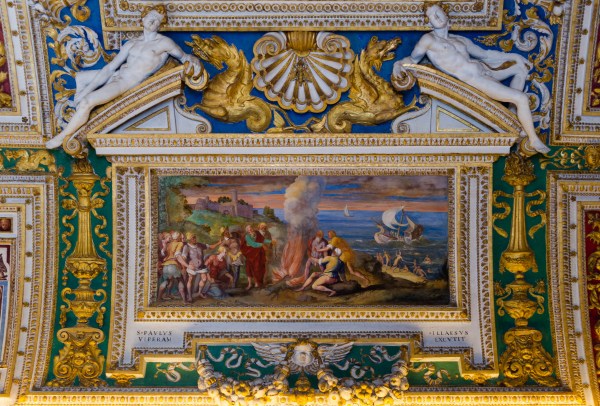
Entry 6, gathering brushwood.
There was a time in my life when I didn’t write short stories. And by that, I mean that I had this youthful, naïve belief that I was a “novelist” and would never write a short story. It was really just an excuse for the simple fact that I didn’t know how to write one.
In school we read tons of short stories—I even liked some of them—although none of them covered genres I read for pleasure. As a reader I’ve always gravitated towards fantasy. I like stories with swords and sorcery, something with an evil to overcome, heroes I can click with, and an adventure I can get lost in.
Needless to say, the “great American short story” was not something I read unless a class made me. I don’t like Virgina Woolfe, I loathe Mark Twain, I don’t have the life experiences of Ernest Hemmingway or Edgar Allen Poe.
Short stories always felt like opaque little pieces of highbrow literature. High art, rich in irony, drama, and meaning, with messages or morals I usually disagreed with or a muddy, bleak modernist outlook I definitely disagreed with. They were the kinds of work I was expected to read and write essays about. All of them far from the kitschy, heartfelt fantasy I love.
When I finished high school and was able to distance myself from the drudgery of school work and look at short stories as a piece of fiction and not as an assignment, I bent a little. I discovered H.P. Lovecraft, Robert Howard, gained a deeper appreciation for Edgar Allen Poe, read Hemmingway and fell in love with him.
I still don’t like Virginia Woolfe, and I’ll never enjoy Mark Twain. But I found Flanery O’Connor and the short works of Leo Tolstoy. While F. Scott FitzGerald has become one of my favorite authors.
But before any of that, I over-corrected and spent the first few years out if high school reading nothing but absolute junk food. I flew through every shallow, vapid, horrendous teen-fic fantasy I could get my young adult hands on.
I knew I was reading dreck, and yet I still imbibed. I was happy to drink up any piece of romance-laden, hand-wringing melodrama. I could slurp them up within a couple of days; the characters, setting, and story promptly forgotten as soon as I picked up the next terrible piece of mass produced, corporate trash.
And so my stubborn, arrogant “I’m a novelist” attitude metastasized. I wanted to be like these YA authors, you know, but better.
But one day, I woke up and couldn’t stand the idea of picking up another novel.
Every book I’d read from high school until about 2015 was exactly the same. A plucky heroine who isn’t like other girls meets about 2.5 boys who needlessly squabble over her while the overtly masculine villain schemes and makes sexist comments until the heroine discovers her inner warrior and defeats the poorly contrived symbol of the patriarchy.
After that I found myself only reading non-fiction. Medieval history, specifically.
As I exhausted my local library’s poorly stocked history section, I turned to medieval literature. I read Dante’s Divine Comedy and Boccacio’s Decameron, various Arthurian tales, poems, etc.
I fell in love with Dante. His entry into my life spurred me into a frenzied trajectory that would alter the way I viewed the world. I’ll have more to say about my patron, later. Just know that it was through his work and my desire to understand it that lead me to reading Aristotle, Virgil, Plato, Homer, Plutarch, Machiavelli, Gottfried, Thomas Aquanis, Cretien de Toyes—
About the time the COVID lockdowns began, I started to really miss fiction. I wanted to escape, I wanted to be anywhere but in America circa 2020.
I was mentally exhausted by the drama going on in my real life, I was working full time, trying to write on the weekends. I watched as my future plans evaporated under the corrupting heat of COVID. I couldn’t focus on history the way I had been.
I tried to hop back into fiction; picking up some paperbacks from my local used book store.
I couldn’t read them. I didn’t have the patience or, rather, the tolerance for modern fiction anymore. I’d been feasting at the table of the Greats for so long, a mass market paperback seemed like thin gruel.
I mentioned in the last entry that COVID was a turning point for me. I had committed years of my life working on a novel that was too long to be published by an unknown author. I couldn’t abandon it; I won’t abandon it. But it was clear that I needed a different strategy.
As my life took a dark turn, I began to pull apart the things that bothered me about modern fiction—the pandering, the limp prose, the lame moralizing, the overwrought, needlessly complicated plots masquerading as “subversion”, the tiresome deconstructed heroes.
I knew I wasn’t the only one getting sick of the same-old-same-old, I just needed to find an in. An “in,” by the way, that I’m still searching for.
Regardless of my chances of success I knew I could either quit entirely or make myself a better writer.
Dante loomed large in the back of my thoughts during this time, pushing me onward. He demanded excellence of himself, trusted that he possessed the tools to reach the absolute heights of his craft. Could I do no less?
What I began to understand was that I needed to learn how to write short.
Looking back, it felt like a monumental task.
The first thing I needed to do was relearn to enjoy fiction.
The Lord of the Rings has eluded me my entire life. This fact is highly embarrassing to me, but there is it. I could never make it past Tom Bombadil. I just couldn’t fall in love with the books like it seemed everyone else could. I knew tons about the books and about Tolkien but the prose never sang to me the way it seemed to sing to others.
I was aware of their Anglo-Saxon/Germanic heritage. I knew that Tolkien wrote the Hobbit specifically to be read aloud to children. I was also highly familiar with Norse, Anglo-Saxon, and Germanic storytelling and poetry because every medievalist, amateur or not, eventually realizes that they have to read Beowulf and the Norse Sagas in order better understand the cultural context of the history they’re studying.
These people did not write things down. Beowulf isn’t meant to be read; it’s meant to be heard.
I made the logical conclusion that I should listen to the Lord of the Rings. I bought an Audible subscription and started to relearn how to enjoy fiction.
It worked. Not only did I finally fall under the spell of LoTR, I rekindled a passion for fiction.
I began to listen to books at work, before bed, while I brushed my teeth, while I did the dishes, while I went for a walk. I even listened and enjoyed books I’d written off as unreadable while in high school.
Never in my life had I thought I would stay up until 2am listening to Pride and Prejudice. But I did that. More so, a book I once disliked became a book I enjoyed.
While I listened to the more time-intensive works, I started reading shorter ones. I was already a fan of H.P. Lovecraft, so I went looking for others like him.
I found myself getting really into horror, I picked up a lot of classic ghost stories. I learned about Weird Tales and met Robert Howard. I fell in love with his Conan the Cimmerian.
It was Howard that really woke me up to the possibilities of short fiction.
Conan is a fantasy hero; he gets by with a canny mix of cleverness and brute strength. He fights monsters, he steals treasure, he saves maidens, he even becomes a king.
All of Conan’s stories are self-contained and short (usually under 50,000). You can read Tower of the Elephant, or the Jewels of Gwahlur, skip Red Nail (you shouldn’t), and still get to know Conan and lose yourself in the Hyperborean Age.
Once I worked my way through every completed Conan tale, I knew that fire was kindled again. My stubborn unwillingness to learn was broken down, the debris removed as brushwood for the firepit.
While I was still adventuring with Conan, I took a chance and penned an old-school sci-fi short story and submitted it to Cirsova Magazine. It was my first, published in Spring 2023. I’m going to break that one open in the next entry.
For now, let me leave you with what writing this entry has taught me. I refuse to give up. Writing has the flavor of a Vocation. I am called to it.
Even if the fire goes out, as it did with me especially during that depression spiral of 2020-2022, you can start another fire, relearn, reframe.
Humble yourself and commit. Gather brushwood to burn, you’ll be surprised at what happens when you pledge yourself to becoming a better writer. It takes just one spark to set everything ablaze.
Above: Saint Paul bitten by a viper in Malta. Ceiling of the Gallery of Geographical Maps in Vatican City.

 The Salon at Elfland