Review: To Sleep in a Sea of Stars, Christopher Paolini

Christopher Paolini and I go way back. Growing up I loved the Inheritance Cycle—or rather, I loved the first two books. Eagon was a fun ride for what it was although it took me a second reading really to appreciate Eldest. Unfortunately, by the time I reached high school I had, for the most part, moved on.

I eventually did finish Brisingr, but it left nothing to me. I barely have any memory of actually reading it. When Inheritance came out, I simply ignored it and seldom, if ever, thought of Paolini again.

A few months ago, a coworker told me about To Sleep in a Sea of Stars, a sci-fi offering from a now very grown-up Christopher Paolini.

I thought, great, maybe this will ignite my love of his works? He’s an adult now, he has experience, gravitas. I’ll give this a read.

To start off this review, I want to say that I don’t regret reading Stars. It was fun, a solid reading experience. But the book left me with a sense of missed opportunity, of near-incompleteness.

There’s a lot of good ideas in this book and each one is sort of picked up, given a cursory examination, and gently set back down again as we move onto the next item of interest. After finishing the novel, I just couldn’t shake the sense that Paolini told the wrong story—that he missed out on the far more interesting tales going on it the background.

Part of what makes the background seem so much more interesting is the absolute bore of a character that is Kira, our POV main protagonist.

Kira has the flavor a passive observer. Things happen to Kira.

Some of this passivity is a product of the universe she inhabits—one that takes orders. Kira is a scientist for a major corporation, she takes orders or she doesn’t get paid; the government is a military dictatorship and she does what they say because she’s a good citizen.

When Kira does finally muscle up some agency, its too little to late. Her character is one that allows things to happen to her, why the sudden shift in attitude?

A story where things happen to an everyman character isn’t necessarily a bad one, but passivity in fiction can be perilous for the writer. There are time where Paolini seems to peek out of the clouds and offer his characters a dues ex machina.

“Wow, that was lucky!” Isn’t really the kind of thing a reader wants to be thinking about how the last story crisis played out. There’s a time and place for that kind of narrative trick, but for Kira, it just reiterates her passivity. She is not calm, cool, collected, or competent. Moments for character growth are unearned—or worse, boring.

Which leads me to my next big issue with Stars. The space travel is boring.

Because of the way Paolini designed FTL space travel, it necessitates that most of the characters go into deep freeze. Kira, immune to the drugs that put people under, spends weeks by herself and Kira simply isn’t interesting enough to make these long periods of narrative fun or stimulating.

Kira’s “progress” made during these FTL trips are a slog to read through, lending to the overall sense of her nonparticipation. Her development feels unearned because the only person she really contends with is herself.

My third, and perhaps my biggest issue with Stars is the direct cause of that sense of incompleteness I mentioned above.

Paolini has created a horrific galaxy filled with technological marvels that stretch the bounds of science and good sense. He’s placed normal people into a place of deep disquiet, but whenever he draws close to pulling out a thread of that existential terror, he draws back and I’m left asking “wait, what? Go back to that, talk about that!”   

At some point, the rebel alien faction mentions that they agreed with the main alien faction’s original plan to invade and conquer human space, they only changed their minds because they felt they needed the help of the humans to defeat a bigger threat.  

This revelation, which is great fodder for storytelling, is barely touched outside a mention here or there.  

But it goes deeper than just missed opportunities.

Like most modern sci-fi, Stars embraces an unquestioning endorsement of Gnosticism. The characters are only their minds, not the flesh that encases them working in tandem with their souls. Despite that many of the characters have become something else, they insist that they have not, that it’s still “them inside.”

But this isn’t true; by the end, Kira becomes something else in the same way Ship Minds are something else.

I think Paolini wants the reader to feel happy for Kira. She has found peace, or at least purpose. But its hard to reconcile what I’m told to feel with the actuality of what he is describing.

Kira is a Lovecraftian nightmare, a color out of dark space. When she returns from her sojourn, when all her friends are long dead and there is nothing left to tie her to the humanity she is no longer a part of, what’s to stop her from becoming the tyrant of the future? She’s already showed signs of it—spying on her friends, passing out all-powerful gifts, making demands of reasonably skeptical government leaders.

And it’s that disquieting, horrific future that I’m far more interested in. Maybe in the sequel, Paolini will deal with these lingering questions? Maybe Stars is the villain’s origin story? Maybe we’ll meet a Ship Mind made a ship’s mind against their will? Maybe someone will stand up to the military dictatorship? I’m not terribly hopeful, but taking a stab as any of those questions would do a lot towards getting me interested in the next book.

Miscellaneous notes

I’ve been telling people that To Sleep in a Sea of Stars reminds me of Mass Effect Andromeda in that I don’t like any of the characters and just when I think it’s going to let me have fun, it doesn’t.

This seems harsh until you learn that I didn’t hate Andromeda. But I didn’t like Andromeda for the reasons that Bioware wanted me like to Andromeda.

Most of the fun in Andromeda came from being deliberately annoying to my shipmates or picking it apart for its questionable plot or finding interesting ways to break it. In other words, Andromeda was fun when I didn’t take it seriously.  

Towards the end of Stars I couldn’t stop laughing. The ending is mostly silly or it’s saccharine to a ridiculous degree. I’m even laughing as I write this because some of the ending is that outlandish.

Stars is also like Mass Effect in the sense that it’s Mass Effect. There’s a lot of similarities right down to the fact that the audiobook is voiced by Jennifer Hale, the voice of Female Shepard. Paolini doesn’t try to hide this fact, he was upfront with Mass Effect’s influence on his work, and it doesn’t really bother me, but it’s there.

Final Thoughts    

Paolini’s capacity for creativity is undiminished. What he lacks is the writing chops to deal with his topics in a charming and stylistically interesting way. To Sleep in a Sea of Stars is competently written, creatively charged, and fast-paced enough to make its hefty page count a relatively easy read. But there’s little to go back to and most of what I’ll recall years from now is what made it entertaining for the wrong reasons.

I don’t regret reading it, but I can’t recommend it.

I write weird tales of my own, you can see them here! Follow me on Twitter/X.

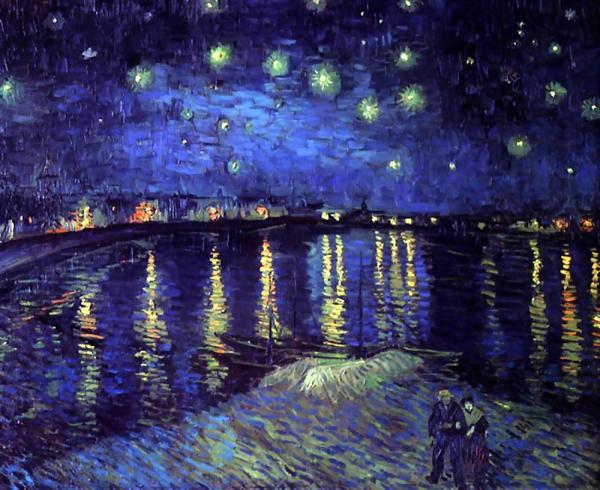
Above: Starry Night Over the Rhône. Oil on Canvas. Vincent van Gogh (1853-1890), Dutch. Currently housed in the Musée d’Orsay in Paris, France.

Writer’s Review: The Secrets to Creating Character Arcs

Before I began writing these reviews, I had a simple criterion for selecting a how-to-write book: I judged the cover.

The cliché “never judge a book by its cover” is more like an aspiration, sort of like “reach for the stars.” No one is actually going to reach up and grab a star and no one is ever going to not judge a book by its cover.

I admit, it’s not a great method. But, when it comes to reading into a topic where you’re not really sure where to start, it’s a utilitarian method. I mean, how else are you supposed to select a book? Considering the books in this genre are designed for mass-appeal you just have to dive in.

Today’s book is one of those I selected based on the cover. I just like it, its simple and striking.         

The Secrets to Creating Character Arcs: A Fiction Writer’s Guide to Masterful Character Creation (Growing Authors out of Writers) by John S. Warner

I can’t tell you anything about John S. Warner. He has a Facebook and a Goodreads page, but it appears that everything he writes is how-to-write books. I have no problem with this, readers are the best at telling writers what they want to read.

The Secrets to Creating Character Arcs: A Fiction Writer’s Guide to Masterful Character Creation (Growing Authors out of Writers) is made up of ten chapters with an introduction and concluding remarks. It’s a little less than 200 pages, making it a quick and easy read.

Warner starts the book with a quick explanation of what he calls The Holy Trinity: Plot, Structure, and Characters. A good story, he writes, is made of this union. I can agree here, but this isn’t really ground breaking. It took a few more chapters for me to finally feel like I was getting something worthwhile from this book.  

Warner’s next step is to discuss the Trinity in further detail. He starts with plot. He provides some advice.

  • Your plot should provide a smooth flow to the story
  • The focus of your plot should be on the leading characters of your story
  • Your plot should have a clear insight into your protagonist’s psyche
  • The plot should start with a bang
  • Your plot should grab the emotions of your readers, but let go in the end

Again, nothing here that I wouldn’t call intuitive to the practicing writer.

However, once he begins breaking down what he means by plot points, I feel like we’re finally getting into some nitty-gritty. It was about here that I began to enjoy it. You see, this book falls into a category I would classify as a “beginner’s basics” or an “expert’s vindicator.”

What Warner begins to discuss now are the seven plot points.

  • Inciting incident
    • First point
      • First pinch
    • Midpoint
      • Final pinch
    • Second point
  • Resolution

He fleshes out each bullet point and then describes how the arrangement of these points is structure.

I then began to contrast what Warner was writing with my own personal techniques. I saw how they differed and how they overlapped. I realized that I didn’t need to read this book, but I wanted to. Warner’s book was simple enough that it was making me think about my own theories.

Warner calls it plotting—writing down the desired events of your story—I call it wish-listing. When it comes to ordering these points, we both call it structuring. These are just a few examples of our overlapping.

Warner dedicates a good chunk of the book to some quick outlines of various, popular structures like Save the Cat’s Beat Sheet and the Fichtean Curve. This a helpful for someone who is not familiar with these structural modes or for someone who wants a refresher.

Once Warner finishes up his explanations of the first aspects of the trinity, he moves on to the real red meat of the book: characters and characterization.

He begins with the bones of a character—what he calls the three pillars of characterization. They are Physical Characterization, the distinct physical details of your character like a scar, scabby knees, or left-handedness. Psychological characterization, those psychological details that help you build a character’s personality, their fears, biases, secrets. Lastly, social circumstances, your character’s place in a society, their school, profession, etc.

I appreciate that Warner writes on archetypes, but stays away from the traditional Jungian archetypes. He keeps it minimal, focusing on Protagonists, antagonists, mentors, sidekicks, and skeptics.

Warner finishes the book with several chapters on crafting characters. He provides questions, some basic tips, and outlines to help you write. There isn’t really anything here to write home about.

Final Thoughts

As much as I enjoyed Warner’s Creating Character Arcs, I can’t say that there is much here for experienced writers. There were many sections that I found helpful for formulating my own ideas on writing, but I can see how that wouldn’t be useful for every writer.

Certainly, if you’re a beginner looking for a more structured way to craft characters, Warner’s book might be a good starting point.

Skippable, but useful for certain purposes.   

Don’t forget to check out the crowdfunding pages for Anvil Issue 2, where my short story, Afflicted: Nourritures les Ver, will be published! For more info, click here.

Writer’s Review: Writing Tools, 50 Essential Strategies

If you’re a writer and you’ve ever looked up “writing advice” you’ve probably come upon a vast google list of various articles offering tidbits of—well, honestly—things you already know because you’re not an idiot. You then decide the best thing to do is search Amazon, surely Jeff Bezos, with all his wealth and power will have a curated list of “how to write” guides for your convenience. You’ll pick one from a writer you know and then it’s off to the races.

To your horror, you’re met with 20 pages of a spectacularly un-curated wild jungle saturated to the brim with no-names and gimmicks. Some of it isn’t even about writing books, it’s about Amazon marketing or prepping or parenting. Some of these books don’t even appear to be written by anyone at all, but by a faceless corporation. Not only that, while they’re cheap as a Kindle book, if you’re more of a “paper and ink” person, you’ll be shelling out twenty to thirty bucks on a new copy.

That’s where I come in. I’ve read dozens of these kinds of book and some of them have really wasted my time, others have helped build my confidence or given me a useful piece of advice I’d never thought of. 

I’ll be honest I’m not exactly sure how to review a book that offers writing strategies and guidance. I’m not going to judge it based on its technical flair or it’s plot or it’s narrative structure. The only thing left is the level of use I got out of it.

That’s probably the only way to review a book like this—or any “self-help” book out there. In the end, I won’t be rating the book out of 5 or 10 or what have you. Instead, I’ll offer my observations on how useful I think the book is and who I think is best served by reading it.

Writing Tools: 50 Essential Strategies for Every Writer by Roy Peter Clark

I don’t know anything about Roy Peter Clark. The blurb on the back of his book says he’s the VP of the Poynter Institute, a prestigious journalism school. Now, let’s not hold that against him, because Writing Tools is a pretty useful book.

Clark’s book is broken into 4 parts: Nuts and Bolts; Special Effects; Blueprints; and Useful Habits. Each part has a number of chapter that Clark calls “Tools.”

For example, Part One: Nuts and Bolts, features Tool 3: Activate your verbs. Clark uses an example from Ian Fleming’s From Russia with Love in order to show that Fleming took to heart the simple advice given by George Orwell: “Never use the passive where you can use the active.”

This is a great tool for writers of all levels and experience—avoid verb qualifiers. Instead of using “he sort of wanted ice cream,” or “he seemed to want ice cream.” Activate your verbs, “he wanted ice cream” or “he chose chocolate” or “he got ice cream.” Clark then reminds us that you can overstuff a paragraph with activated verbs. When you play with this concept, you can see what he means by the need for temperance. 

This tool has become extremely useful to me, especially when editing. Often, when writing, I’m desperate to get everything out onto the page with the idea that I will prune later. This leaves my writing with a lot of ugly verb qualifiers. I find myself scraping these barnacles away, especially in my action-oriented scenes, where I need swift, clean sentences to keep up forward momentum.

Tool 5 is another excellent gem of advice. Clark charges writers to “watch those adverbs.” He states: “at their best, adverbs spice up a verb or adjective. At their worst, they express a meaning already contained in it.”

To make his point, Clark uses the example “she smiled happily” and “she smiled sadly.” “She smiled happily” is immediately cringe inducing. It’s a bad use of adverbs. “She smiled” already intonates happiness. You don’t need to qualify it. But, “she smiled sadly” is a good use of the adverb “sadly” because it changes the meaning of the smile.

Of course, he does conclude with a disclaimer, stating that J.K. Rowling uses loads of adverbs.

Another tool I found extremely helpful is in Part Two: Special Effects. Tool 16 tells us to Seek original images.

Clark begins with an Orwell quote, “never use a metaphor, simile, or other figure of speech which you are used to seeing in print.” Orwell had no love for clichés and thought of them as a substitute for thinking. Tool 16 taught me this lesson very well.

During a recent rewrite in a novel I’ve been working on, I came upon a cliché that jarred me right out my own narrative. It was a not-so-common Shakespearean euphemism for marital infidelity, but I knew it well enough to know that I didn’t want it there.

I spent a couple hours looking for alternatives online. In the end I was forced to think about the specific culture I had created, the kind of place the characters lived in, and I created my own. The scene was immediately better, it made the setting feel more lifelike.

This tool is useful for all, but I find it particularly necessary for speculative fiction writers. Your high-tech space aliens aren’t going to say “you’re putting the cart before the horse.” And in your medieval fantasy adventure where reading is a luxury, your peasants aren’t “reading between the lines.” Even if it takes hours, sit down and think because Orwell is right, most clichés are a substitute for thinking.

For my last example, I’m pulling from Part 4: Useful Habits. Tool 41 tells us to Turn procrastination into rehearsal.

I work a full-time job, the only real time I have to write is on the weekends and two days can be cruelly short if I’m having difficultly finding my groove. Clark writes: “writers experience procrastination as a vice, not a virtue. During the process of not writing, we doubt ourselves and sacrifice the creative time we could use to build a draft. What would happen if we experiences this period of delay not as something destructive, but as something constructive, or even necessary?…what if we call it rehearsal?…we all rehearse, and that includes writers. Our problem is that we call it procrastination or writer’s block.” 

This is was something that I desperately needed to read. As my work day dragged on and I found I had difficulty writing on the weekends, I began to punish myself with the typical mental abuse we writers hurl at ourselves—you’ll never write anything worthy, you’ll never be published, you’re creatively bankrupt, you’re lazy, etc.

But the drive to write is innate in me. Even as I abused myself, I found myself writing up scenes and ideas in my head. Usually just before bed, during downtime at work, or while in the shower. And when I was unable to get them out onto a page, I continued with my self-abusing. It created a vicious cycle than began to put a real strain on my mental health. 

Clark’s advice, that I allow those periods of none-production to become a time when I rehearse what I’m going to write on the weekend.

When the weekend comes, I have no standards. I write. I throw everything at the page, I get everything out and prune it later. I no longer allow myself to suffer “writer’s block.” I rehearse. If I’m really struggling, I look back at some earlier work and do a little basic editing. I keep a daybook where I write little musings and interesting ideas, snatches of poetry, insight or epiphanies.

Its difficult to reframe the “typical ideal” of the “struggling” author. But once you liberate yourself from that concept, you’ll be free to actually do some writing.

Final Thoughts

Roy Peter Clark’s Writing Tools: 50 Essential Strategies for Every Writer is one of the most useful “how to write” guides I’ve ever read. It has become the standard by which I rate all “how to write” guides.

There is something in here for every type of writer. It has useful tips to ease beginners and concise reminders for the experts.

Absolutely recommended. Buy it, buy some highlighters, take notes.         

Blog at WordPress.com.

Up ↑