Adventures in Storytelling 6

Entry 6, gathering brushwood.

There was a time in my life when I didn’t write short stories. And by that, I mean that I had this youthful, naïve belief that I was a “novelist” and would never write a short story. It was really just an excuse for the simple fact that I didn’t know how to write one.

In school we read tons of short stories—I even liked some of them—although none of them covered genres I read for pleasure. As a reader I’ve always gravitated towards fantasy. I like stories with swords and sorcery, something with an evil to overcome, heroes I can click with, and an adventure I can get lost in. 

Needless to say, the “great American short story” was not something I read unless a class made me. I don’t like Virgina Woolfe, I loathe Mark Twain, I don’t have the life experiences of Ernest Hemmingway or Edgar Allen Poe.

Short stories always felt like opaque little pieces of highbrow literature. High art, rich in irony, drama, and meaning, with messages or morals I usually disagreed with or a muddy, bleak modernist outlook I definitely disagreed with. They were the kinds of work I was expected to read and write essays about. All of them far from the kitschy, heartfelt fantasy I love.

When I finished high school and was able to distance myself from the drudgery of school work and look at short stories as a piece of fiction and not as an assignment, I bent a little. I discovered H.P. Lovecraft, Robert Howard, gained a deeper appreciation for Edgar Allen Poe, read Hemmingway and fell in love with him.

I still don’t like Virginia Woolfe, and I’ll never enjoy Mark Twain. But I found Flanery O’Connor and the short works of Leo Tolstoy. While F. Scott FitzGerald has become one of my favorite authors.  

But before any of that, I over-corrected and spent the first few years out if high school reading nothing but absolute junk food. I flew through every shallow, vapid, horrendous teen-fic fantasy I could get my young adult hands on.

I knew I was reading dreck, and yet I still imbibed. I was happy to drink up any piece of romance-laden, hand-wringing melodrama. I could slurp them up within a couple of days; the characters, setting, and story promptly forgotten as soon as I picked up the next terrible piece of mass produced, corporate trash.

And so my stubborn, arrogant “I’m a novelist” attitude metastasized. I wanted to be like these YA authors, you know, but better.   

But one day, I woke up and couldn’t stand the idea of picking up another novel.

Every book I’d read from high school until about 2015 was exactly the same. A plucky heroine who isn’t like other girls meets about 2.5 boys who needlessly squabble over her while the overtly masculine villain schemes and makes sexist comments until the heroine discovers her inner warrior and defeats the poorly contrived symbol of the patriarchy.

After that I found myself only reading non-fiction. Medieval history, specifically.

As I exhausted my local library’s poorly stocked history section, I turned to medieval literature. I read Dante’s Divine Comedy and Boccacio’s Decameron, various Arthurian tales, poems, etc.

I fell in love with Dante. His entry into my life spurred me into a frenzied trajectory that would alter the way I viewed the world. I’ll have more to say about my patron, later. Just know that it was through his work and my desire to understand it that lead me to reading Aristotle, Virgil, Plato, Homer, Plutarch, Machiavelli, Gottfried, Thomas Aquanis, Cretien de Toyes—

About the time the COVID lockdowns began, I started to really miss fiction. I wanted to escape, I wanted to be anywhere but in America circa 2020.

I was mentally exhausted by the drama going on in my real life, I was working full time, trying to write on the weekends. I watched as my future plans evaporated under the corrupting heat of COVID. I couldn’t focus on history the way I had been.

I tried to hop back into fiction; picking up some paperbacks from my local used book store.

I couldn’t read them. I didn’t have the patience or, rather, the tolerance for modern fiction anymore. I’d been feasting at the table of the Greats for so long, a mass market paperback seemed like thin gruel.

I mentioned in the last entry that COVID was a turning point for me. I had committed years of my life working on a novel that was too long to be published by an unknown author. I couldn’t abandon it; I won’t abandon it. But it was clear that I needed a different strategy.

As my life took a dark turn, I began to pull apart the things that bothered me about modern fiction—the pandering, the limp prose, the lame moralizing, the overwrought, needlessly complicated plots masquerading as “subversion”, the tiresome deconstructed heroes.

I knew I wasn’t the only one getting sick of the same-old-same-old, I just needed to find an in. An “in,” by the way, that I’m still searching for.  

Regardless of my chances of success I knew I could either quit entirely or make myself a better writer.

Dante loomed large in the back of my thoughts during this time, pushing me onward. He demanded excellence of himself, trusted that he possessed the tools to reach the absolute heights of his craft. Could I do no less?

What I began to understand was that I needed to learn how to write short.

Looking back, it felt like a monumental task.

The first thing I needed to do was relearn to enjoy fiction.

The Lord of the Rings has eluded me my entire life. This fact is highly embarrassing to me, but there is it. I could never make it past Tom Bombadil. I just couldn’t fall in love with the books like it seemed everyone else could. I knew tons about the books and about Tolkien but the prose never sang to me the way it seemed to sing to others.

I was aware of their Anglo-Saxon/Germanic heritage. I knew that Tolkien wrote the Hobbit specifically to be read aloud to children. I was also highly familiar with Norse, Anglo-Saxon, and Germanic storytelling and poetry because every medievalist, amateur or not, eventually realizes that they have to read Beowulf and the Norse Sagas in order better understand the cultural context of the history they’re studying.

These people did not write things down. Beowulf isn’t meant to be read; it’s meant to be heard.

I made the logical conclusion that I should listen to the Lord of the Rings. I bought an Audible subscription and started to relearn how to enjoy fiction.

It worked. Not only did I finally fall under the spell of LoTR, I rekindled a passion for fiction.

I began to listen to books at work, before bed, while I brushed my teeth, while I did the dishes, while I went for a walk. I even listened and enjoyed books I’d written off as unreadable while in high school.

Never in my life had I thought I would stay up until 2am listening to Pride and Prejudice. But I did that. More so, a book I once disliked became a book I enjoyed.

While I listened to the more time-intensive works, I started reading shorter ones. I was already a fan of H.P. Lovecraft, so I went looking for others like him.

I found myself getting really into horror, I picked up a lot of classic ghost stories. I learned about Weird Tales and met Robert Howard. I fell in love with his Conan the Cimmerian.

It was Howard that really woke me up to the possibilities of short fiction.

Conan is a fantasy hero; he gets by with a canny mix of cleverness and brute strength. He fights monsters, he steals treasure, he saves maidens, he even becomes a king.

All of Conan’s stories are self-contained and short (usually under 50,000). You can read Tower of the Elephant, or the Jewels of Gwahlur, skip Red Nail (you shouldn’t), and still get to know Conan and lose yourself in the Hyperborean Age.

Once I worked my way through every completed Conan tale, I knew that fire was kindled again. My stubborn unwillingness to learn was broken down, the debris removed as brushwood for the firepit.

While I was still adventuring with Conan, I took a chance and penned an old-school sci-fi short story and submitted it to Cirsova Magazine. It was my first, published in Spring 2023. I’m going to break that one open in the next entry.

For now, let me leave you with what writing this entry has taught me. I refuse to give up. Writing has the flavor of a Vocation. I am called to it.

Even if the fire goes out, as it did with me especially during that depression spiral of 2020-2022, you can start another fire, relearn, reframe.

Humble yourself and commit. Gather brushwood to burn, you’ll be surprised at what happens when you pledge yourself to becoming a better writer. It takes just one spark to set everything ablaze.  

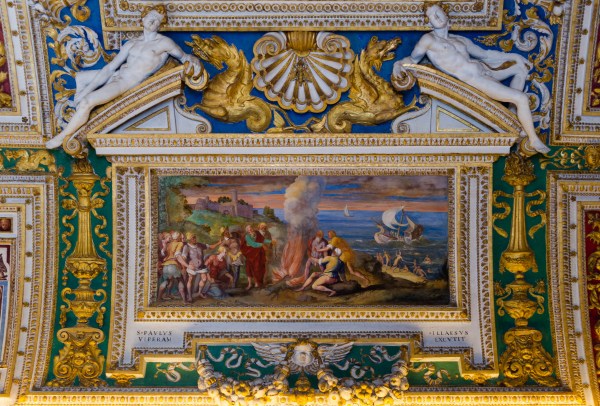
Above: Saint Paul bitten by a viper in Malta. Ceiling of the Gallery of Geographical Maps in Vatican City.
Adventures in Storytelling 5

Entry 4, Carpe editorem, occide, part 3.  

Now that I’ve confirmed what we already know, that writing is work worth doing; every correction, setback, and mistake makes you a better writer. We can talk about the tricky subject of taste.

I don’t like this is a delicate situation every writer will inevitably come up against. The way it’s handled can make or break a writer’s morale. Whether it comes from a friend, a random reader, or the worst critic of all—the self. Not liking something you’ve written can be disastrous.

I began editing P1 while embarking on a new career path. Unfortunately, I would abandon this career about a year and a half later, but during this period of my life I went through long stretches when I didn’t really do any editing or any serious work on P1. I worked on short stories at this time, although I also worked on Project Paisley’s second work, P2.

A stretch of alienation, as previously mentioned in entry 3, can put a lot of distance between the work and the writer. When I finally went back to P1 I found there was more to love than I had thought.

What I also learned is that there were plenty of things I didn’t like too.

This caused an…interesting crisis.

On one hand, P1 was almost exactly what I want in a fantasy epic. Political intrigue, sword fights, romance, an interesting magic system, etcetera. The problem was that all the cool stuff was tied up with a subpar b-plot that drifted into multiple directions and needed cutting or immediate tie-in.

I wish I could explain what this crisis looked like, but the only word that comes close is despair. I was extremely sad that I failed to bring this crucial plot material into the fold. It stuck out like a loose thread. Pulling it out unraveled parts of the story I wasn’t ready to give up. Leaving it there was a testament to my poor abilities.

After another month of wallowing, I eventually worked up the courage to take a look at my draft. It was still not great. But, this time around I noticed something. Attentive to the dislike I had for certain sections, I read them as a reader would and found myself thinking; “I would have done this” or “it makes more sense this way.”

I remember that it was a Saturday, sometime in Spring, during the COVID lockdowns when I could go outside during my at-home work day and get some sun. I resolved to fix what I didn’t like.

Armed with a blue pen and sheet of white computer paper, I made myself think about my work and how to make it better. I wrote notes, I crossed things out, I made sarcastic remarks to myself. I worked.

It was about this time when I began to see the value of planning. While my “pantsing” managed to hammer out an initial draft, I realized that it was that out-of-control creative process that tangled up the good ideas with the bad ideas. Somewhere between pantsing and planning, there is a happy middle.

When I write, I find that there is a gestational period between the initial idea and the beginning of the execution of that idea. It’s been as short as one evening and as long as several years. During this gestational period, I took up a practice I call wish-listing.

Over the next several days after that initial sit down, I added more ideas to my list. It’s only now that I understand what I was doing there. I was wish-listing.  

As far as those needed edits go, I eventually settled on a plan and began to put it into action. I’ve completed the first section requiring some massive rewrites. The rest will involve re-arrangements, cuts, and most likely, rewrites.

No one wants to rewrite thousands of words, but ultimately to solve the problem I created, I had to rewrite it. In order to work on these rewrites, I set aside other works in order to focus my energy on P1.

It’s been increasingly difficult to “get in the mood” so to speak. Working a full-time job can really put a damper on the creative flow. The same happens when I spend long stretches away from my work. I have to spend a little time getting back into the characters. To get back in the groove I use a tactic similar to pre-editing (entry 3) that I call previewing.

During preview I jump back to sections before the area I want to work on. Sometimes, I read things out loud. I try to capture the rhythm and voice of the character I intend to write. Jumping ahead can also help the process. Sometimes I takes an entire Saturday to recapture the voice I want. Other times, it’s easy. Since I can only find time to write on the weekends, this gives me a very short window in which to work.

This was a source of extreme anxiety for me. I began to feel like I was giving up without the dignity of throwing in the towel. My life was consumed by my 8-5. When most people use the weekend to unwind from their work week, I felt like I was starting my work—the real work, the work I love. This made me miss out on relaxation, on the unwinding required for a healthy work-life balance.

Worse, when I did relax, I felt guilty. I felt like I was procrastinating, shirking my responsibilities.

Suddenly, spending an hour reading a novel felt like I was wasting time not working on mine. Hanging out with friends had to be cut short because I had to go home and get something out on a page. I didn’t go hiking or take a walk or do any of the things I loved doing before my full-time.

I taxed my mental health and my physical health. Sleeping issues that I had dealt with in the past suddenly reared up, worrying me more. Something was going to break, and that something was me.

To make a long story short, the break didn’t involve my writing. There are personal factors that went into the long and dark winter that was 2021. Writing was my haven, the place I could control. The only thing in the world that made sense to me. I muddled through 2021, fought my way through the spring of 2022.

It was at the height of this breakdown that I finally gave in. I had toyed with Catholicism for years by then. In April, just a few days after Easter, I caved too the only force that could soften my stubborn heart. Christ struck tinder in the ash heap of my soul and for the first time in a long time I stopped worrying.

Am I going to tell you that I no longer complete an elaborate night-time ritual in order to fend off the Sunday Scaries? No, because that would be a lie. Am I going to tell you that I’m not anxious about my writing, or work, my personal life, politics—no, because that would be a lie. But I don’t let them control me anymore. Not even my writing gets to rule my life. I have a different King now and he wants me to write because he likes stories and wants me to like them too.

During 2022, while I worked through my personal problems, I let myself enjoy writing again. I set the P1 rewrites aside and worked on a couple short stories. When I went back to P1 I fell in love with the story and found a deeper appreciation for the work that I put into P1.

I finished the largest chunk of those rewrites back in August of 2022. There’s still more work to do. But I’m taking a break from P1. This isn’t the last entry regarding P1 and Project Paisley. But it is for now.   

Ultimately, what I hope you pick up here, dear reader, is that writing is hard. It’s hard work. Don’t let anyone tell you that it’s not. The effort and preparation that goes into writing is enormous. Editing is just as effortful and time consuming as writing itself—sometimes even more so. The emotional exertion can be just as detrimental to your heart, mind, and body as the physical toll of working that shitty retail job you hate.

But just like that job you hate; you have to do the work. The key to staying even-keeled is remembering the job you love is supposed to be done because you love it. You were asked to pick up this cross because the Man we nailed to it knows you can carry it.

Writing demands work, but it should bring joy.     

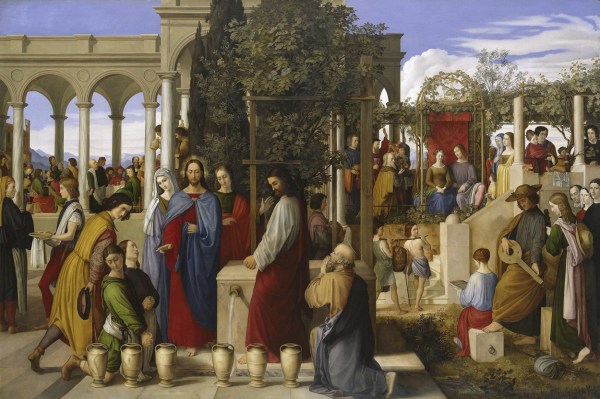
Above: The Marriage at Cana. Julius Schnorr von Carolsfeld (March 1794 – May 1872). German. Oil on Canvas. House at Hamburger Kunsthalle.

Adventures in Storytelling 4

Entry 4, Carpe editorem, occide…continued.   

In my last entry I outlined four points that needed addressing in P1. I left off in the middle of my second round of editing and highlighted that I use my own tools to help identify my strengths and weaknesses. I made a list and focused on the nuts and bolts, things like -ly words and passive voice.

I want highlight one of the other two issues identified: lore/worldbuilding mistakes and inconsistencies; and, there are some things I simply don’t like.

I’m going to start with the first—lore/worldbuilding—because it’s easier to answer.

There is no end to the discourse regarding “worldbuilding.” There are endless books and articles on the topic, various charts and step-by-step guides on how to “build unique and imaginative places.” And that’s great, sometimes people need a guide.

Once you’ve come to understand the need for worldbuilding and mastered the concepts, your next step is to debate endlessly about when and where to use it, what qualifies as worldbuilding, and when its really just an infodump?

I’m not going to bore you with a lengthy discourse. I believe thoroughly that if you are writing, you are worldbuilding. Every sentence is an opportunity to build and deepen the unique flavor and culture of a world. It should be done in every kind of story, regardless if the setting is New York City or some far-flung elfland.

The danger with worldbuilding lies in the fact that sometimes it is an infodump.

In P1, I found that I didn’t really have a problem with infodumping. I killed that problem in one of my first drafts, working and reworking paragraphs and conversations to move information in a smoother way. I classified lore and worldbuilding information into two categories: absolutely necessary, and trivia.

Lore that is absolutely necessary is lore that is needed in order for the plot and the character’s actions to make sense. It is necessary to suspend a reader’s belief. For example, P1’s co-protagonist, R, has a background before meeting protagonist E. R’s background includes connections to an organization with an extensive history. That history must be told for R’s actions to make sense. Without that lore, R’s movements and thoughts become schizophrenic—unmoored from the reality of the story.

Lore classified as trivia is the nice little accoutrements that make a story unique, pretty, realistic. It’s the way someone styles hair or takes their tea. It’s how the road shunts to the left or how the flowers were blooming late in the mild spring. Fine details, those little things whose inclusion adds color but absence results in no serious loss to the central action of the story.

The issue was just how much lore I had.

If you recall from Adventures in Storytelling 1, I started P1 because a sense of overwhelming vastness that plagued my first abortive attempts at putting Project Paisley on paper. I knew I had something; I just wasn’t sure where to go with it. P1 was started to help me congeal—so to speak—my world.

In that, I would say I was successful. I believe the world I’ve created is colorful and realistic. Is it perfect? Of course not! But I think I have a world that is interesting and engaging. It’s made up of several counties, each with their own unique cultures.

That said, I didn’t start out that way. While writing, I spent a lot of time thinking about P1’s setting.

The main setting of P1 is an island-bound city, at the risk of oversharing, when thinking about this city I had two real cities in mind—London and Paris. I wanted to capture the things I liked about both cities. I thought deeply about how the ocean effects a city, it’s culture, government, etc. What considerations does an island-bound nation have to make regarding security? How does the sea change their food culture? What kind of jobs would their poor city-folk work? What of the prosperous?

In the end, I found myself asking, what would Paris be like if was actually on the coast of Normandy? What about London without the Thames?

My first draft was missing many of the key elements that I feel make this setting (as it’s written now) interesting. While I muddled through various technical problems, I found myself filling in the blank corners. Ordinary English idioms were rewritten to better relay the culture of a seafaring people, food became fish heavy, the peasantry became laborers and fishermen. I began to add these little details.

And that was just a single city. The religion of this world was terribly atrophied. I used a placeholder name for the main deity until a better name struck me in the middle of a slow work day. That bit of inspiration was just pure luck, the rest I had to force myself to sit down and think about.

When I began writing P1, I already had a small booklet that I jotted ideas in. It was in no way comprehensive, but it was helpful and allowed me to keep track of my thoughts.  

I’d written several notes about the religion of a particular civilization that acts as the “national antagonist” if that makes sense. This nation is in a strained relationship with the other nations. They’re less an actual threat and more a looming, invisible darkness that hangs over the characters like a Sword of Damocles.

With them, I had to ask myself, how weird am I willing to be? How strange and foreign do I go? I wanted to create a religion that would repulse all modern sensibilities. Something in the way of a mystery cult with elements of ancient fertility cults. I confided in some friends and the answer I got back is the same advice I would give to any writer. Be weird. Write what you want. Weird is where the fun is.

There is only one way to solve lore and worldbuilding inconsistencies. If its trivial, you can drop it. If it’s necessary, you alter it. Its perfectly possible for you to like the mistake more than the original idea. I’ve changed things to better match up with the mistake I made.

But, the more you have, the higher the chance for error. As I read through my second or third draft, I realized that my timeline was, well, fucked. I couldn’t keep my pacing tight. Things were moving either too quickly to be believable, or too slowly. Fixing this is easier said than done. I haven’t completely fixed it.

Before my most recent draft I sat down and did two things.

First, I worked out a primitive timeline. I went event by event and found that a perceptive reader would quickly take note of the awkwardness of the pacing. Conflict was happening so frequently that despite my clear delineation of day and night, it didn’t feel like there was enough time between problem and resolution.

Now, of course, piling catastrophe on catastrophe is part of being a writer. The action happens in between conflict and resolution. Because my story has a high element of political chaos, it was necessary for the conflicts to coalesce, or the solution to become a problem later in the plot. But I couldn’t make the pacing feel natural. I had to sit down and write it out, event by event, piece by piece, until I understood exactly what I was looking at.

I remain uncomfortable with my current timeline; I am working on fixing the pacing.

The second thing I did was go through each chapter and take out everything I could find that was lore related. I placed it all in a master document. This list has become an augmentation to my original booklet. I refer to it as needed. Now, anything inconsistent or repeated is glaringly obvious. By listing each piece of lore/worldbuilding with the chapter it was found in, I am now able to refer and correct.

You’ll note that these aren’t really solutions. They’re more like guides. The tasks I’ve made for myself are monumental and they cannot be solved in a few short sessions. As I write this entry, I’m actively in the middle of these corrections. I’m not foolish enough to think that I can work a perfect draft. Eventually, I will have to give in and let the story escape.

It’s hard to pinpoint a lesson when you’re actively attempting to fix something. The only thing I could offer my past self is this:

Writing is work, but a good story deserves your attention. Even if you can only work small pieces at a time, keep chipping away. Every correction, every setback, every mistake makes you a better writer.

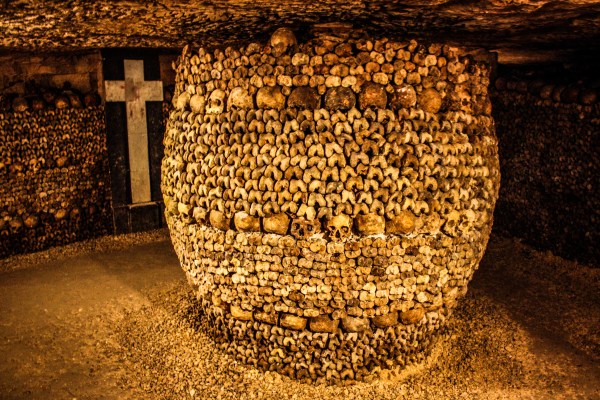
Above: a view from the Paris Catacombs. Consecrated in 1786, the Catacombs are the final resting place of countless Parisian dead. May the souls of the faithfully departed, through the mercy of God, rest in peace.

Blog at WordPress.com.

Up ↑