An Update No One Asked For

But, boy, writing it was cathartic.

When I set out to work on this blog, I had hoped to be consistent in my updates. That thought was quickly thrown out the window when I realized that I didn’t have much of anything to say and in trying to practice what I preach, I decided to say nothing but for the occasionally interesting (at least to me) thought.

Now I’m writing this to give you a bit of an update.

Whew, friends, but the two years have been…we’ll call it an “adventure” instead of “an ever-widening nightmare of failures and fuck-ups.”

That’s probably a little too harsh, but for a while I really did feel that way. Far from trusting the Lord, I fell back into my old habits and started despairing over my lot in life. Little did I know, the Lord was preparing me for something else, the totality of which I still don’t fully understand.

But that’s neither here nor there, what I wanted to get across in this post is that you may notice that my fiction writing has gone quiet. I haven’t made any posts about my short stories or that novel I’ve been working on for the last year and change and unfortunately that silence might drag on for a little while more.

You see, as part of that long list of failures—er, adventure—is that I lost my job and spent about three months absolutely disoriented by how and when everything I had planned went wrong.

In the wake of 2024: relationships imploded, projects abandoned, plans shredded, ideas were cursed, everything and anything that could go wrong, went very, very, very wrong.

Hindsight is 20/20, but I’ve worn glasses my entire life and don’t have 20/20 vision. The incomplete picture of 2024-2025 is something that may sharpen into focus within another year of two.  

I’m not complaining, even if it seems like I am.

All of this is grist for the mill. A writer needs experiences, and nothing is a more visceral experience than heartbreak and humiliation. I look back on the past two years and see the narrative thread, however faintly, trusting that the Lord Jesus knows me better than I do and that His plans are always better than mine.

So, what am I up to?

At the prompting of the Holy Spirit, I’ve embraced my desire for higher education and am now pursuing my Master’s Degree in Catechetics and Evangelization (that is, teaching and proclaiming the Faith) so that this blunt instrument might become a more useful tool for the Lord and His Church. I’ve also taken on a full-time job to coincide with going to school. This is because I ascribe to the “rip the band aid off” philosophy of rapid personal change.  

A new short story will be published in summer 2026 with Cirsova.

If you were a fan of Afflicted (Anvil Magazine #2), you’ll like this one: Dr. Amélia Mitre is back in Afflicted: the Hands of Hanged Men. I’ll update you as the time for publication come nearer. I really like this one, it’s dark, spooky, and a bit longer than the first.

The novel I’ve been working on since January 2024 was completed back in April of this year and went through a first round of edits in May. It was handed off to a professional editor in August and came back to me in early September. I am now working through those edits and I think once it’s done, I’ll have something worthwhile.

Progress has slowed on that front, mostly because I now have a full-time job and am a part-time graduate student. I’ve been slowly making progress, but I want to a complete work before I show too much of it off.

Needless to say, if you’re a fan of swords and sorcery, you might enjoy Iron Sharpens Iron. More details will follow.

Thank you for everyone who has supported me and prayed for me, read my work, etc. You are appreciated, and I pray for you.

St. Therese of Lisieux, St. Joan of Arc, St. Francis de Sales, St. Francis of Assisi—pray for us!        

Above: Portrait of Jean Miélot, a Burgundian Scribe by Jean le Tavernier (d. 1462). French. Housed in Bibliothèque Nationale de France.

Anvil Magazine #4 Pre-Orders live on Indiegogo!

Anvil Iron Age Magazine Issue #4 is now funding on Indiegogo or can be pre-ordered on the IronAge Media website. My short story, Homefront, will be featured in this issue alongside other fantastic pulp offerings, including a story by Blaine Pardoe!

Here’s the blurb for Homefront!

A housewife’s work is never done. She must get the kids ready for school, tend the garden, clean the house, buy groceries, do the laundry, greet the new neighbors, and suss out any extraterrestrial activity and neutralize it all before her husband gets home!

If you choose to support Anvil, let them know I sent you. Your support, no matter how small, helps keep the flame of independent IPs alive and I cannot thank you enough!

Don’t forget to follow me on Twitter/X and if you haven’t already, you can find my short story, Afflicted: Nourritures les Ver in Anvil #2. You can find links to my other written works, here!

Adventures in Storytelling 6

Entry 6, gathering brushwood.

There was a time in my life when I didn’t write short stories. And by that, I mean that I had this youthful, naïve belief that I was a “novelist” and would never write a short story. It was really just an excuse for the simple fact that I didn’t know how to write one.

In school we read tons of short stories—I even liked some of them—although none of them covered genres I read for pleasure. As a reader I’ve always gravitated towards fantasy. I like stories with swords and sorcery, something with an evil to overcome, heroes I can click with, and an adventure I can get lost in. 

Needless to say, the “great American short story” was not something I read unless a class made me. I don’t like Virgina Woolfe, I loathe Mark Twain, I don’t have the life experiences of Ernest Hemmingway or Edgar Allen Poe.

Short stories always felt like opaque little pieces of highbrow literature. High art, rich in irony, drama, and meaning, with messages or morals I usually disagreed with or a muddy, bleak modernist outlook I definitely disagreed with. They were the kinds of work I was expected to read and write essays about. All of them far from the kitschy, heartfelt fantasy I love.

When I finished high school and was able to distance myself from the drudgery of school work and look at short stories as a piece of fiction and not as an assignment, I bent a little. I discovered H.P. Lovecraft, Robert Howard, gained a deeper appreciation for Edgar Allen Poe, read Hemmingway and fell in love with him.

I still don’t like Virginia Woolfe, and I’ll never enjoy Mark Twain. But I found Flanery O’Connor and the short works of Leo Tolstoy. While F. Scott FitzGerald has become one of my favorite authors.  

But before any of that, I over-corrected and spent the first few years out if high school reading nothing but absolute junk food. I flew through every shallow, vapid, horrendous teen-fic fantasy I could get my young adult hands on.

I knew I was reading dreck, and yet I still imbibed. I was happy to drink up any piece of romance-laden, hand-wringing melodrama. I could slurp them up within a couple of days; the characters, setting, and story promptly forgotten as soon as I picked up the next terrible piece of mass produced, corporate trash.

And so my stubborn, arrogant “I’m a novelist” attitude metastasized. I wanted to be like these YA authors, you know, but better.   

But one day, I woke up and couldn’t stand the idea of picking up another novel.

Every book I’d read from high school until about 2015 was exactly the same. A plucky heroine who isn’t like other girls meets about 2.5 boys who needlessly squabble over her while the overtly masculine villain schemes and makes sexist comments until the heroine discovers her inner warrior and defeats the poorly contrived symbol of the patriarchy.

After that I found myself only reading non-fiction. Medieval history, specifically.

As I exhausted my local library’s poorly stocked history section, I turned to medieval literature. I read Dante’s Divine Comedy and Boccacio’s Decameron, various Arthurian tales, poems, etc.

I fell in love with Dante. His entry into my life spurred me into a frenzied trajectory that would alter the way I viewed the world. I’ll have more to say about my patron, later. Just know that it was through his work and my desire to understand it that lead me to reading Aristotle, Virgil, Plato, Homer, Plutarch, Machiavelli, Gottfried, Thomas Aquanis, Cretien de Toyes—

About the time the COVID lockdowns began, I started to really miss fiction. I wanted to escape, I wanted to be anywhere but in America circa 2020.

I was mentally exhausted by the drama going on in my real life, I was working full time, trying to write on the weekends. I watched as my future plans evaporated under the corrupting heat of COVID. I couldn’t focus on history the way I had been.

I tried to hop back into fiction; picking up some paperbacks from my local used book store.

I couldn’t read them. I didn’t have the patience or, rather, the tolerance for modern fiction anymore. I’d been feasting at the table of the Greats for so long, a mass market paperback seemed like thin gruel.

I mentioned in the last entry that COVID was a turning point for me. I had committed years of my life working on a novel that was too long to be published by an unknown author. I couldn’t abandon it; I won’t abandon it. But it was clear that I needed a different strategy.

As my life took a dark turn, I began to pull apart the things that bothered me about modern fiction—the pandering, the limp prose, the lame moralizing, the overwrought, needlessly complicated plots masquerading as “subversion”, the tiresome deconstructed heroes.

I knew I wasn’t the only one getting sick of the same-old-same-old, I just needed to find an in. An “in,” by the way, that I’m still searching for.  

Regardless of my chances of success I knew I could either quit entirely or make myself a better writer.

Dante loomed large in the back of my thoughts during this time, pushing me onward. He demanded excellence of himself, trusted that he possessed the tools to reach the absolute heights of his craft. Could I do no less?

What I began to understand was that I needed to learn how to write short.

Looking back, it felt like a monumental task.

The first thing I needed to do was relearn to enjoy fiction.

The Lord of the Rings has eluded me my entire life. This fact is highly embarrassing to me, but there is it. I could never make it past Tom Bombadil. I just couldn’t fall in love with the books like it seemed everyone else could. I knew tons about the books and about Tolkien but the prose never sang to me the way it seemed to sing to others.

I was aware of their Anglo-Saxon/Germanic heritage. I knew that Tolkien wrote the Hobbit specifically to be read aloud to children. I was also highly familiar with Norse, Anglo-Saxon, and Germanic storytelling and poetry because every medievalist, amateur or not, eventually realizes that they have to read Beowulf and the Norse Sagas in order better understand the cultural context of the history they’re studying.

These people did not write things down. Beowulf isn’t meant to be read; it’s meant to be heard.

I made the logical conclusion that I should listen to the Lord of the Rings. I bought an Audible subscription and started to relearn how to enjoy fiction.

It worked. Not only did I finally fall under the spell of LoTR, I rekindled a passion for fiction.

I began to listen to books at work, before bed, while I brushed my teeth, while I did the dishes, while I went for a walk. I even listened and enjoyed books I’d written off as unreadable while in high school.

Never in my life had I thought I would stay up until 2am listening to Pride and Prejudice. But I did that. More so, a book I once disliked became a book I enjoyed.

While I listened to the more time-intensive works, I started reading shorter ones. I was already a fan of H.P. Lovecraft, so I went looking for others like him.

I found myself getting really into horror, I picked up a lot of classic ghost stories. I learned about Weird Tales and met Robert Howard. I fell in love with his Conan the Cimmerian.

It was Howard that really woke me up to the possibilities of short fiction.

Conan is a fantasy hero; he gets by with a canny mix of cleverness and brute strength. He fights monsters, he steals treasure, he saves maidens, he even becomes a king.

All of Conan’s stories are self-contained and short (usually under 50,000). You can read Tower of the Elephant, or the Jewels of Gwahlur, skip Red Nail (you shouldn’t), and still get to know Conan and lose yourself in the Hyperborean Age.

Once I worked my way through every completed Conan tale, I knew that fire was kindled again. My stubborn unwillingness to learn was broken down, the debris removed as brushwood for the firepit.

While I was still adventuring with Conan, I took a chance and penned an old-school sci-fi short story and submitted it to Cirsova Magazine. It was my first, published in Spring 2023. I’m going to break that one open in the next entry.

For now, let me leave you with what writing this entry has taught me. I refuse to give up. Writing has the flavor of a Vocation. I am called to it.

Even if the fire goes out, as it did with me especially during that depression spiral of 2020-2022, you can start another fire, relearn, reframe.

Humble yourself and commit. Gather brushwood to burn, you’ll be surprised at what happens when you pledge yourself to becoming a better writer. It takes just one spark to set everything ablaze.  

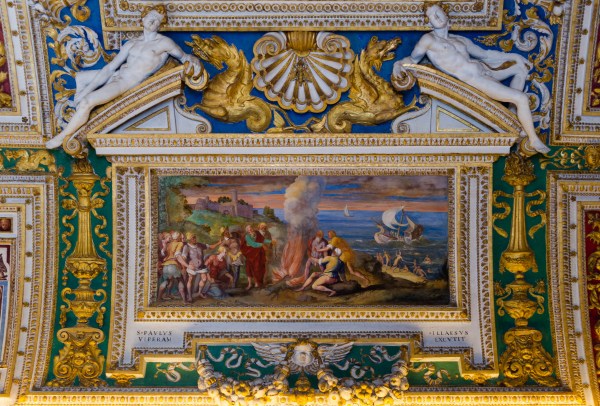
Above: Saint Paul bitten by a viper in Malta. Ceiling of the Gallery of Geographical Maps in Vatican City.


Adventures in Storytelling 5

Entry 4, Carpe editorem, occide, part 3.  

Now that I’ve confirmed what we already know, that writing is work worth doing; every correction, setback, and mistake makes you a better writer. We can talk about the tricky subject of taste.

I don’t like this is a delicate situation every writer will inevitably come up against. The way it’s handled can make or break a writer’s morale. Whether it comes from a friend, a random reader, or the worst critic of all—the self. Not liking something you’ve written can be disastrous.

I began editing P1 while embarking on a new career path. Unfortunately, I would abandon this career about a year and a half later, but during this period of my life I went through long stretches when I didn’t really do any editing or any serious work on P1. I worked on short stories at this time, although I also worked on Project Paisley’s second work, P2.

A stretch of alienation, as previously mentioned in entry 3, can put a lot of distance between the work and the writer. When I finally went back to P1 I found there was more to love than I had thought.

What I also learned is that there were plenty of things I didn’t like too.

This caused an…interesting crisis.

On one hand, P1 was almost exactly what I want in a fantasy epic. Political intrigue, sword fights, romance, an interesting magic system, etcetera. The problem was that all the cool stuff was tied up with a subpar b-plot that drifted into multiple directions and needed cutting or immediate tie-in.

I wish I could explain what this crisis looked like, but the only word that comes close is despair. I was extremely sad that I failed to bring this crucial plot material into the fold. It stuck out like a loose thread. Pulling it out unraveled parts of the story I wasn’t ready to give up. Leaving it there was a testament to my poor abilities.

After another month of wallowing, I eventually worked up the courage to take a look at my draft. It was still not great. But, this time around I noticed something. Attentive to the dislike I had for certain sections, I read them as a reader would and found myself thinking; “I would have done this” or “it makes more sense this way.”

I remember that it was a Saturday, sometime in Spring, during the COVID lockdowns when I could go outside during my at-home work day and get some sun. I resolved to fix what I didn’t like.

Armed with a blue pen and sheet of white computer paper, I made myself think about my work and how to make it better. I wrote notes, I crossed things out, I made sarcastic remarks to myself. I worked.

It was about this time when I began to see the value of planning. While my “pantsing” managed to hammer out an initial draft, I realized that it was that out-of-control creative process that tangled up the good ideas with the bad ideas. Somewhere between pantsing and planning, there is a happy middle.

When I write, I find that there is a gestational period between the initial idea and the beginning of the execution of that idea. It’s been as short as one evening and as long as several years. During this gestational period, I took up a practice I call wish-listing.

Over the next several days after that initial sit down, I added more ideas to my list. It’s only now that I understand what I was doing there. I was wish-listing.  

As far as those needed edits go, I eventually settled on a plan and began to put it into action. I’ve completed the first section requiring some massive rewrites. The rest will involve re-arrangements, cuts, and most likely, rewrites.

No one wants to rewrite thousands of words, but ultimately to solve the problem I created, I had to rewrite it. In order to work on these rewrites, I set aside other works in order to focus my energy on P1.

It’s been increasingly difficult to “get in the mood” so to speak. Working a full-time job can really put a damper on the creative flow. The same happens when I spend long stretches away from my work. I have to spend a little time getting back into the characters. To get back in the groove I use a tactic similar to pre-editing (entry 3) that I call previewing.

During preview I jump back to sections before the area I want to work on. Sometimes, I read things out loud. I try to capture the rhythm and voice of the character I intend to write. Jumping ahead can also help the process. Sometimes I takes an entire Saturday to recapture the voice I want. Other times, it’s easy. Since I can only find time to write on the weekends, this gives me a very short window in which to work.

This was a source of extreme anxiety for me. I began to feel like I was giving up without the dignity of throwing in the towel. My life was consumed by my 8-5. When most people use the weekend to unwind from their work week, I felt like I was starting my work—the real work, the work I love. This made me miss out on relaxation, on the unwinding required for a healthy work-life balance.

Worse, when I did relax, I felt guilty. I felt like I was procrastinating, shirking my responsibilities.

Suddenly, spending an hour reading a novel felt like I was wasting time not working on mine. Hanging out with friends had to be cut short because I had to go home and get something out on a page. I didn’t go hiking or take a walk or do any of the things I loved doing before my full-time.

I taxed my mental health and my physical health. Sleeping issues that I had dealt with in the past suddenly reared up, worrying me more. Something was going to break, and that something was me.

To make a long story short, the break didn’t involve my writing. There are personal factors that went into the long and dark winter that was 2021. Writing was my haven, the place I could control. The only thing in the world that made sense to me. I muddled through 2021, fought my way through the spring of 2022.

It was at the height of this breakdown that I finally gave in. I had toyed with Catholicism for years by then. In April, just a few days after Easter, I caved too the only force that could soften my stubborn heart. Christ struck tinder in the ash heap of my soul and for the first time in a long time I stopped worrying.

Am I going to tell you that I no longer complete an elaborate night-time ritual in order to fend off the Sunday Scaries? No, because that would be a lie. Am I going to tell you that I’m not anxious about my writing, or work, my personal life, politics—no, because that would be a lie. But I don’t let them control me anymore. Not even my writing gets to rule my life. I have a different King now and he wants me to write because he likes stories and wants me to like them too.

During 2022, while I worked through my personal problems, I let myself enjoy writing again. I set the P1 rewrites aside and worked on a couple short stories. When I went back to P1 I fell in love with the story and found a deeper appreciation for the work that I put into P1.

I finished the largest chunk of those rewrites back in August of 2022. There’s still more work to do. But I’m taking a break from P1. This isn’t the last entry regarding P1 and Project Paisley. But it is for now.   

Ultimately, what I hope you pick up here, dear reader, is that writing is hard. It’s hard work. Don’t let anyone tell you that it’s not. The effort and preparation that goes into writing is enormous. Editing is just as effortful and time consuming as writing itself—sometimes even more so. The emotional exertion can be just as detrimental to your heart, mind, and body as the physical toll of working that shitty retail job you hate.

But just like that job you hate; you have to do the work. The key to staying even-keeled is remembering the job you love is supposed to be done because you love it. You were asked to pick up this cross because the Man we nailed to it knows you can carry it.

Writing demands work, but it should bring joy.     

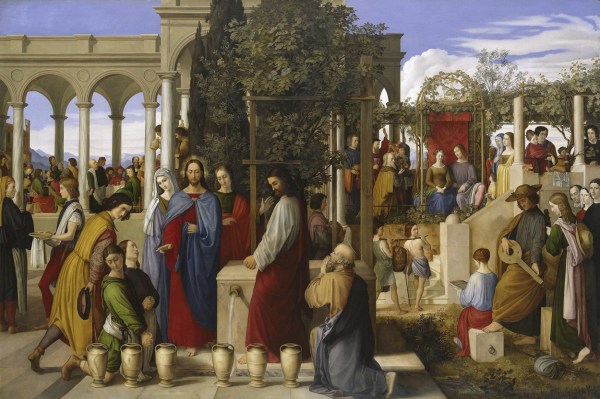
Above: The Marriage at Cana. Julius Schnorr von Carolsfeld (March 1794 – May 1872). German. Oil on Canvas. House at Hamburger Kunsthalle.

Adventures in Storytelling: Interview w/ Richard of IronAge Media

For this entry in Adventures in Storytelling, I’m doing something a little different. Instead of focusing on myself and my journey, I want to turn our attention onto a less well-known part of Storytelling, namely, publishing.

Richard Wilson is the founder of IronAge Media. Recently, his new magazine ANVIL: An IronAge Magazine was crowdfunded and released in July of 2023. In the interest of full disclosure, I was a backer of issue 1 and, my short story, Afflicted: Nourritures les Ver, will be published in ANVIL issue 2 which will be released this coming October. Although fundraising has ended, you can still purchase copies “on demand” via Indigogo.

The point of this series has always been to share tips, tricks, and struggles in the same way someone might journal a travel diary. Richard is on the bleeding edge of a new era of literary endeavor and I think we can learn a lot from his side of the adventure.

Independent publishing has become the norm and pulp style magazines are seeing a resurgence in online circles. While I’m not sure that the traditional publication industry is entirely down for the count, its certainly exciting to see new blood in the literary world.

I’d like to thank Richard and everyone at IronAge Media for consenting to this interview. Working with this team has been an awesome experience. I’ve learned so much from the interactions I’ve had with Richard.    

Let’s get into it.

The Interview

Tell me a little about yourself. Are you a writer, artist, or is Anvil Magazine your first creative endeavor?

Well I’m certainly not a writer, and although I have done plenty of painting and sketching in the past I wouldn’t identify as an artist. Prior to ANVIL I had worked on a couple of personal projects that would qualify as creative endeavors, but all of them were digital and coding focused. A few small video games and mods, some coding projects, and even a metaverse for a bit. However, ANVIL was the first thing I’ve personally made a serious effort to bring to market.


Who are your favorite writers or books? Favorite video games, comics? What type of media inspires you?  

That’s a big question. Early in life the Dinotopia books by James Gurney were particularly influential in my love of reading and I believe they hold up as beautiful artistic works as an adult. The original Dune series, The Book of the New Sun, and Zen and the Art of Motorcycle Maintenance were all works that I chewed on in my high school years, in addition to the usual high school assigned reading torment and more casual fun of older scifi.


For readers who might not be familiar, in your own words, what is the Iron Age? 

I’ll steal from myself in the first issue of ANVIL: The Iron Age is a decentralized movement of independent creators, across genres and mediums, circumventing traditional producers to create the kinds of entertainment that they want to see.


Do you think there’s a real hunger for original IPs?

I think there’s a hunger for something different. Before mega-corporations started buying up IPs like startup competitors, I think there was a much broader range of ‘taste’ within those legacy franchises and people didn’t feel any need to look around. Now if you want something aside from boardroom, corporate approved mediocrity wearing your childhood franchises like a skinsuit, you really have to look to new, original IPs.


What is the philosophy or guiding principle of IronAge Media?

Become the culture! Pragmatically that means bootstrapping the new media ecosystem as best as I can.


What made you want to start a magazine? Was it a spur of the moment decision or was it something you had always dreamed of? I know you have a talented team working with you, were you friends before IronAge Media, or did you just come together as a group of like-minded people? (i.e. how did this team get assembled?)

It was relatively spur of the moment. I hadn’t considered starting a magazine in January, but I was looking at actionable ways to achieve some broader goals I’d been thinking about. As for the team, Daniel and Jake were people I met early in the process of growing IronAge Media, and it was just a matter of looking at people who I knew I’d work well with and also had the skill sets I needed.


How did you settle on the name, Anvil? Is it symbolic or just cool?

Both. It was the first thing that popped in my mind when I was thinking about the magazine. Symbolically and thematically on brand for the Iron Age. I agonized over a lot of other names when I discovered an old communist rag was called ‘The Anvil’ back a hundred years ago, but I ultimately decided I’d rather go with my instincts and re-appropriate the term.


The first issue of Anvil Magazine far surpassed its original monetary goal, how does that feel? Were you surprised or did you know there was a desire for the kind of stories that Anvil promises?

It was immensely humbling more than anything else. I wasn’t necessarily surprised that people wanted it, I felt confident in the product, but I was surprised that I was able to get enough attention to communicate what it was to people and that those people were willing to trust me to deliver on that message.


What was the hardest part of getting IronAge Media and Anvil magazine off the ground? What was the most fun? And what was the most rewarding?

For me the greatest difficulty of IAM has been articles. I’m not a writer by practice, so writing a review or article for the site is far more time consuming than it should be, which is why I’m so appreciative of people who send in content. As for the most fun I’d definitely say the image prompts. Those were a decision I made on a whim and have proven to be a major part of the community building of IAM, and in many ways lead directly to ANVIL. Regarding ANVIL, by far the most difficult part of it has been fulfillment so far. I know a lot of people see the big number on the campaign and think it translates to big dollars for me, but when it comes to hourly rate, I definitely screwed myself over. The success of ANVIL of course has been an amazing and at times surreal experience that opened up a lot more options for what else I’d like to do. Certainly seeing authors happy to be published and readers excited about the magazine has been a very rewarding.


What are your future hopes for Iron Age Media? Do you have any plans to see IronAge Media branch out beyond Anvil Magazine? Do you see Anvil as a herald of a new age in media?

Expect to see the IAM site rebuilt soon to give users a more modern, slick feel. The overall brand is already moving into some new projects. One which will be public later this year, another that has a much longer timeline.

My goal for ANVIL has always been to create a place for consumers to find enjoyable works by new authors and artists they will love. I find that there’s a lot of (justified) complaining about consumer habits in the indie world, but I hope a brand like ANVIL can work as a stepping stone to draw in new buyers who know they aren’t happy, and just aren’t sure where to find that originality they’ve been missing.


I always end my entries of Adventures in Storytelling with a lesson I learned or a piece of advice I found helpful. Are there any lessons that launching Iron Age Media and ANVIL1 taught you?

Be a rational optimist and, the fastest way to learn if something is viable is to do it. There are a million failed websites and tens of thousands of failed magazines. If I had been negative about this I never would have tried. Instead I took a risk, put in the work, alongside other hard working folks, and now I can say that indie creators have made money and gained fans thanks to the project.


Do you have any advice for writers, artists, publishers?  

The potential market for new media is huge. Focus on your work and getting that work in front of buyers. Another person succeeding doesn’t take money out of your pocket, our current, globally networked economy is just too big for that. Doesn’t mean seeing crap succeeding is any less frustrating, but don’t let it drive you to harm your own goals.


Any final thoughts to share? Where can my readers find you?

Thank you for the opportunity to publish Afflicted! My wife and myself both enjoyed the character of Amélia Mitre and the interesting world you’ve placed her in. Your readers can find me at IronAge.Media and follow the links there to my various socials. I stream on Sunday evenings if you’d like to chat with me as I do something relaxing.


Again, I want to offer my heartfelt thanks to Richard and everyone at IronAge Media. Working with IronAge has been a awesome and humbling experience. It’s my hope that we work together in the future.

To sum up Richard’s great advice, remember:

Be a rational optimist. The fastest way to learn if something is possible, is to do it. Drop the negativity, take a risk, put in the work, and surround yourself with a cadre of other hardworking folk.

The potential market is huge, other people succeeding isn’t taking success from you, even if it hurts to see mediocre work rise to the top.

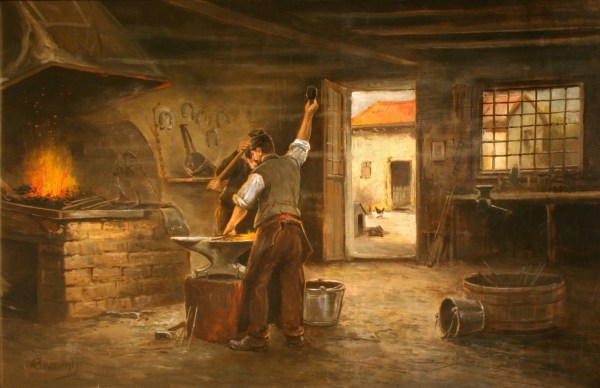
Above: The Blacksmith’s Studio. Albert Brument, French, 1883-1901. Oil on canvas. Housed in a Private Collection.

Blog at WordPress.com.

Up ↑