I keep a commonplace book where I collect phrases, proverbs, sentences, or ideas like a haphazard bouquet of wildflowers. I pick them as they come to me, with no curation save what I share on this blog.
In this series, I’ll offer a quote and meditate on why it deserved to be preserved in my Florilegium.
“Christian mysticism speaks of the ‘gift of tears’ – as a precious gift of divine grace. The Master cried at the tomb of Lazarus.”
Meditations on the Tarot, Anonymous
The shortest sentence in the Gospels is “Jesus wept.” (John 11:35). This verse holds particular significance to me because it was the first time I encountered Jesus as the Son of Man. This short sentence forced me to confront the reality of Jesus as a both human and divine.
His friend, Lazarus, was three days dead. He knew that with a word he could raise his friend from the dead. Yet, when confronted with the awful reality of death, Jesus wept.
It’s hard not to reckon with that realization. God came down to earth and met us, as Bishop Barron likes to say, in the muddy waters of our sinfulness. And when his friend died, he mourned with Mary and Martha.
The Anonymous French Mystic behind Meditations on the Tarot does not encourage the Faithful to seek out tarot cards. This book is not about telling the future or seeking signs from the “other side.” And I, as a Roman Catholic, am distinctly advising you to leave tarot cards as they are—superstitious paper, that, like all bits of paper, can become idols if we let them.
But the Major Arcana of tarot, which evolved into the face cards of a standard 52 deck, are rife with symbolism—particularly Christian symbolism. This fact cannot be ignored or pushed aside. French tarot, those used for cartomancy, are a product of a deeply seeded French Catholic culture.
Our Anonymous Friend works through each of the Major Arcana breaking open each suit in order to show the meaning underneath the patina modern occultism painted over them. He works each card out as a letter to his readers, the quote above regards the High Priestess.
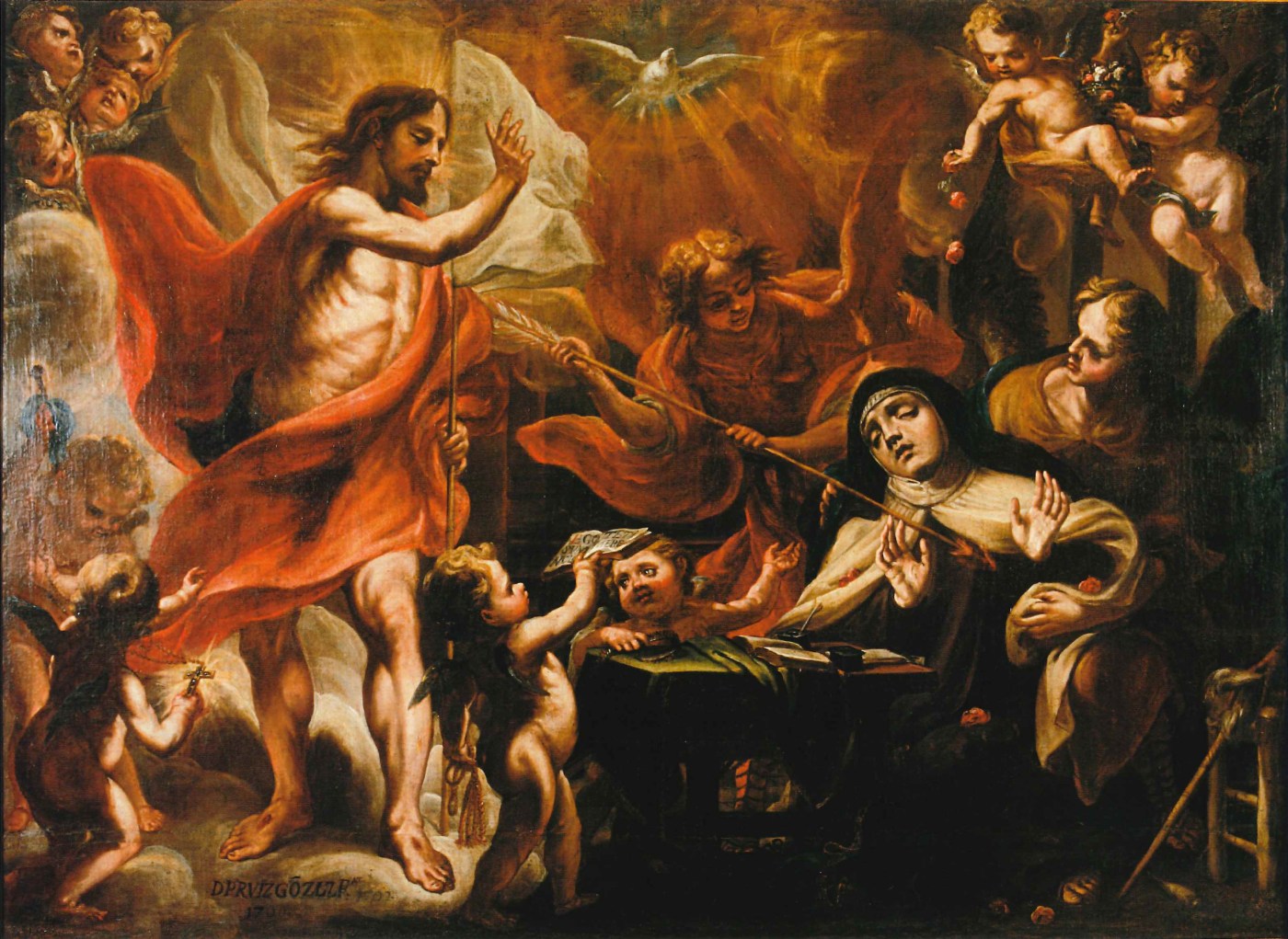
The gift of tears, as a precious gift from the Almighty, broke open John 11:35 for me. Our Anonymous Friend regards that gift as sacred, a mystical experience. My mind wanders to the Great Carmelite Saints, Teresa of Avila and John of the Cross.
Both Saint Teresa and Saint John of the Cross had mystical, passionate visions. The ecstasy left them both ill, weeping, and in a pain so terrible it could only be called pleasure.
Our Lord, in his Passion, faced the cruelest of humiliations and torments and was killed by the very people he had come to save. But under those layers of agony, there was hope. It had to be this way. Blood can only pay for blood; he had come to ransom us. That was pleasure so powerful, it could only be called pain.
When Jesus weeps, he makes weeping sacred. Jesus validates all human emotion, sharing the worst of them all—grief—to make it clear that what we feel is real and true. Emotions like grief, sadness, anger, etc, should never control us, but they are valid, and most importantly, their undercurrent is always joy.
Above: Transverberación de santa Teresa de Jesús con Cristo Resucitado (Transverberation of Saint Teresa of Jesus with the Risen Christ). Oil on Canvas. Pedro Ruiz González 1640 – 1706. Spanish Painter. Housed(?) in Church of Saint Mamés (Magaz de Pisuerga), Spain.
Like weird tales? I write my own, you can find them here! You can also follow me on Twitter/X!
 The Salon at Elfland
Leave a comment